PROJECT
বিবর্তনীয় সৃজনশীলতা
জৈবিক বিবর্তন থেকে শেখা সৃজনশীল পদ্ধতি। ৭০+ কোম্পানি এবং বিশ্ববিদ্যালয় দ্বারা গৃহীত, ইয়ামামোতো শিচিহেই পুরস্কার বিজয়ী। চীনা, কোরিয়ান, ইন্দোনেশিয়ান ভাষায় অনূদিত, বিশ্বব্যাপী ছড়িয়ে পড়ছে।
HOW
জৈবিক বিবর্তন ব্যবহার করে সৃজনশীলতা শিক্ষাকে পদ্ধতিগত করা।
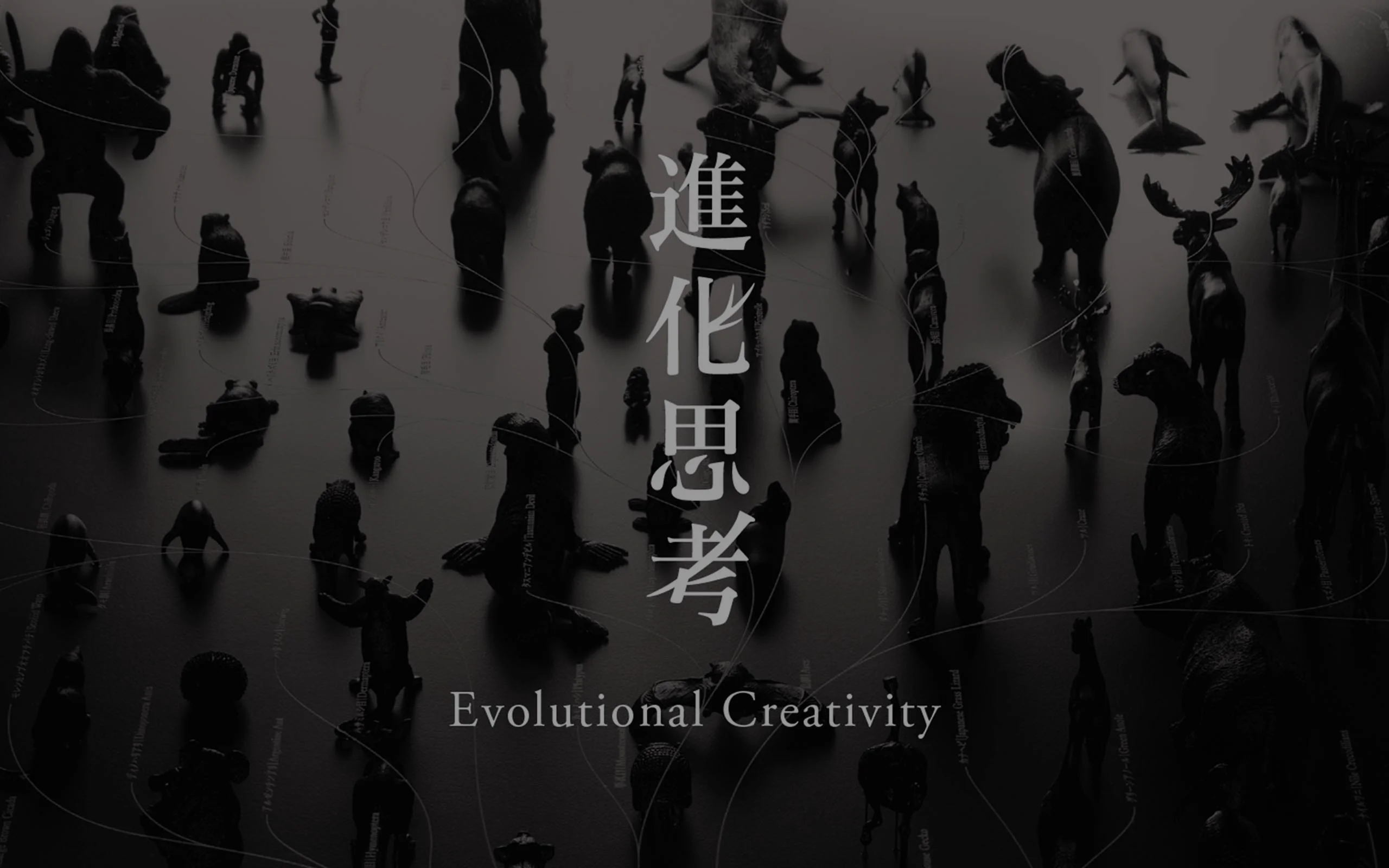
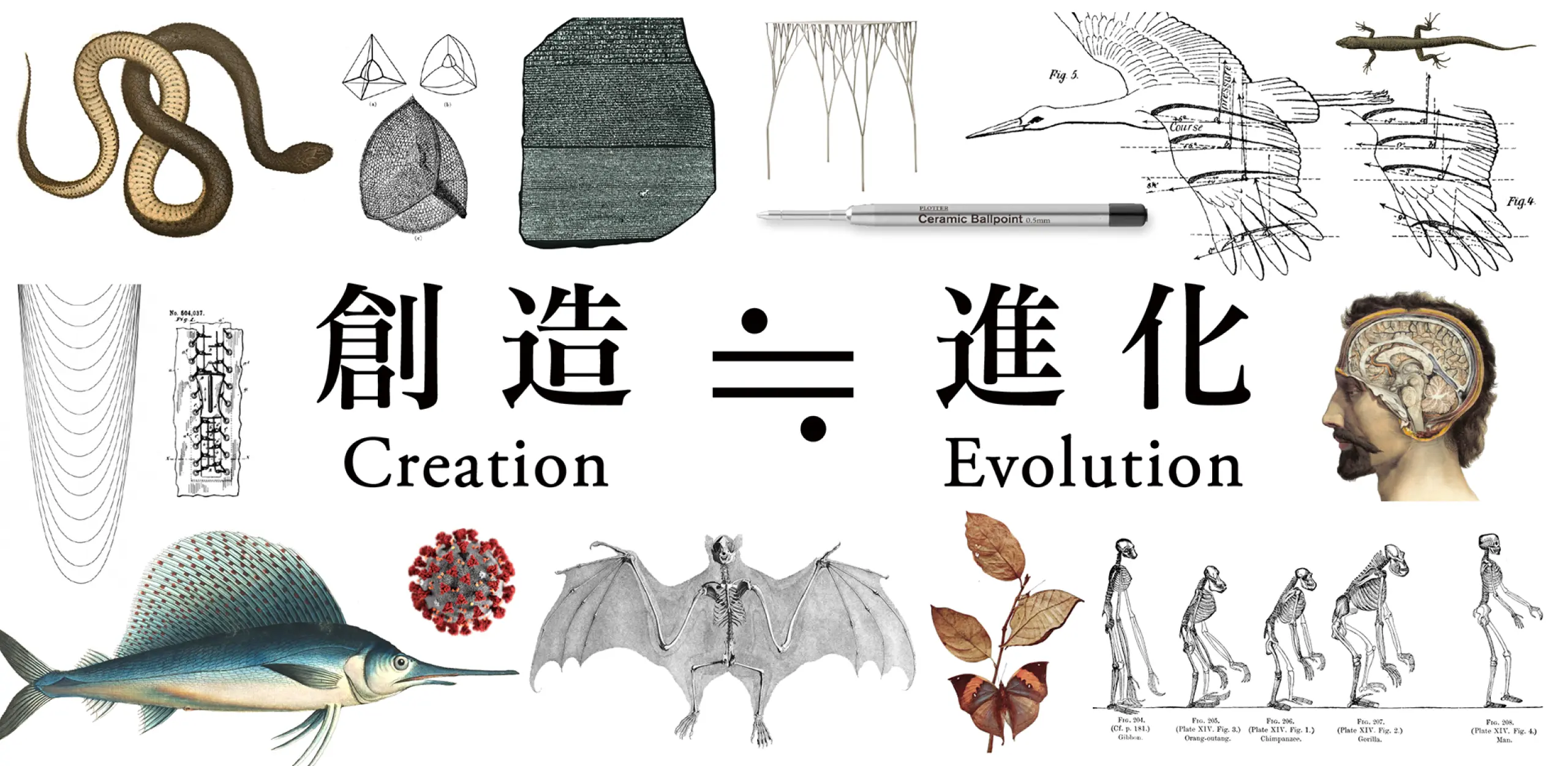
মানব সৃজনশীলতা এতটাই বিশেষ যে একে প্রাকৃতিক জগতে একটি অতিপ্রাকৃত ঘটনা বলা যেতে পারে। পৃথিবীতে জীবনের ৩.৮ বিলিয়ন বছরের ইতিহাসে কোটি কোটি প্রজাতির মধ্যে আমাদের মতো সৃজনশীলতার স্তর প্রদর্শনকারী আর কোনো প্রজাতি নেই। যেহেতু আমরা মানুষেরাও প্রকৃতির অংশ, তাই আমাদের সৃজনশীলতাকেও একটি প্রাকৃতিক ঘটনা হিসেবে বিবেচনা করা উচিত।
একইসাথে, যখন আমরা প্রকৃতির আকৃতি এবং রূপের দিকে তাকাই, আমরা মনে করতে পারি যে প্রকৃতি মানুষের চেয়েও বেশি সৃজনশীল। এটা কেন?
এই দৃষ্টিভঙ্গি থেকে, NOSIGNER-এর প্রধান Eisuke Tachikawa মনে করেন যে মানব সৃজনশীলতা জীবের বিবর্তনের মতো একটি ঘটনা। তিনি প্রাকৃতিক বিবর্তনের ভিত্তিতে সৃজনশীলতাকে কাঠামোবদ্ধ করার চেষ্টা অব্যাহত রেখেছেন। এভাবে তিনি Evolutional Creativity নিয়ে এসেছেন, একটি পদ্ধতিগত সৃজনশীল চিন্তাভাবনার পদ্ধতি যা জীবের বিবর্তনের কার্যপ্রণালীকে ডিজাইন এবং উদ্ভাবনে প্রয়োগ করে।
জীবেরা মিউটেশনের মাধ্যমে বিবর্তিত হয় যা কাকতালীয়ভাবে ঘটে এবং নির্বাচনের মাধ্যমে যা পরিবেশগত কারণ এবং অন্যান্য অবস্থার কারণে প্রয়োজনীয়তা দ্বারা ঘটে। এই দুটি প্রক্রিয়া বংশপরম্পরায় জিনগতভাবে পুনরাবৃত্তি হয়।
যদি আমাদের সৃজনশীলতা একইভাবে কাজ করে, তাহলে মানবজাতির অনেক আবিষ্কার এবং উদ্ভাবন যা বিশ্বে বিপ্লব এনেছে তা কাকতালীয়তা এবং প্রয়োজনীয়তার কারণে সৃষ্ট এই পর্যায়ক্রমিক প্রক্রিয়ার জন্য দায়ী করা যেতে পারে। কাকতালীয় এবং প্রয়োজনীয় উভয় প্রক্রিয়াতেই কোনো সচেতন অভিপ্রায় নেই। দুটি প্রক্রিয়া সর্বোত্তম অভিযোজনের কাছাকাছি পৌঁছানোর জন্য কেবল নিজেদের মধ্যে পর্যায়ক্রমে ঘটে।
সৃজনশীলতা এমন কিছু যা স্রষ্টার সচেতন অভিপ্রায়ের উপর নির্ভর না করে স্বতন্ত্রভাবে ঘটে। এই ধারণার ভিত্তিতে, Evolutional Creativity হলো পাগলাটে এবং অপ্রচলিত কাকতালীয়তা থেকে জন্ম নেওয়া Mutated ধারণা এবং বর্তমান পরিস্থিতির সাথে অভিযোজনের প্রয়োজনীয়তা থেকে জন্ম নেওয়া Selective ধারণার মধ্যে পর্যায়ক্রমে পরিবর্তনের প্রক্রিয়া। এই পর্যায়ক্রমিক সৃজনশীলতার প্রক্রিয়া বংশপরম্পরায় চলতে থাকে।
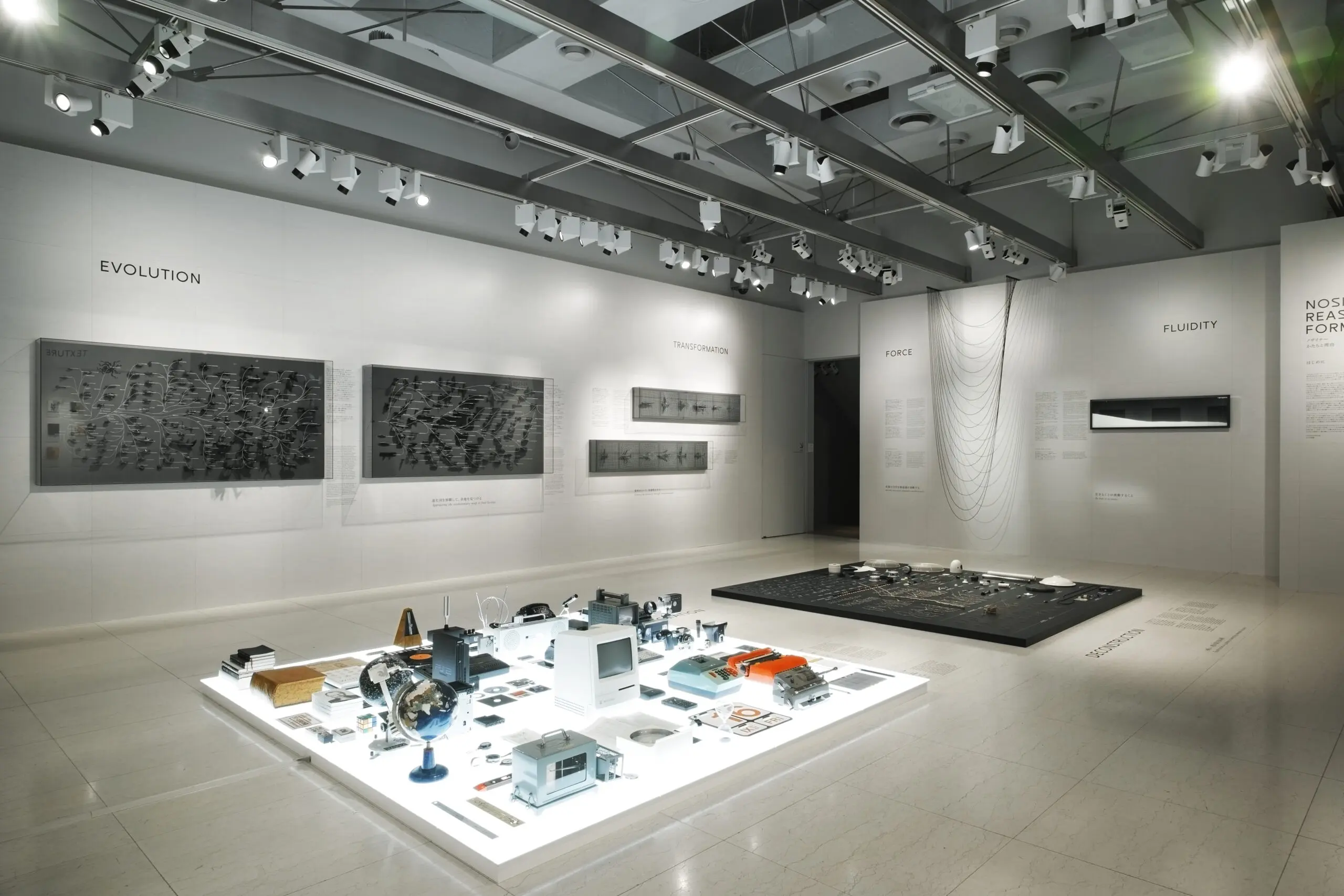

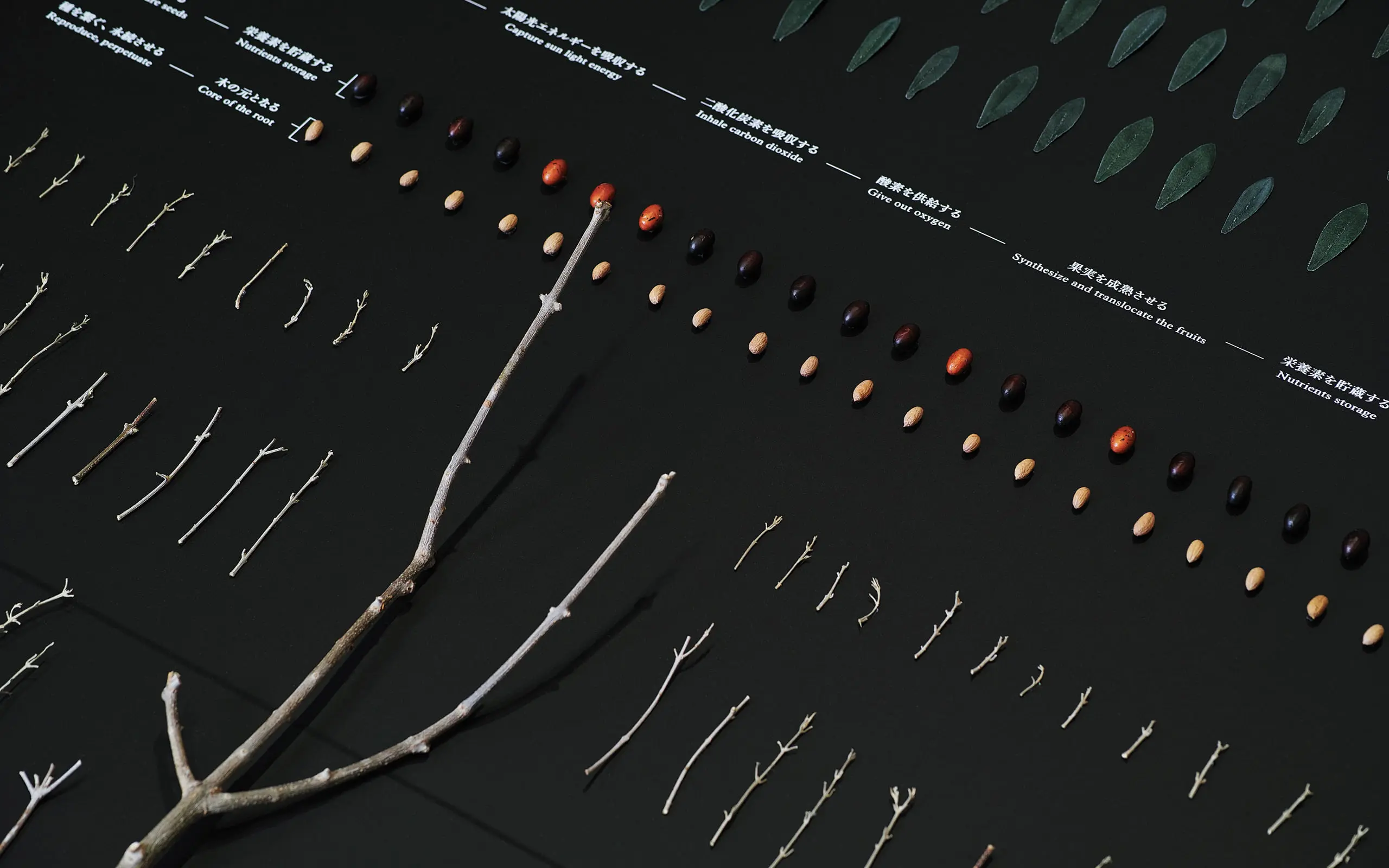
তাচিকাওয়া ডিজাইন এবং ভাষার মধ্যে সংযোগ নিয়ে গবেষণা করেছেন, এবং তিনি বিশ্বাস করেন যে মানুষের সৃজনশীলতার উৎস আসে ভাষা থেকে। এবং জীবন্ত বস্তুর বিবর্তনের চাবিকাঠি হল ডিএনএর পরিবর্তন যা ভাষার সাথে খুবই সাদৃশ্যপূর্ণ।
ডিএনএ কপি করার ত্রুটিগুলো ভাষার ভুল উচ্চারণ এবং ভুল শ্রবণের সাথে তুলনা করা যেতে পারে। এই অনুমানের ভিত্তিতে, তাচিকাওয়া তত্ত্ব প্রদান করেন যে বিবর্তন এবং সৃজনশীলতা পরিবর্তনের অনুরূপ প্যাটার্ন তৈরি করে।
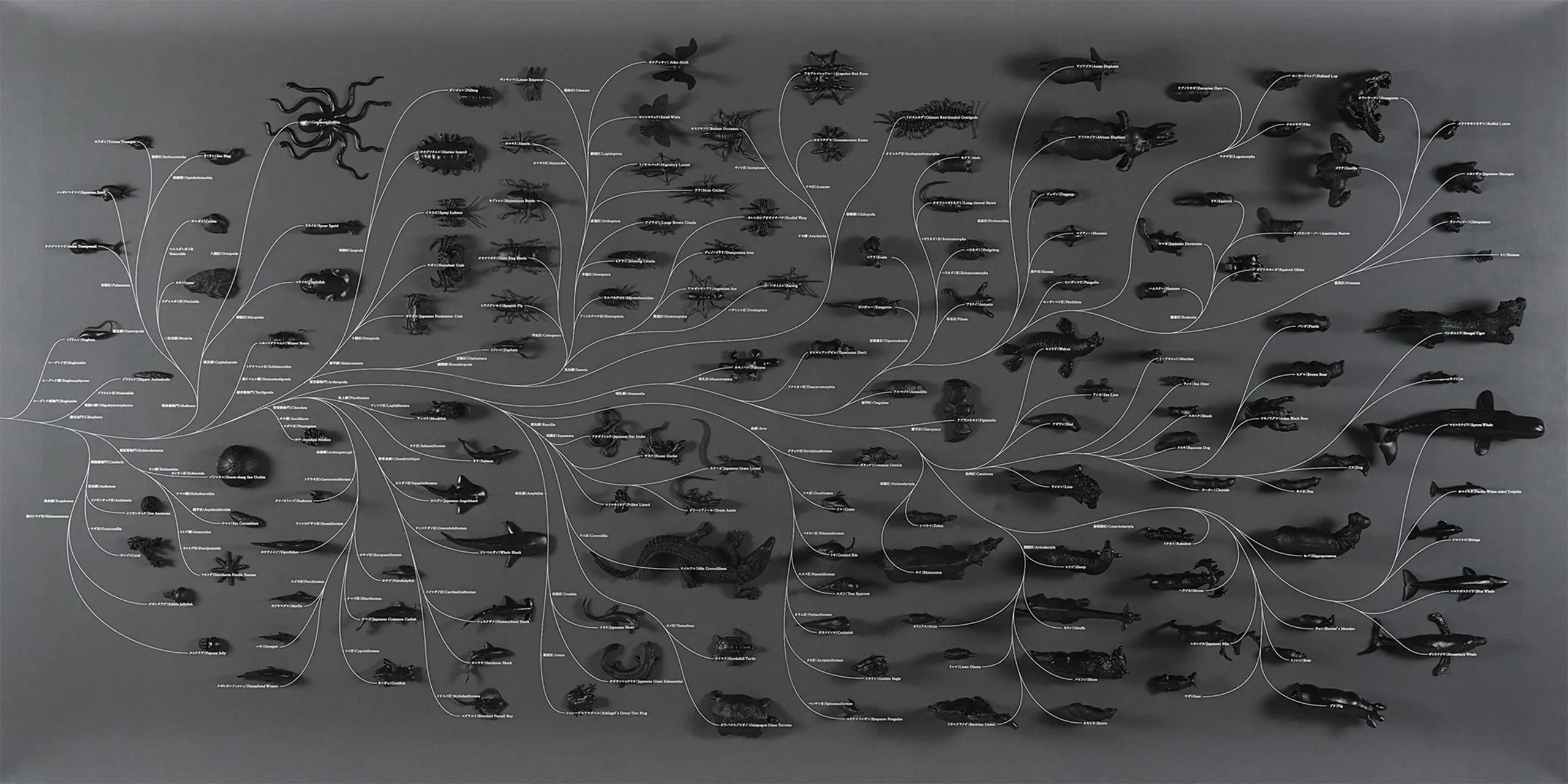
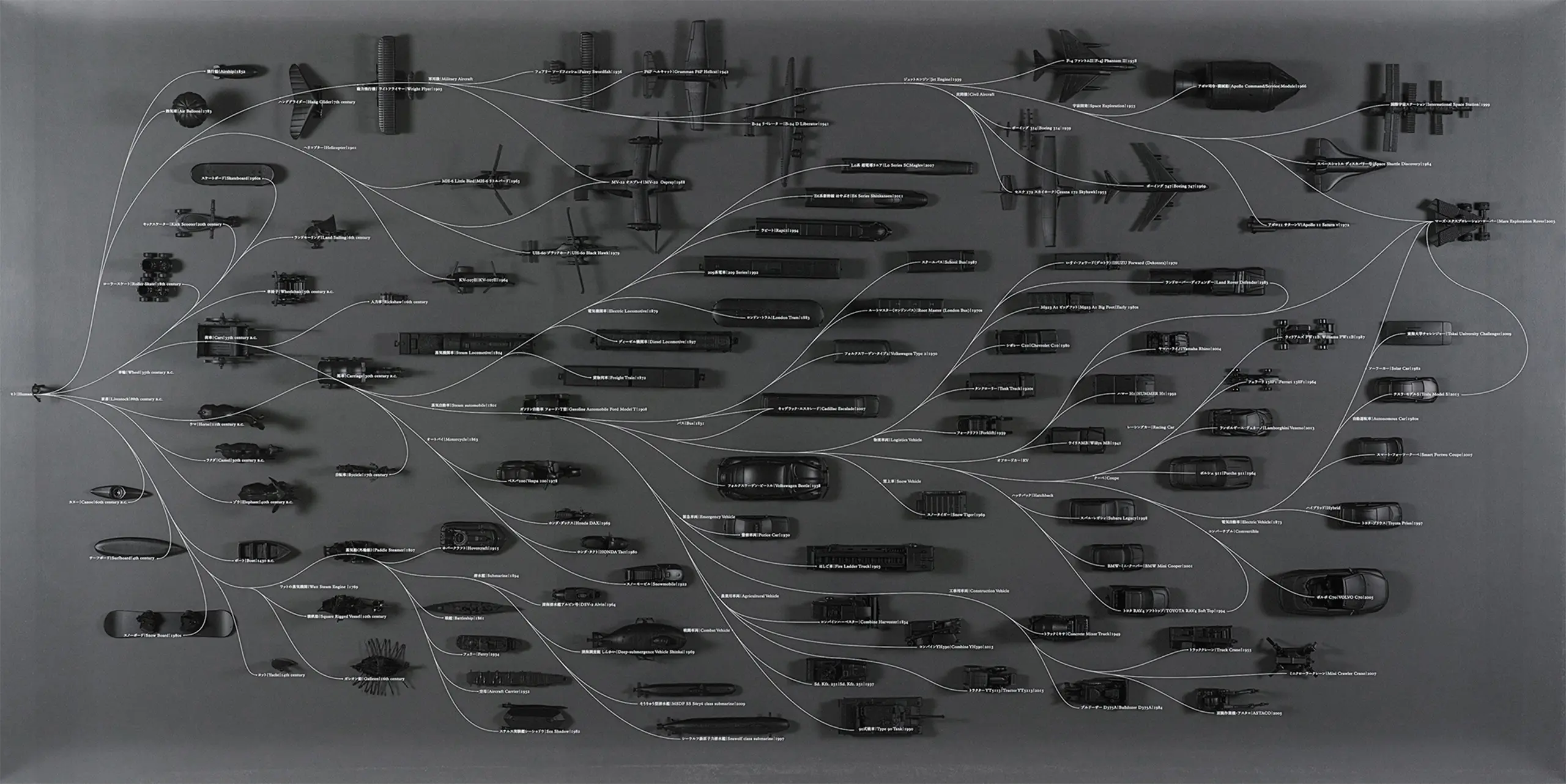
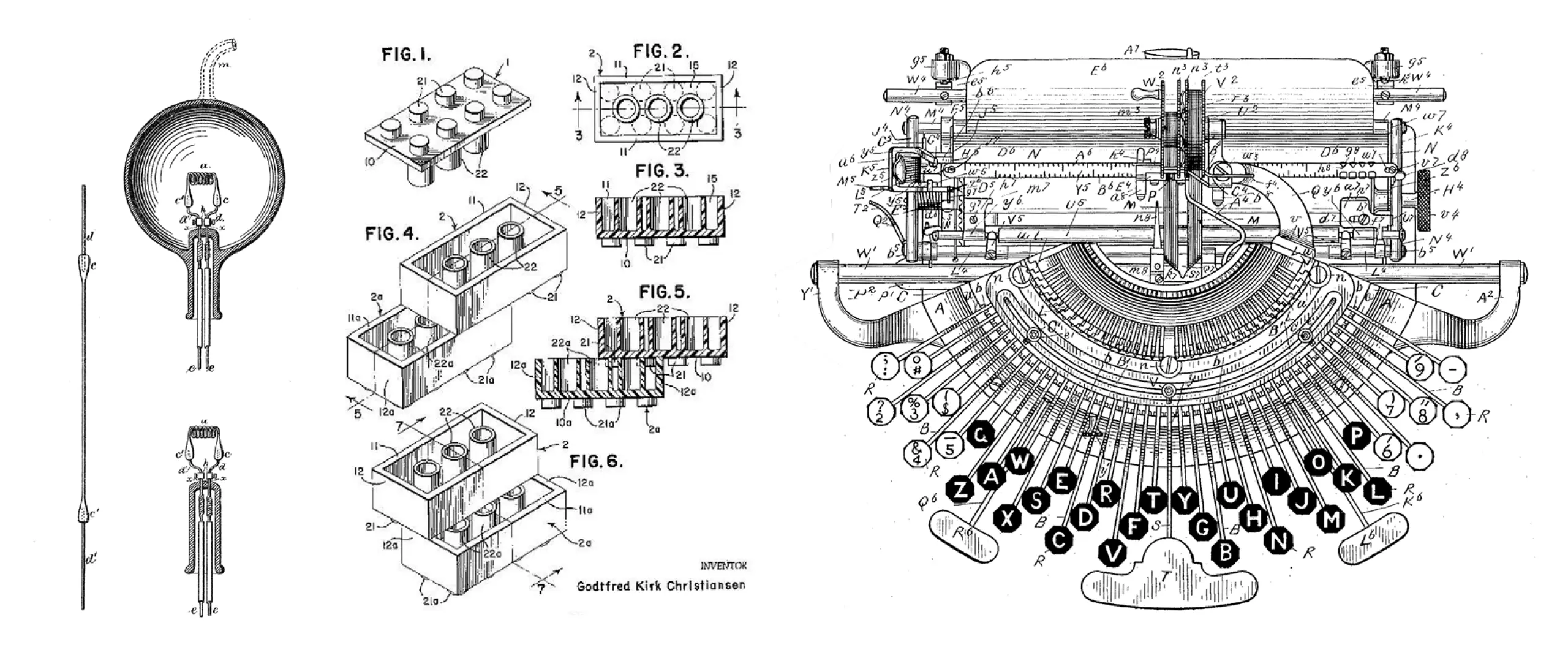
জীবন্ত বস্তুর বিবর্তনে পাওয়া অনুরূপ প্যাটার্নগুলো বিভিন্ন মানব আবিষ্কার এবং সংস্কৃতিতেও স্পষ্ট। বিবর্তনীয় সৃজনশীলতা এই অনুরূপ প্যাটার্নগুলো সৃজনশীল প্রক্রিয়ায় প্রয়োগ করে। নতুন ধারণার ফলে যে ত্রুটিগুলো হয় সেগুলো নয়টি প্রকারে শ্রেণীবদ্ধ করা হয়েছে।
Variate, Disappear, Integrate, Reverse, Separate, Substitute, Assimilate, Transit, এবং Proliferate-এর নয়টি পরিবর্তন প্যাটার্নকে একটি টুলবক্স থেকে হাতিয়ার হিসেবে ব্যবহার করে, আমরা অনেক সংখ্যক আকস্মিক ত্রুটি তৈরি করতে পারি এবং অল্প সময়ে অনেক ধারণা সৃষ্টি করতে পারি। এগুলো হল পরিবর্তিত ধারণা।
তাহলে আমরা কিভাবে এই ধরনের ত্রুটি থেকে একটি ভাল ধারণা নির্বাচন করি? প্রাকৃতিক জগতে, আমরা দেখতে পাই যে জীবন্ত বস্তুগুলো কিভাবে তাদের পরিবেশের সাথে খাপ খাওয়ানোর জন্য নির্বাচন করে। আমরা যদি প্রাকৃতিক বিজ্ঞানীর দীর্ঘদিনের পরিশীলিত প্রাকৃতিক জগৎ পর্যবেক্ষণের পদ্ধতি থেকে শিখি, তাহলে আমরা হয়তো অভিযোজনশীল ধারণা নির্বাচন করতে পারব।
প্রাকৃতিক বিজ্ঞানে বিভিন্ন পর্যবেক্ষণ পদ্ধতি অধ্যয়ন করার সময়, তাচিকাওয়া লক্ষ্য করেন যে সময় এবং স্থান উভয়কে অন্তর্ভুক্ত করে মাত্র চারটি দৃষ্টিভঙ্গি রয়েছে। প্রত্যেকটিই একটি প্রতিষ্ঠিত, জৈবিক পর্যবেক্ষণ ব্যবস্থা।
চারটি দৃষ্টিভঙ্গি হল অভ্যন্তরীণ অংশগুলো বোঝার জন্য Anatomy, বাহ্যিক পরিবেশ বোঝার জন্য Ecosystem, বংশপরম্পরার বিকাশ বোঝার জন্য Lineage, এবং Forecast এবং Backcast পদ্ধতির সাথে ভবিষ্যৎ নিয়ে চিন্তা করার জন্য Prediction। তিনি এই চারটি অভিযোজনশীল পদ্ধতিকে পদ্ধতিবদ্ধ করেছেন এবং এগুলোকে Spatial-Temporal Learning নাম দিয়েছেন। সময় এবং স্থানকে অন্তর্ভুক্ত করে এই চারটি দৃষ্টিভঙ্গির মাধ্যমে পরিস্থিতিগুলো বিশ্লেষণ করে, আমরা বুঝতে পারি যে সমাজ কিভাবে অনিবার্য পছন্দগুলো করতে চাপের মধ্যে পড়ে। তারপর আমরা দৃঢ় ধারণা নির্বাচন করে সেই অনুযায়ী তাদের মোকাবিলা করতে পারি।
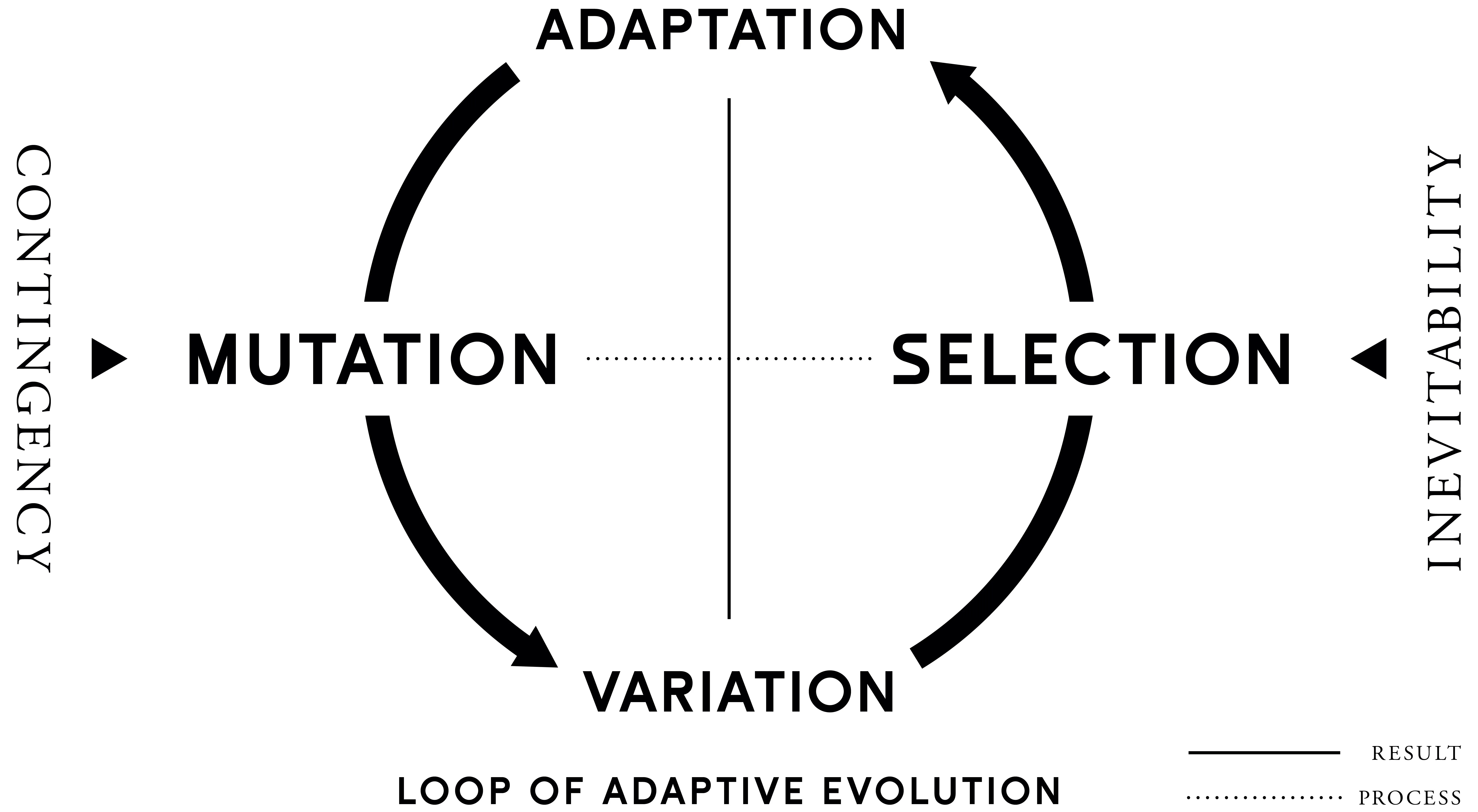
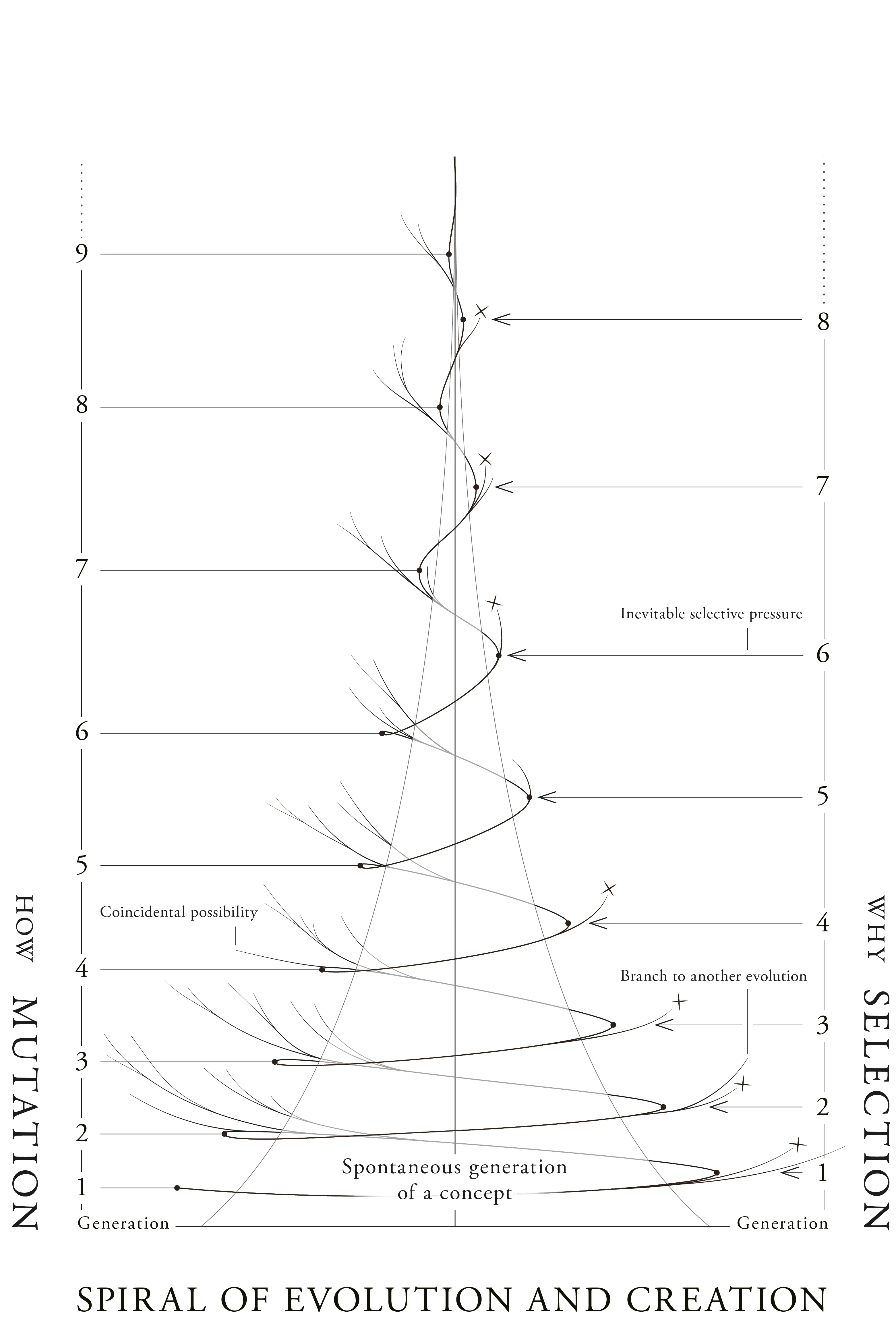
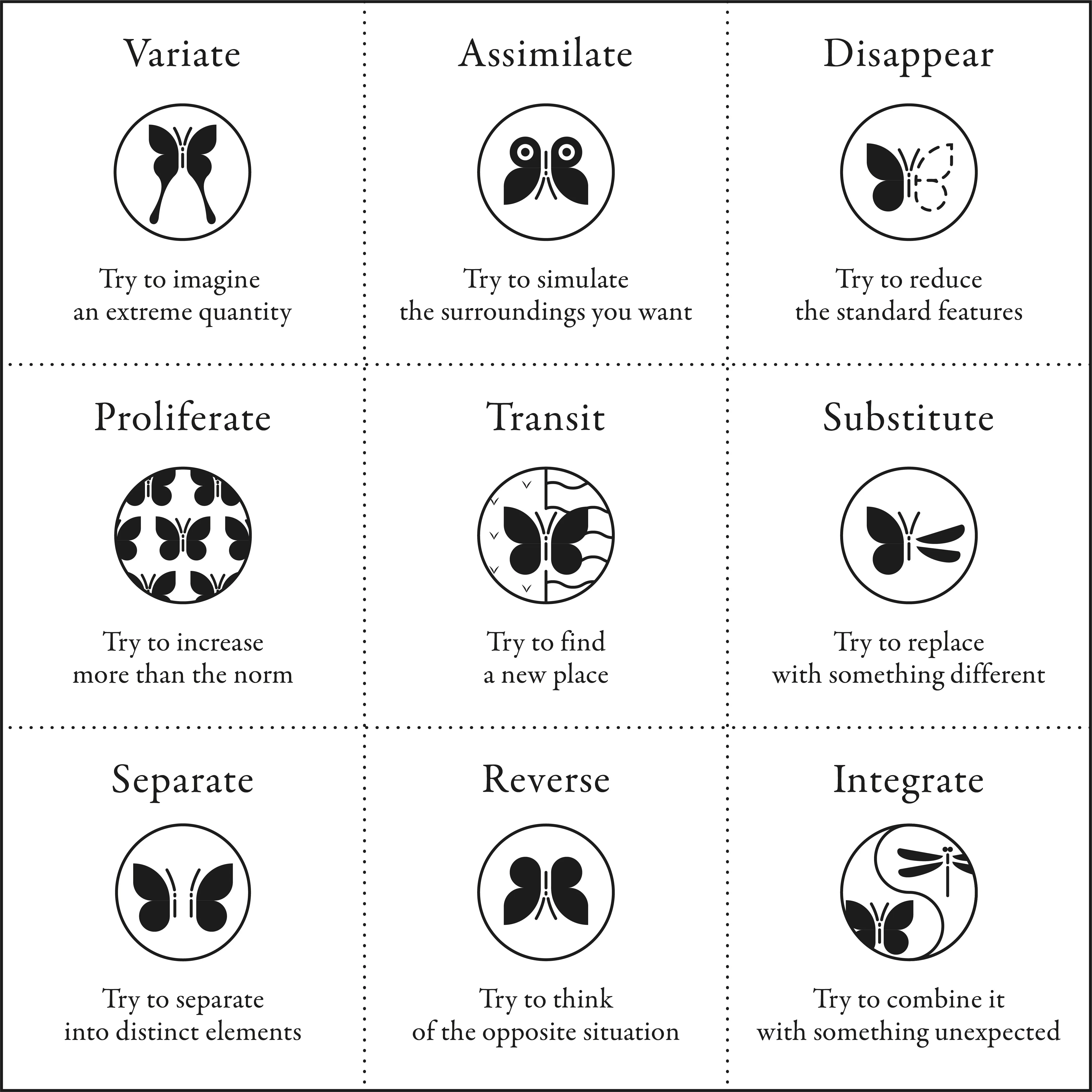
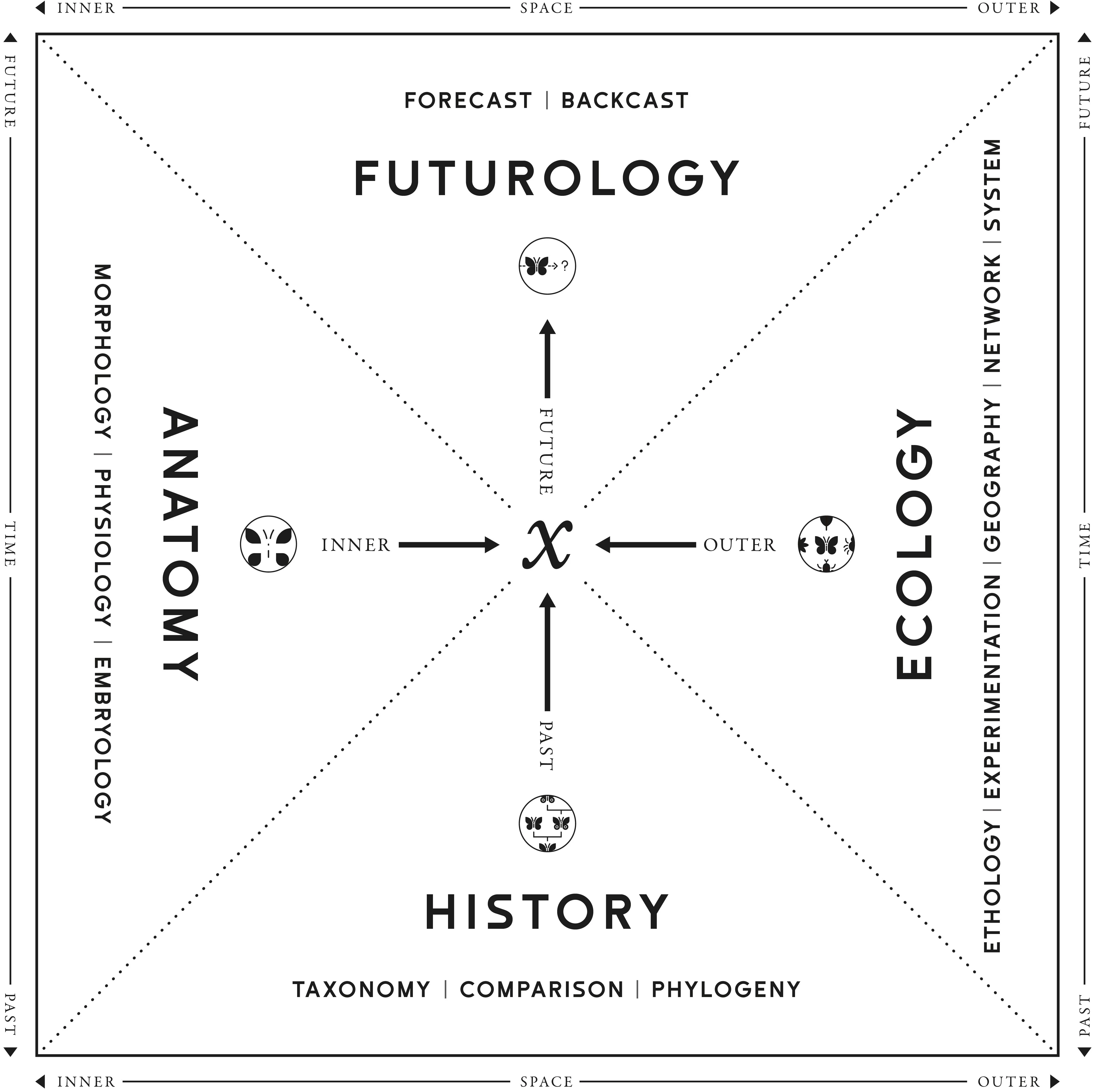
বিবর্তনীয় সৃজনশীলতা হল একটি চিন্তাভাবনার পদ্ধতি যা মিউটেশন এবং নির্বাচনের দুটি ধারণা ব্যবহার করে এবং তাদের মধ্যে পর্যায়ক্রমে পরিবর্তন করে দীর্ঘ সময় টিকে থাকতে পারে এমন সৃজনশীল ধারণা তৈরি করে।
(বিবর্তনীয় সৃজনশীলতা বইয়ের প্রথম সংস্করণে আকস্মিক মিউটেশন এবং অভিযোজনের লক্ষ্যে প্রাকৃতিক নির্বাচনের ইঙ্গিতে "মিউটেশন এবং অভিযোজন" অভিব্যক্তি ব্যবহার করা হয়েছিল। তবে, সংশোধিত সংস্করণে একাডেমিক শুদ্ধতার সাথে আরও সামঞ্জস্যপূর্ণ হওয়ার জন্য অভিব্যক্তিটি "মিউটেশন এবং নির্বাচন" এ পরিবর্তন করা হয়েছে।)
২০২১ সালের এপ্রিল মাসে, Evolutional Creativity প্রথম বই হিসেবে বিক্রয়ে আসে যা Amanokaze দ্বারা প্রকাশিত হয়েছিল, যা শিমানে প্রিফেকচারের আমাতে প্রতিষ্ঠিত প্রথম প্রকাশনা সংস্থা, যা জাতীয় সীমানার কাছে প্রায় ২,০০০ জনসংখ্যার একটি দূরবর্তী দ্বীপে অবস্থিত। দূরবর্তী স্থানে প্রকাশিত হওয়া সত্ত্বেও, বইটি Amazon Japan-এর Business & Economics বিভাগে নং ১ বেস্টসেলার হয়ে ওঠে। প্রকাশের এক সপ্তাহের মধ্যে, এটি তিনটি মুদ্রণে ৩০,০০০ কপি বিক্রি হয়েছিল। বইয়ের বিক্রয় ব্যাপকভাবে সম্প্রসারিত হতে থাকে।
বইটি জাপানে অসংখ্য পুরস্কারও জিতেছে। তার মধ্যে একটি ছিল Yamamoto Shichihei পুরস্কার, একটি মর্যাদাপূর্ণ একাডেমিক পুরস্কার যা কয়েক বছরে একবার মানবিকতার বইগুলোকে দেওয়া হয় যা জাপানের প্রতীক। নির্বাচনী কমিটিতে ছিলেন দুইজন জীববিজ্ঞানী (শারীরতত্ত্ববিদ Takeshi Yoro এবং বিবর্তনীয় জীববিজ্ঞানী Mariko Hasegawa), সামাজিক বিজ্ঞানের অর্থনীতিবিদ Motoshige Ito, রাষ্ট্রবিজ্ঞানী Terumasa Nakanishi, এবং আইন বিশারদ Hidetsugu Yagi। বইটি মানবিকতা ও বিজ্ঞানের বাইরেও একাডেমিক প্রশংসা পেয়েছে।
Evolutional Creativity দিয়ে আমরা প্রমাণ করতে চাই যে দূরবর্তী স্থান থেকেও আমরা পৃথিবীকে পরিবর্তন করতে পারি। আমরা এই নতুন সৃজনশীলতা শিক্ষা কর্মসূচি বিশ্বব্যাপী ছড়িয়ে দিতে চাই।
VOICE
বিবর্তন বিভিন্ন স্বীকৃত নিয়ম অনুসরণ করে। লেখক এই নিয়মগুলিকে ভিত্তি হিসেবে ব্যবহার করেছেন, তথাকথিত উদ্ভাবনের জন্য মূল্যবান রেফারেন্স উপাদান প্রদানের লক্ষ্যে।
যদিও প্রতিটি ক্ষেত্রের বিশেষত্ব বইটি পড়ে জানাই সবচেয়ে ভাল, কিন্তু এই ধারণার মৌলিকত্ব—উদ্ভাবনের বিষয়ে চিন্তাভাবনায় বিবর্তনীয় নীতিমালা প্রয়োগ করা—একটি সাধারণ কিভাবে করতে হয় গাইডের তুলনায় অনেক বেশি। প্রতিটি অধ্যায়ে উপস্থাপিত উদাহরণগুলি জীবন্ত এবং আকর্ষক, যা বইটিকে পড়তে উপভোগ্য করে তোলে। এটি লেখকের ক্রমাগত এবং নিরলস চিন্তাভাবনাকে প্রতিফলিত করে।
পৃথিবীতে ৩.৫ বিলিয়ন বছরের জৈবিক বিবর্তন আমাদের দিকে পরিচালিত করেছে, আজ আমরা যা তা গড়ে তুলেছে। যদি সেই প্রক্রিয়াটি নির্দিষ্ট নিয়ম দ্বারা পরিচালিত হয়ে থাকে, তাহলে সেই একই নিয়মগুলি আগামীর প্রক্রিয়াগুলির জন্য রেফারেন্স হিসেবে কাজ করতে পারবে না এমন কোনো কারণ নেই।
লেখকের পদ্ধতি মূলত সাদৃশ্যভিত্তিক। কনরাড লরেঞ্জ, নৈতিকতাবিদ, তার নোবেল পুরস্কার বক্তৃতায় একবার উল্লেখ করেছিলেন যে তার পদ্ধতি ছিল সম্পূর্ণভাবে সাদৃশ্যভিত্তিক। একাডেমিক জগতে, যেখানে প্রায়ই "মৌলিকত্বের" উপর জোর দেওয়া হয়, খুব কমই এটি স্বীকার করবেন। তবুও যে প্রসঙ্গে মৌলিকত্বকে মূল্য দেওয়া হয়—যেমন উদ্ভাবনে—সেখানে সাদৃশ্যের গুরুত্ব স্পষ্ট হয়ে ওঠে। এই অর্থে, এই কাজটি অত্যন্ত মূল্যবান এবং ইয়ামামোতো শিচিহেই পুরস্কারের যোগ্য।
ইয়োরো রিসার্চ ইনস্টিটিউট, লি. /
প্রফেসর ইমেরিটাস, টোকিও বিশ্ববিদ্যালয়
তাকেশি ইয়োরো

বই ডিজাইন সম্পর্কে
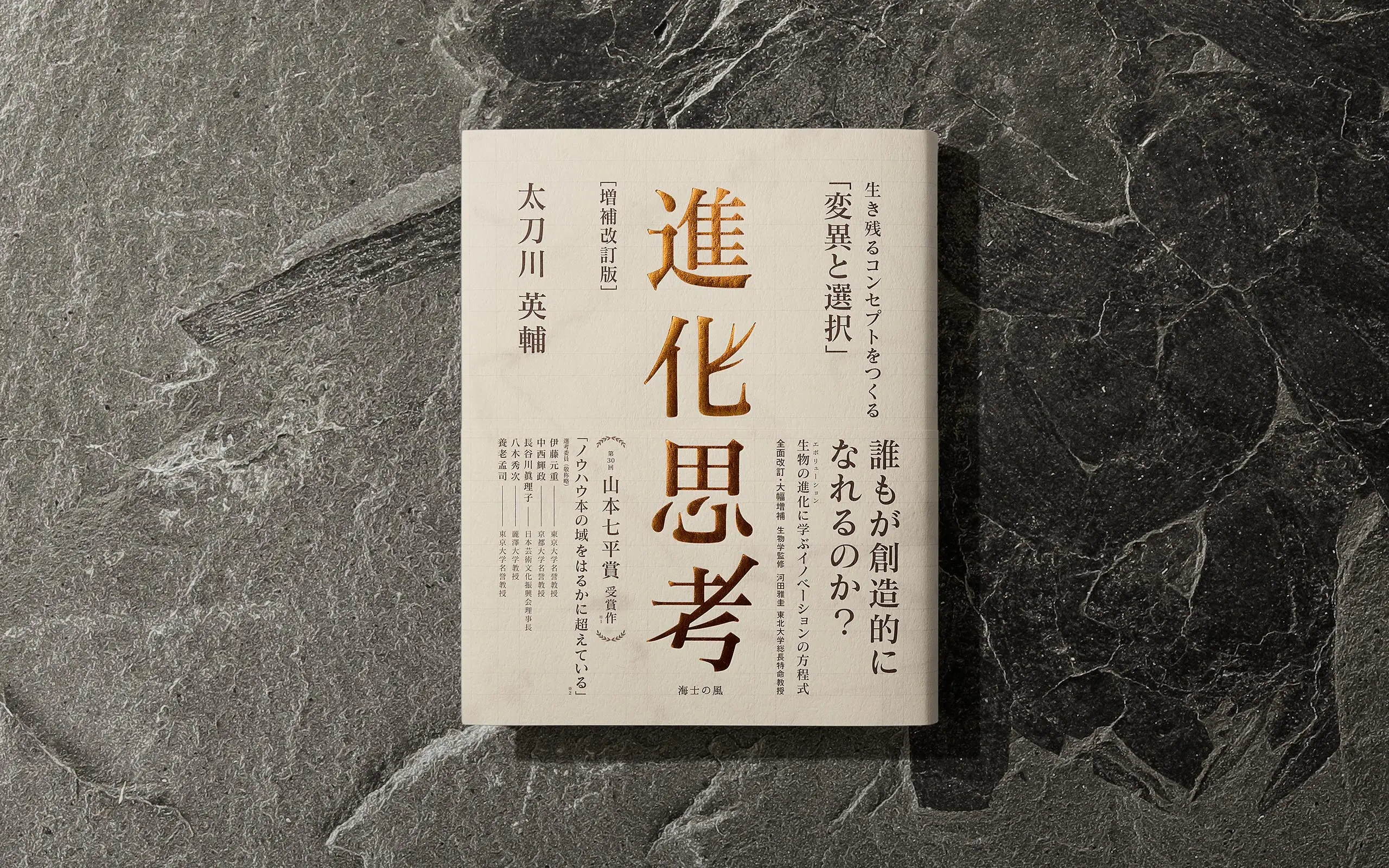
বইটি ডিজাইন করেছিলেন তাচিকাওয়া, লেখক নিজেই।
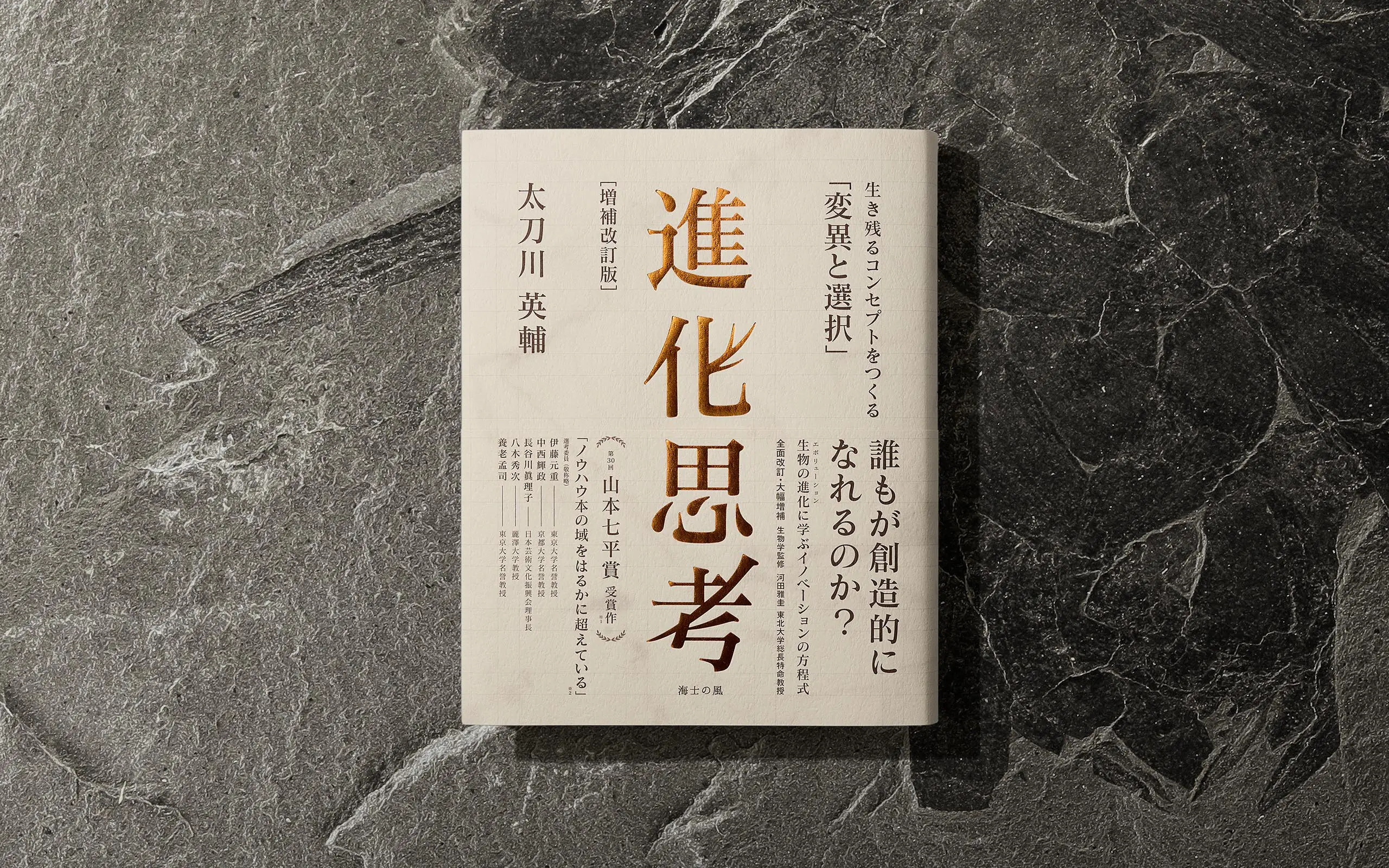
তিনি চেয়েছিলেন বইটি বর্তমান সময়ের বাইরেও প্রিয় হয়ে থাকুক। যুগ যুগ ধরে গড়ে ওঠা ভূতাত্ত্বিক স্তর থেকে অনুপ্রাণিত হয়ে, তিনি পাথরের মতো ডিজাইন ও টেক্সচার নির্ধারণ করেছিলেন। এটি ছিল জেমস হাটনের ভূতাত্ত্বিক গবেষণার প্রতি শ্রদ্ধাঞ্জলিও, যিনি চার্লস ডারউইনের বিবর্তন তত্ত্বকে প্রভাবিত করেছিলেন।
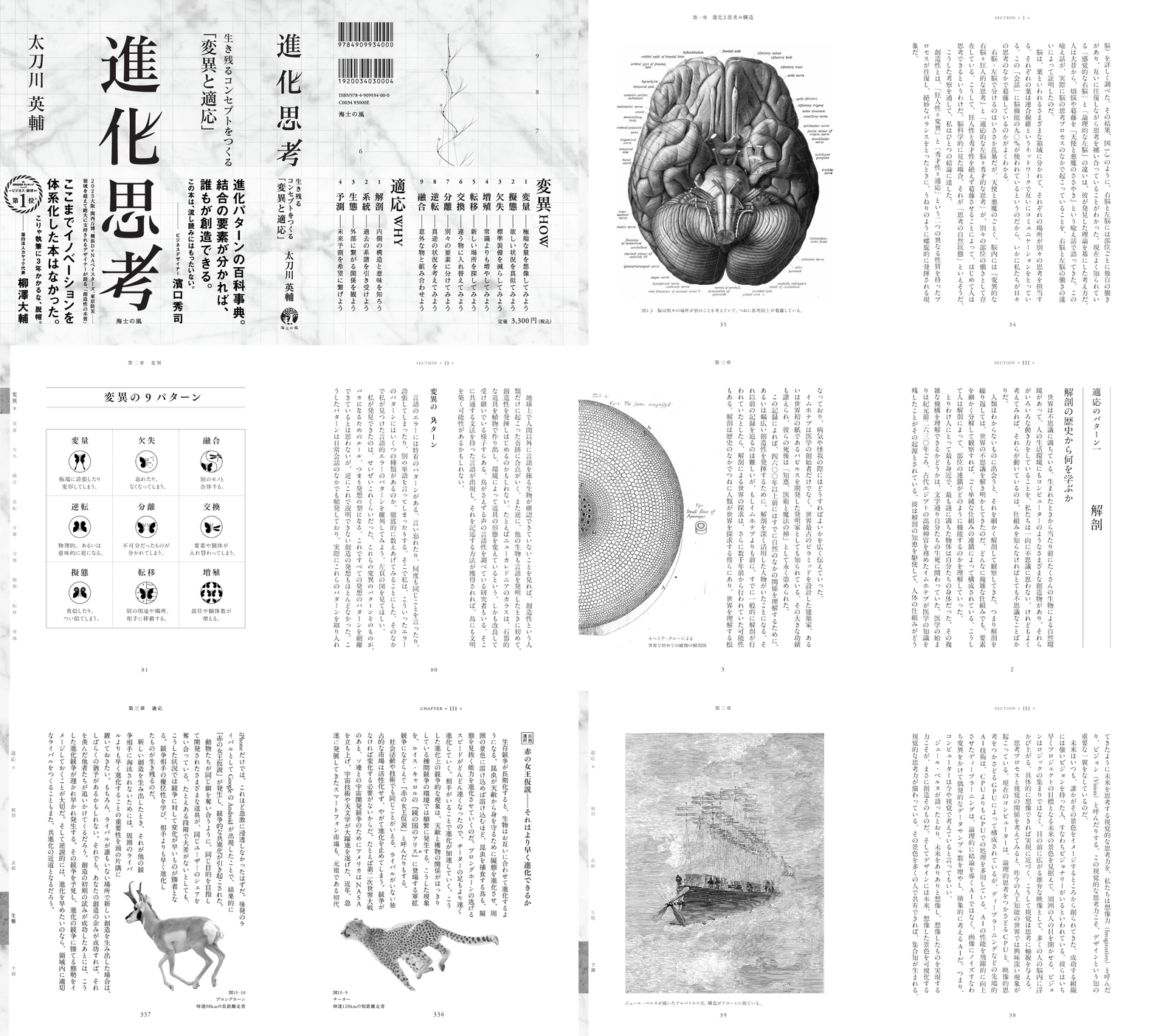
বইয়ের কভারে ব্যবহৃত হয়েছে একটি এমবসড প্যাটার্নড কাগজ (যার নাম "ইওয়া-হাদা" বা পাথরের পৃষ্ঠ) যার পাথরের মতো টেক্সচার রয়েছে, যার উপর মার্বেল প্যাটার্ন মুদ্রিত। বইয়ের প্রান্তেও একই মার্বেল প্যাটার্ন রয়েছে বলে ৫০০+ পৃষ্ঠার বইটি দেখতে একটি পুরু ও শক্ত পাথরের ইটের মতো। এছাড়াও, যতটা সম্ভব আলংকারিক উপাদান বাদ দিয়ে ও মিনিমালিস্ট ডিজাইন রেখে, একটি সুষম রঙের টোন বজায় রাখা হয়েছে। এটি একটি কালোত্তীর্ণ, আকর্ষণীয় বই ডিজাইন যা কোনো ডিজাইন ট্রেন্ড দ্বারা প্রভাবিত নয়।
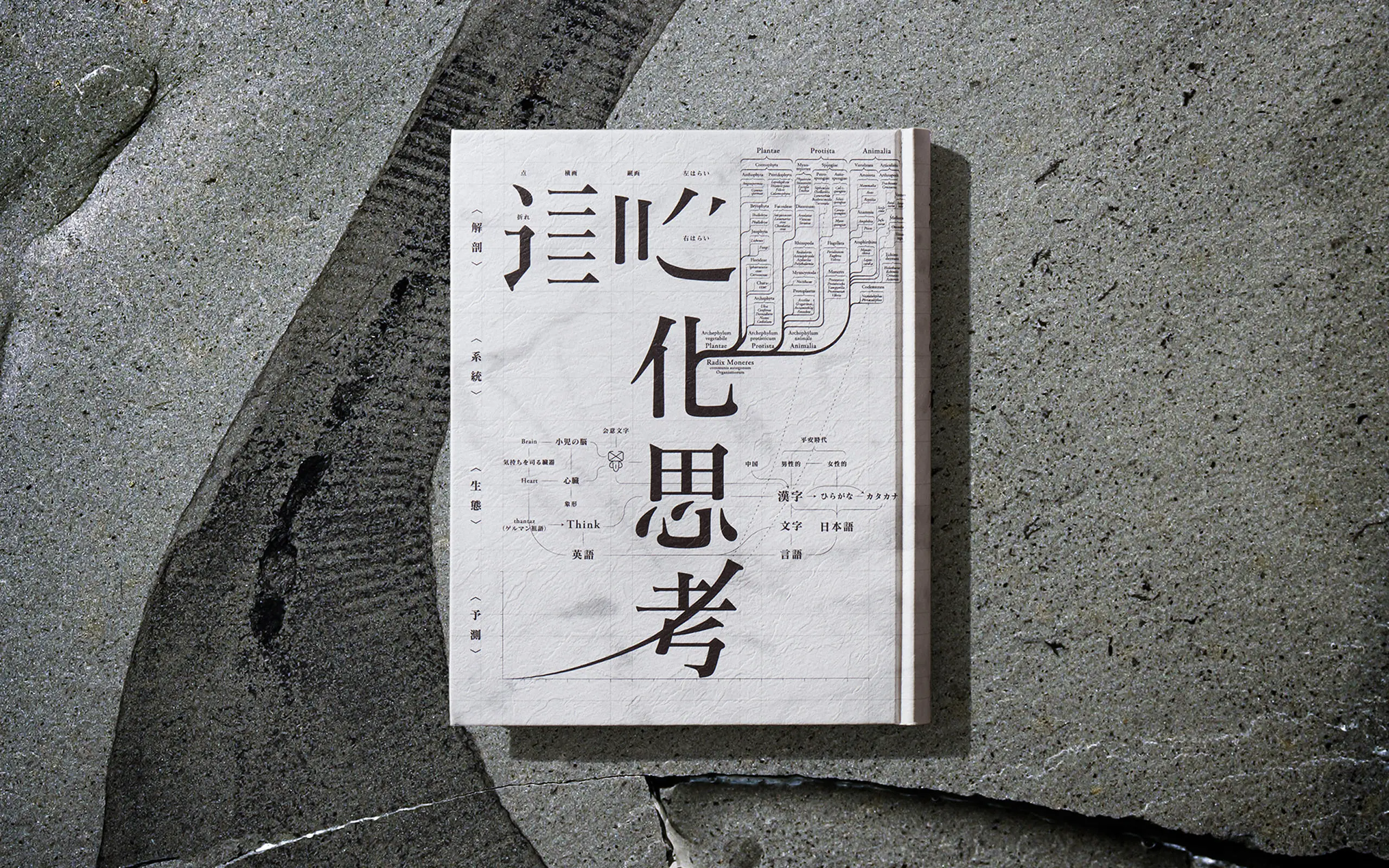
বইটির শিরোনাম লোগোতে চারটি কাঞ্জি অক্ষর (進 化 思 考) দেখানো হয়েছে যা বিবর্তনীয় সৃজনশীলতার পরিব্যাপ্তি, আত্তীকরণ, বিপরীতকরণ এবং বৈচিত্র্যের মিউটেশন প্যাটার্নের উপর ভিত্তি করে রূপান্তরিত হচ্ছে। কাগজের মলাট সরিয়ে ফেললে, বইয়ের মলাটে একই চারটি কাঞ্জি অক্ষর স্থানিক-কালিক শেখার চারটি ধারণার দৃশ্যমান উপস্থাপনা হিসেবে দেখা যায়: শারীরস্থান, বংশপরম্পরা, বাস্তুতন্ত্র এবং পূর্বাভাস।
মুদ্রিত লোগোটি সরাসরি উপর থেকে দেখলে কালো দেখাতে পারে, কিন্তু কোণ থেকে দেখলে এটি বাদামী দেখায়। এই প্রভাবটি মুরাতা কিম্পাকু কোম্পানির "কফি ব্রাউন" হট স্ট্যাম্পিং ফয়েল দিয়ে তৈরি করা হয়েছে এবং এটি মার্বেলে বসানো ক্ষীণভাবে ঝিকমিক করা রত্নের মতো দেখানোর জন্য ডিজাইন করা হয়েছে।

যেহেতু তাচিকাওয়া একাধারে বই ডিজাইনার এবং লেখক, তিনি কার্যকরভাবে মূল বিষয়বস্তুর টাইপসেটিং ডিজাইন করতে পারেন wrap-around টেক্সট ব্যবহার করে চিত্রগুলিকে টেক্সটের সাথে একীভূত করার জন্য। বইয়ের সূচিতেও একটি মার্বেল প্যাটার্ন রয়েছে যাতে বিষয়গুলি খুঁজে পাওয়া এবং টেক্সট পুনরায় পড়া সহজ হয়।
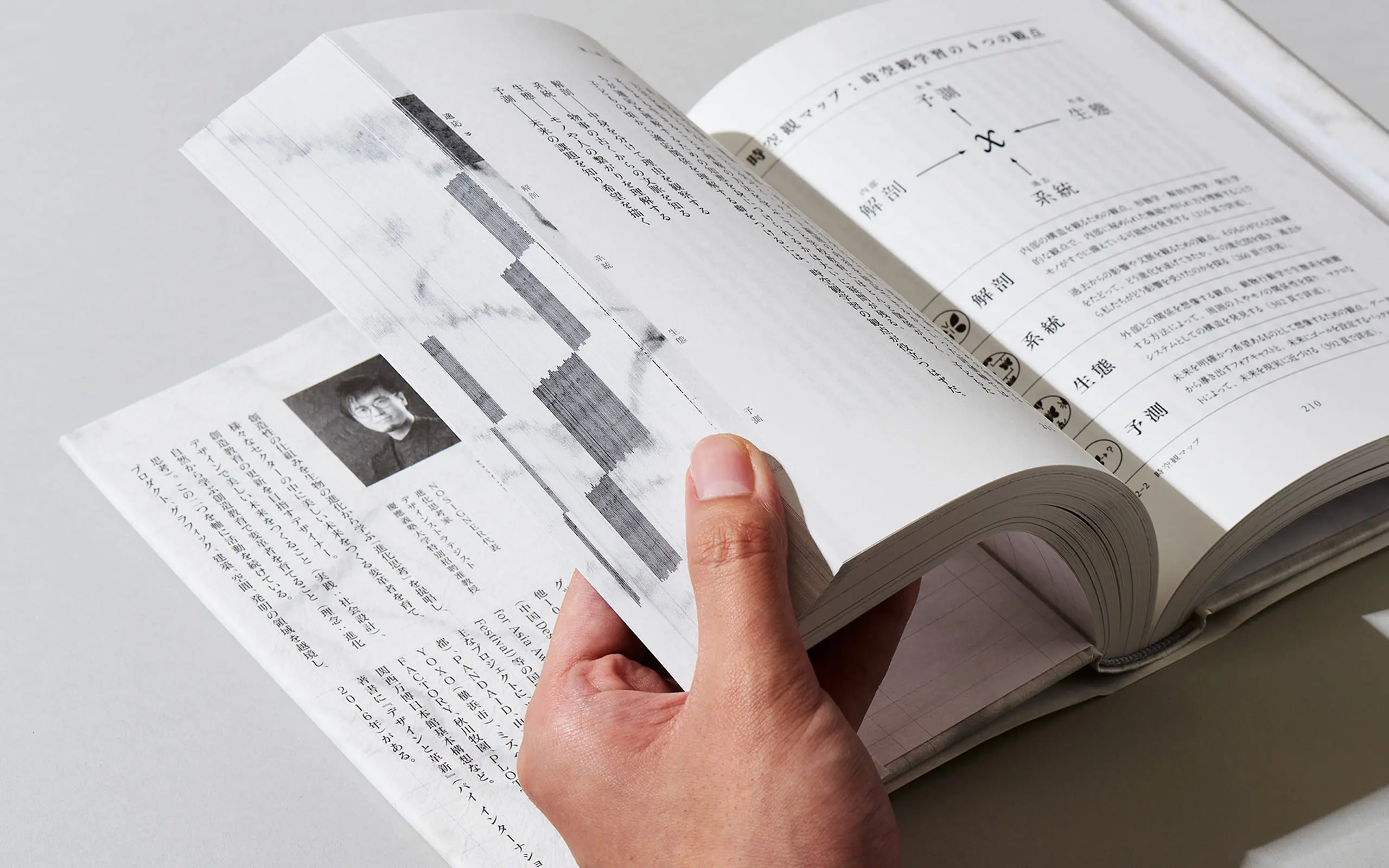
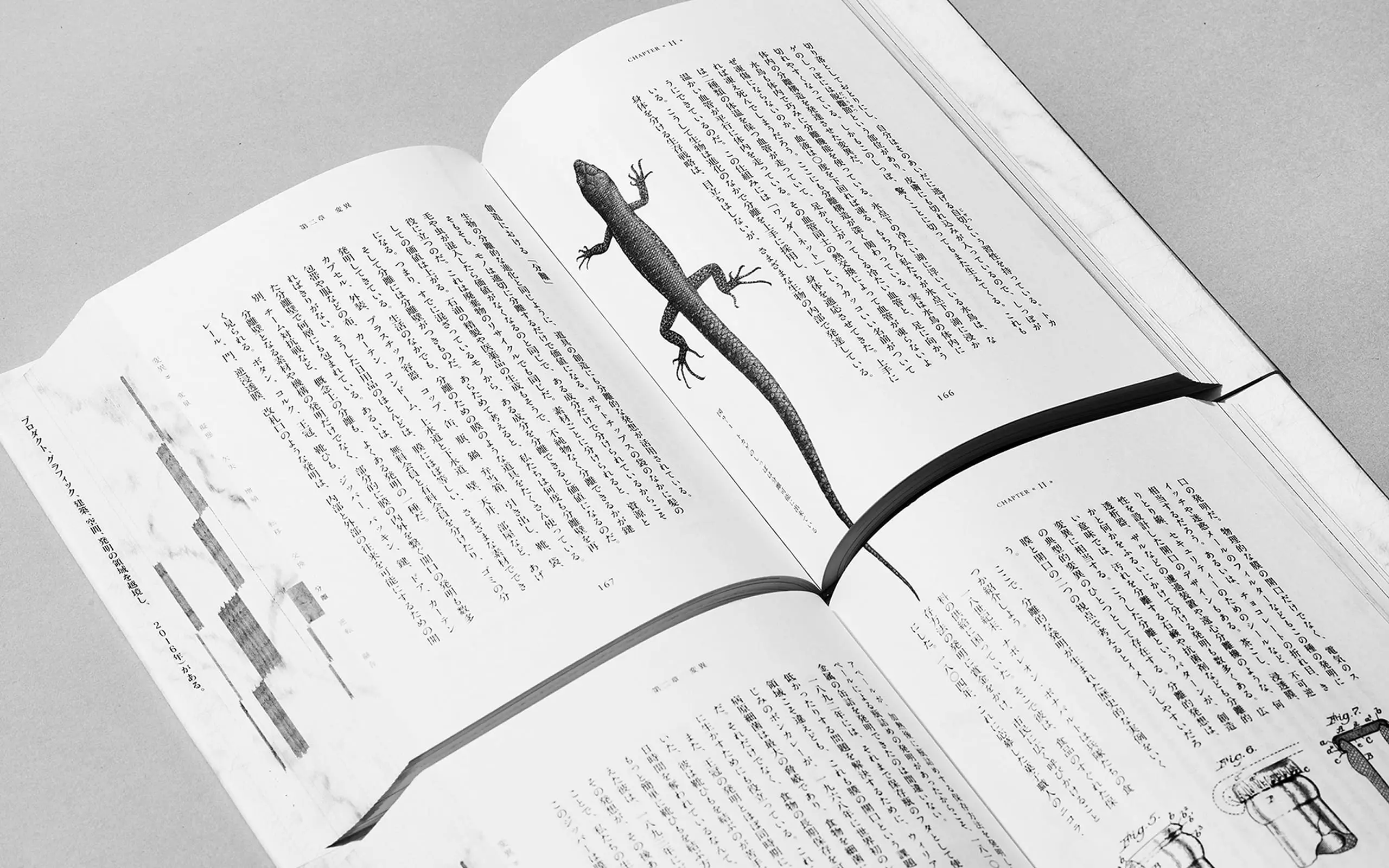
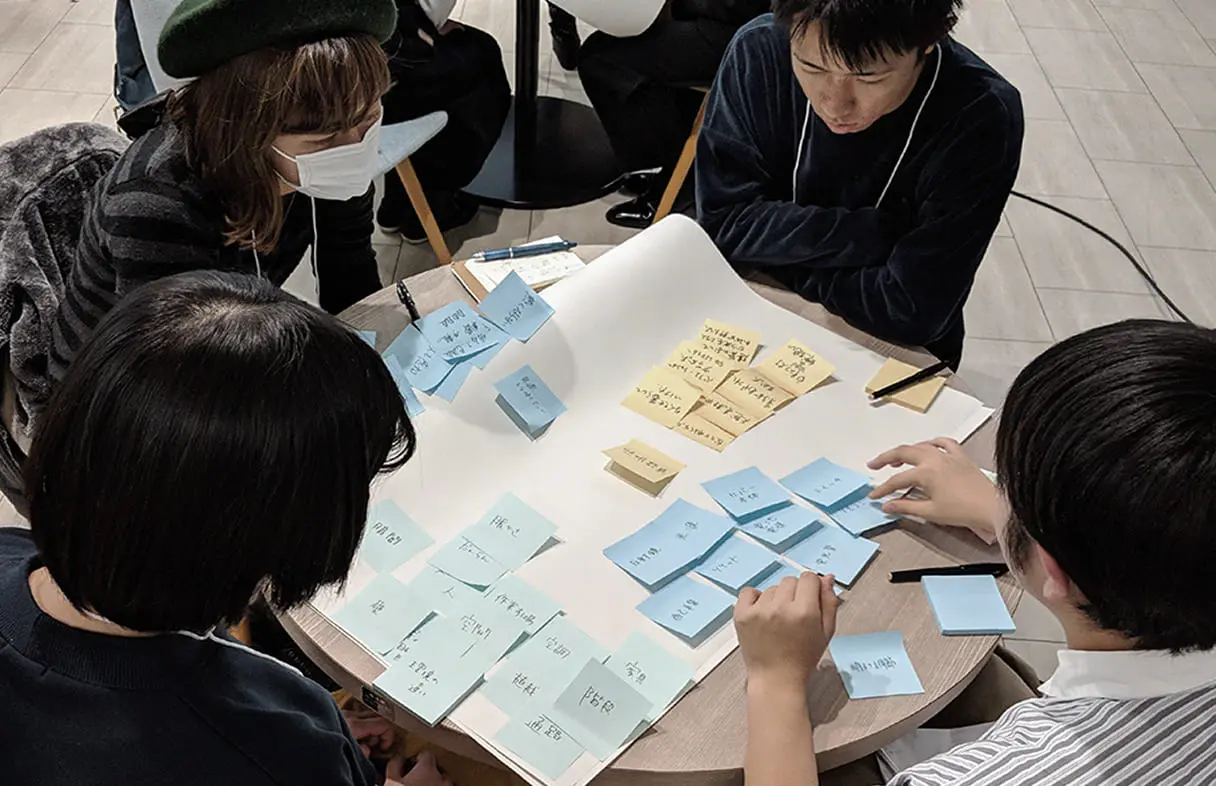
এই বইটি কোম্পানি এবং বিশ্ববিদ্যালয়ের সৃজনশীলতা কর্মশালা থেকে উৎপন্ন হয়েছে এই সুবিধা কাজে লাগিয়ে, এতে ৫০টি কর্মশালা রয়েছে যা সৃজনশীল চিন্তাভাবনাকে উৎসাহিত করে। এটি শুধুমাত্র পড়ার জন্য একটি পাঠ্যবই না হয়ে, আপনি আপনার সৃজনশীল ধারণাগুলোকে অনুশীলনে প্রয়োগ করার চেষ্টাও করতে পারেন। বইটি ৫০০ পৃষ্ঠার বেশি দীর্ঘ হওয়া সত্ত্বেও, এটি পড়তে সহজ এবং ব্যবহার করতে সুবিধাজনক। এটি "সৃজনশীলতা" এবং "জৈবিক বিবর্তন" বিষয়ক তথ্য খোঁজার জন্য একটি নিয়মিত রেফারেন্স বা বিশ্বকোষ হিসেবে ব্যবহার করা যেতে পারে।

WHY
সৃজনশীলতা কি শুধুমাত্র প্রতিভাবানদের মধ্যে সীমাবদ্ধ?
আমাদের চাহিদার পিছনে ছুটতে গিয়ে, আমরা মানুষেরা সৃজনশীল হয়ে উঠেছি এবং সব ধরনের যন্ত্র আবিষ্কার করেছি, যার ফলে আমাদের সভ্যতার উন্নয়নে অবদান রেখেছি। এর গুরুত্ব সত্ত্বেও, সৃজনশীলতাকে সাধারণত একটি জন্মগত ক্ষমতা হিসেবে বিবেচনা করা হয় যার জন্য প্রাকৃতিক প্রতিভা প্রয়োজন। সৃজনশীলতা কি এমন কিছু যা আপনি শিখতে পারেন না?
রেমন্ড ক্যাটেলের "ক্রিস্টালাইজড এবং ফ্লুইড ইন্টেলিজেন্স"

২০৩০ এজেন্ডার মধ্যবিন্দুতে ব্যক্তিগত এসডিজি লক্ষ্যগুলির অবস্থা

জাপানি ছাত্রছাত্রীদের চার্ট যারা মনে করে তারা সৃজনশীল

অসংখ্য মানুষ আছে যারা মনে করে তাদের কোনো সৃজনশীল প্রতিভা নেই কারণ তারা শিল্পকলার ক্লাসে ভালো ছবি আঁকতে পারেনি, ইত্যাদি। একটি হতাশাজনক সমীক্ষায় দেখা গেছে যে জাপানের কলেজ শিক্ষার্থীদের মধ্যে মাত্র আট শতাংশ মনে করে যে তারা সৃজনশীল।
আমরা কি সত্যিই সৃজনশীলতা সম্পর্কে পুঙ্খানুপুঙ্খ ধারণা রাখি? যখন আমরা এ বিষয়ে চিন্তা করি, তখন আমরা উপলব্ধি করতে পারি যে সৃজনশীলতা কীভাবে কাজ করে এবং কীভাবে আমরা এর জন্য প্রশিক্ষিত হতে পারি সে বিষয়ে আমরা কত কমই জানি। যদি আমরা সৃজনশীলতার অন্তর্নিহিত কার্যপ্রণালী বুঝতে পারি, তাহলে আমরা হয়তো তা অর্জন করতে পারব।
সাম্প্রতিক বছরগুলোতে, স্কুলগুলো সক্রিয় শিক্ষা এবং অনুসন্ধান-ভিত্তিক শিক্ষার মতো শিক্ষার্থীদের সক্রিয় অংশগ্রহণ সম্পর্কে চিন্তাভাবনা শুরু করেছে। এটি ক্লাসের বিষয়ের প্রচলিত কাঠামোর দ্বারা সীমাবদ্ধ নয় এমন সৃজনশীলতা এবং অনুসন্ধিত্সু মন গড়ে তোলার জন্য। এমনকি ব্যবসায়িক জগতেও, সৃজনশীলতাকে উদ্দীপিত করে এমন চিন্তাভাবনার পদ্ধতিগুলো আরও বেশি মনোযোগ পাচ্ছে।
যদি আমাদের আরও বেশি মানুষ সৃজনশীল প্রকল্প শুরু করে, তাহলে তা একটি আরও টেকসই সমাজ এবং বিভিন্ন সামাজিক সমস্যার মৌলিক সমাধানের দিকে পরিচালিত করবে। এই লক্ষ্যে, আমাদের সৃজনশীলতাকেই বুঝতে হবে এবং সৃজনশীলতা সম্পর্কে পদ্ধতিগতভাবে শেখার জন্য একটি তত্ত্ব এবং একটি শিক্ষা কর্মসূচি প্রতিষ্ঠা করতে হবে।
WILL
সৃজনশীল শিক্ষাদান হালনাগাদ করা এবং একটি অস্থায়ী বিশ্বকে অতিক্রম করা।
বিবর্তনীয় সৃজনশীলতা বিশ্বের সবচেয়ে শক্তিশালী উদ্ভাবন পদ্ধতি হিসেবে ব্যাপক স্বীকৃতি ও গ্রহণযোগ্যতা অর্জন করেছে, যা Panasonic, Fujitsu, Sumitomo House এবং Keio University-র মতো প্রধান জাপানি কোম্পানি এবং শিক্ষা প্রতিষ্ঠানসমূহ গ্রহণ করেছে। এই পদ্ধতিটি এমনকি Doshisha University-র জাতীয় ভাষার প্রবেশিকা পরীক্ষায় একটি প্রশ্ন হিসেবে অন্তর্ভুক্ত করা হয়েছে। যতই ব্যক্তিরা এই সৃজনশীল চিন্তাভাবনা গ্রহণ করে এবং টেকসইতার জন্য রূপান্তরকারী প্রকল্প তৈরি করছে, বিবর্তনীয় সৃজনশীলতার পরিধি ক্রমাগত সম্প্রসারিত হচ্ছে। এমনকি জাপানের অগ্রণী AI-এর বিশেষজ্ঞরা তাদের কাজে বিবর্তনীয় সৃজনশীলতার নীতিমালা অন্তর্ভুক্ত করছেন, এবং চিড়িয়াখানায় প্রাণীদের নিয়ে দেশের সবচেয়ে বড় পরিবেশগত প্রদর্শনীতে এই পদ্ধতি ব্যবহার করে কর্মশালা অনুষ্ঠিত হয়েছে। বিবর্তনীয় সৃজনশীলতা ক্রমান্বয়ে বিস্তৃত ক্ষেত্রে প্রবেশ করছে, এবং এর প্রভাব ক্রমাগত বৃদ্ধি পেতে থাকবে।
বিবর্তনীয় সৃজনশীলতার প্রারম্ভিক সাফল্য এবং স্বীকৃতি সত্ত্বেও, প্রকৃতির নিয়ম থেকে অনুপ্রেরণা নিয়ে প্রকৃত সৃজনশীল শিক্ষা প্রকল্প বাস্তবায়ন এখনও প্রাথমিক পর্যায়ে রয়েছে।
প্রযুক্তির মাধ্যমে মানবতা যেমন অগ্রসর হচ্ছে, তেমনি আমরা ভূতত্ত্ব এবং জলবায়ুর আমূল পরিবর্তনের পাশাপাশি বাস্তুতন্ত্রের পতনের পরিণতিরও সম্মুখীন হচ্ছি। আমরা "অ্যানথ্রোপোসিন" যুগে প্রবেশ করেছি, একটি ভূতাত্ত্বিক যুগ যেখানে মানুষের কার্যকলাপ পৃথিবীর উপর গভীর প্রভাব ফেলে। আমাদের সভ্যতা "গ্রহীয় সীমানা" অতিক্রম করে ফেলেছে, যে বিন্দুতে অপরিবর্তনীয় এবং আকস্মিক পরিবেশগত পরিবর্তন একটি বাস্তব সম্ভাবনা হয়ে ওঠে, সময় অত্যন্ত গুরুত্বপূর্ণ। আমাদের বেঁচে থাকা নিশ্চিত করতে এবং একটি টেকসই ভবিষ্যতের পথ প্রশস্ত করতে বিবর্তনীয় সৃজনশীলতার মতো উদ্ভাবনী এবং কার্যকর শিক্ষা পদ্ধতি বাস্তবায়ন করা অত্যন্ত গুরুত্বপূর্ণ।


মানবতার সৃজনশীলতার সংকীর্ণ প্রকাশ সভ্যতার পতনের সংকটের দিকে নিয়ে গেছে, তবুও আমাদের সৃজনশীলতাই পৃথিবীতে আমাদের বেঁচে থাকার একমাত্র উপায়। এটি অপরিহার্য যে আমরা সৃজনশীলতার মূল সারটি অনুধাবন করি এবং বিভিন্ন সমস্যা সমাধানে এবং একটি টেকসই সমাজ গঠনে এর সম্পূর্ণ সম্ভাবনাকে কাজে লাগাই। এখনই আমাদের সৃজনশীলতার গভীর বোঝাপড়ায় প্রবেশ করার এবং মানুষ ও পরিবেশের মধ্যে সহাবস্থান প্রচারকারী সমাধানে এটি প্রয়োগ করার সময়।
উনিশ শতকে উন্নতি লাভকারী প্রাথমিক শৈশব শিক্ষার পথপ্রদর্শক ফ্রিডরিশ ফ্রোবেল প্রাকৃতিক বিজ্ঞান থেকে অনুপ্রেরণা নিয়ে সৃজনশীলতা শিক্ষার ভিত্তি স্থাপন করেছিলেন এবং পরবর্তীতে বাউহাউসের মতো আন্দোলনের উপর উল্লেখযোগ্য প্রভাব বিস্তার করেছিলেন। তবে ফ্রোবেল এবং বাউহাউসের যুগান্তকারী কাজ সত্ত্বেও, সৃজনশীলতা শিক্ষা গত শতাব্দীর জন্য মূলত অপরিবর্তিত রয়েছে। আমাদের লক্ষ্য হল এই শিক্ষাক্ষেত্রটিকে বিকশিত ও পুনরুজ্জীবিত করা, সমাজ ও পরিবেশের ক্রমপরিবর্তনশীল প্রয়োজনের সাথে তাল মিলিয়ে চলার জন্য।
আমরা বিশ্বাস করি যে বিবর্তনীয় সৃজনশীলতার দৃষ্টিভঙ্গি দিয়ে সৃজনশীলতা শিক্ষাকে হালনাগাদ করে আমরা ব্যক্তিদের আমাদের সময়ের জরুরি সামাজিক সমস্যাগুলি সৃজনশীলভাবে মোকাবেলা করতে এবং প্রতিটি সম্প্রদায়ের প্রতিটি ব্যক্তির সৃজনশীলতাকে সর্বোচ্চ মাত্রায় বৃদ্ধি করতে ক্ষমতায়িত করতে পারি। নতুন ও উদ্ভাবনী উপায়ে চিন্তা ও কাজ করার সরঞ্জাম দিয়ে ব্যক্তিদের সজ্জিত করে আমরা মানবতার মুখোমুখি মহান চ্যালেঞ্জগুলি সমাধানের দিকে কাজ করতে এবং সকলের জন্য একটি উন্নত ভবিষ্যৎ গড়তে পারি।

বইটি " Evolutional Creativity " প্রি-অর্ডারের জন্য বিক্রয়ে আসার পরপরই Amazon-এর ব্যবসা এবং অর্থনীতির বই র্যাঙ্কিংয়ে ১ নম্বর স্থান অধিকার করেছে, এবং প্রকাশের আগেই দ্রুত পুনর্মুদ্রণ করা হয়েছে। প্রত্যেকের মধ্যে সুপ্ত সৃজনশীলতাকে জাগ্রত করে এমন এই নতুন চিন্তাধারাটি কী?
সম্পর্কিত সাইট /
The Evolution of “Evolutional Creativity” (Updated November 2025)
November 2025: Keynote Speech at the 9th Leadership Summit 2025 in Bangladesh
Eisuke Tachikawa took the stage as a keynote speaker at the “Leadership Summit 2025” held in Bangladesh. Held under the theme “Resilient Leadership – Thriving Amid Uncertainty,” this international conference explored the sustainable and ethical leadership required in a rapidly changing society. Tachikawa delivered a speech on the nature of leadership in addressing social issues and environmental changes from the perspective of Evolutional Creativity.
November 2025: Online Presentation at the 12th Anniversary Commemoration of Typhoon Yolanda
Marking the 12th anniversary of Typhoon Yolanda—which caused some of the worst damage ever recorded in the Philippines—Eisuke Tachikawa spoke at a commemorative event held at Eastern Visayas State University. He delivered an online lecture on “Evolutional Creativity” to approximately 400 participants, sharing creative perspectives on how to confront disasters.
November 2025: Delivered a Special Lecture to Graduate Students at Minerva University
At Minerva University—known for its unique educational model that involves learning while moving between seven cities worldwide and having been selected as “the world’s most innovative university”—Eisuke Tachikawa delivered a special lecture on “Evolutional Creativity” to approximately 20 graduate students majoring in “Decision Science.” Students from diverse backgrounds, including current politicians and corporate leaders, visited the Yokohama studio of NOSIGNER—the firm led by Tachikawa—and the lecture lasted three hours due to a lively Q&A session.
October 2025: Presentation at the “Cities of Design Subnetwork Meeting” Conference Hosted by the UNESCO Creative Cities Network (UCCN)
Eisuke Tachikawa spoke at the “Cities of Design Subnetwork Meeting” hosted by the UNESCO Creative Cities Network (UCCN)—which aims to harness culture and creativity for sustainable urban development—at the Bandung Institute of Technology. He participated in a panel discussion themed “Creative City 2.0,” exchanging views on approaches to creativity based on “Evolutional Creativity” and the future of cities adapting to climate change.
September 2025: Keynote Speech at the International Design Conference (IDC) 2025 in the Philippines
Eisuke Tachikawa delivered a keynote speech at the International Design Conference (IDC) 2025, organized by the Design Center of the Philippines, the government agency responsible for promoting design in the Philippines. Invited as a keynote speaker to the conference, which featured a diverse lineup of speakers including consultants, designers, researchers, and business executives under the theme “Holding the Whole,” he delivered a keynote address on creativity education based on “Evolutional Creativity” and the ideal form of cities adapting to climate change.
July 2025: Received the Highest Academic Award from Bandung Institute of Technology
He was awarded the “GANESA WIDYA JASA ADIUTAMA Award,” the highest academic honor bestowed by the Bandung Institute of Technology (ITB) in Indonesia for outstanding contributions to knowledge and education. This prestigious award is granted to only two individuals following a rigorous selection process from candidates nominated by each faculty; he was selected based on a nomination from the Faculty of Art and Design (FSRD).
November 2024: Publication of the Indonesian Edition of *Evolutional Creativity*
The Indonesian edition of the book *Evolutional Creativity* was published by the Indonesian publishing house “SiMPUL” under the supervision of the Bandung Institute of Technology (ITB), one of Indonesia’s leading universities.
Additionally, to commemorate the book’s publication, an exhibition and commemorative lecture were held at the ITB Design Center, and an exhibition and workshop were also held at the Jakarta art space “
April 2024: 3rd Anniversary of the Publication of “Evolutional Creativity”
“Evolutional Creativity,” systematized by its proponent, Eisuke Tachikawa, after years of exploration, has continued to evolve even today, having received a wide range of feedback—including support, encouragement, criticism, and suggestions—from many people since the first edition of the book was published.
Furthermore, a reader community formed by over 100 enthusiastic readers remains actively engaged, and the principles of Evolutional Creativity are being put to practical use in the work and daily lives of its practitioners.
March 2024: Lecture at the Ministry of Economy, Trade and Industry for Stanford Business School Students
Tachikawa delivered a lecture on Japanese design and Evolutional Creativity to approximately 30 students and faculty members from Stanford Graduate School of Business at the Ministry of Economy, Trade and Industry. This lecture was part of the school’s study tour to Japan, a program designed to explore the relationship between Japan’s rapid economic growth and design, as well as the current state of startups.
December 2023: Publication of *Evolutional Creativity [Expanded and Revised Edition]*
With biological supervision provided by evolutionary biologist Masaki Kawata (Professor by Special Appointment to the President at Tohoku University),
October 2023: Paper Presentation at the World Design Assembly International Conference
At the
September 2023: Exhibition Held at the Taiwan Design Museum
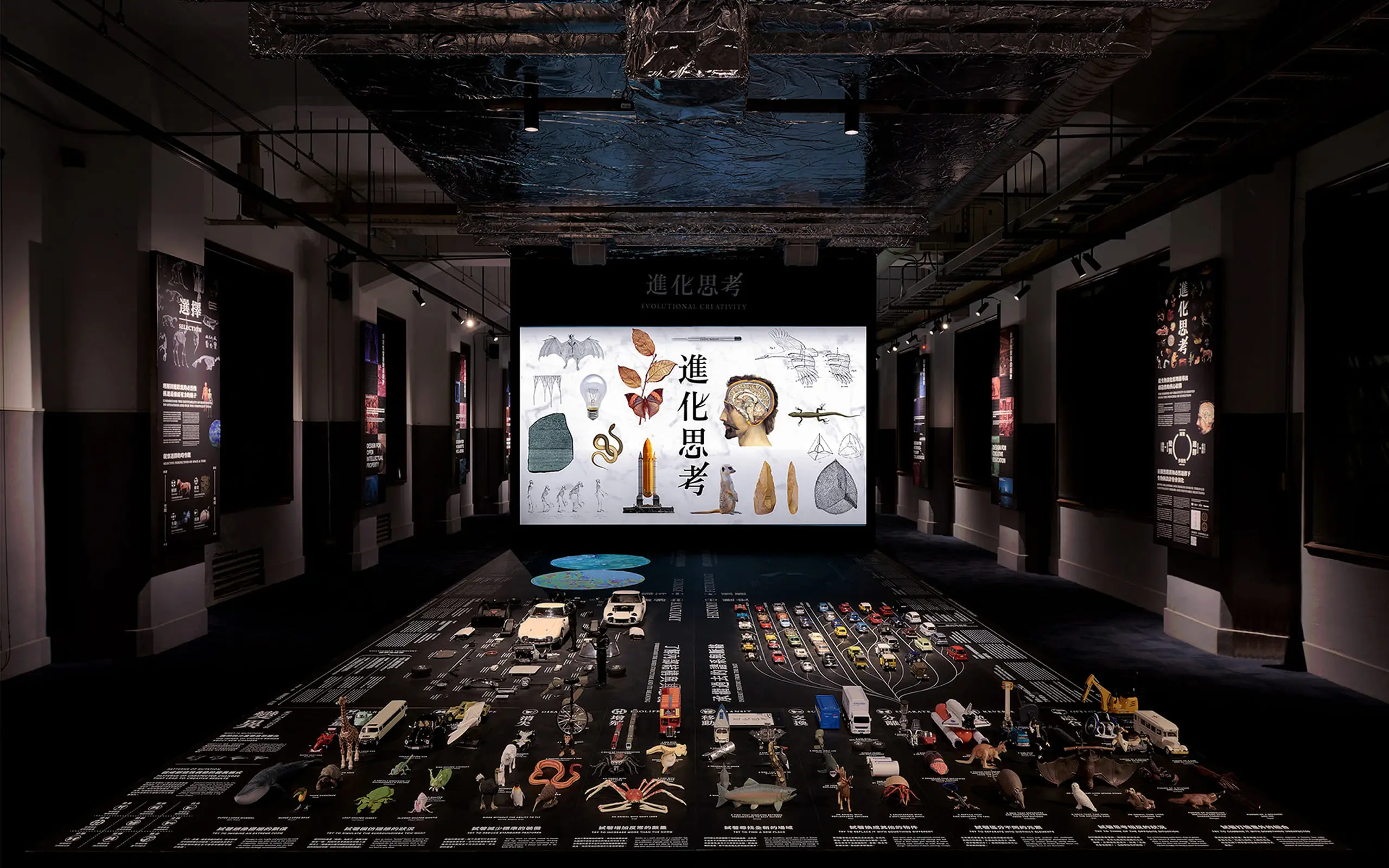
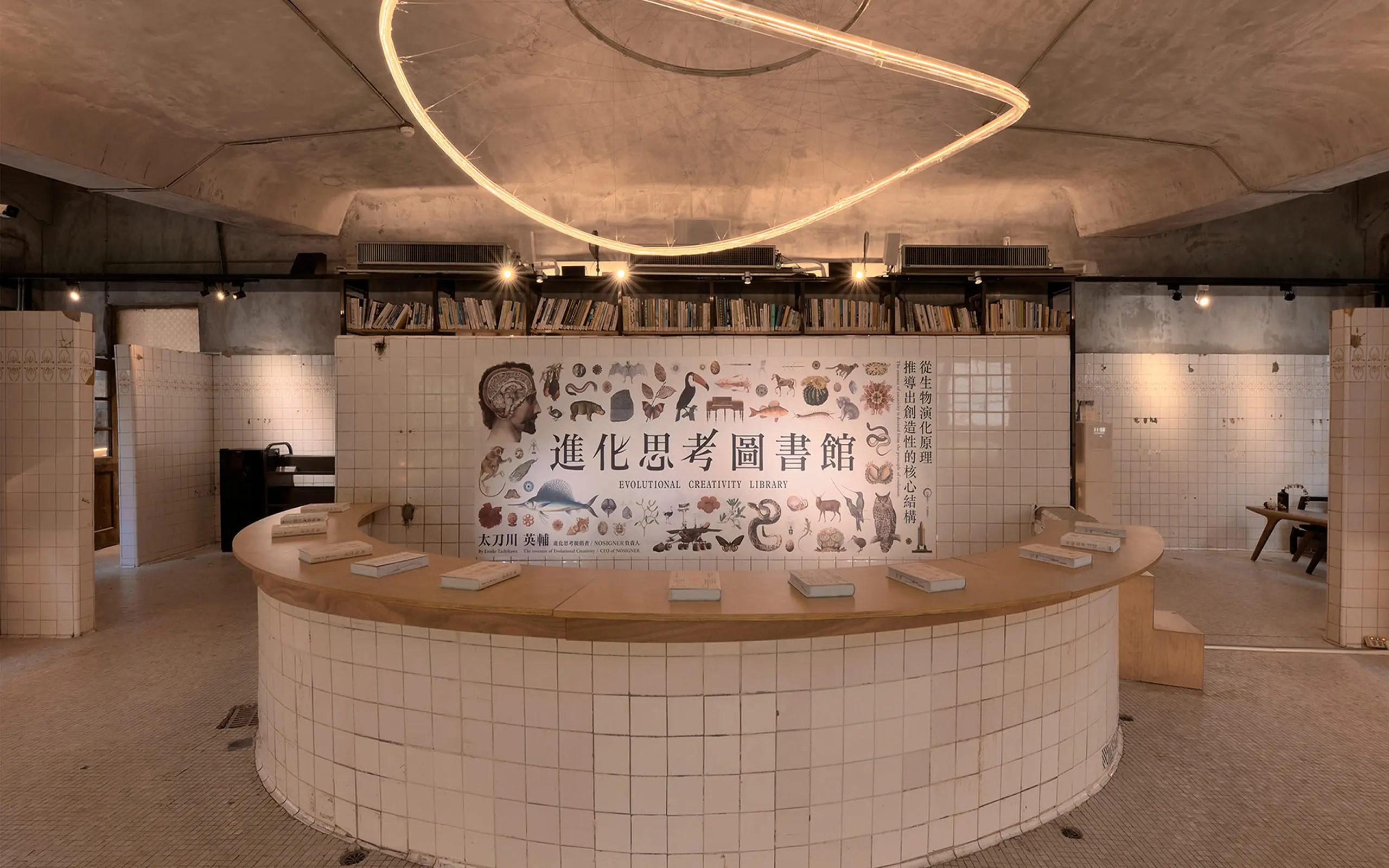
Coinciding with the publication of the Taiwanese edition of the book *Evolutional Creativity*, an exhibition by NOSIGNER titled
September 2023: Publication of the Taiwanese Edition of “Evolutional Creativity”
Following the Korean edition, the
June 2023: Publication of the Korean Edition of “Evolutional Creativity”
The
May 2023: Presentation at a Conference Hosted by UNESCO-MGIEP
Tachikawa was invited to speak at the conference “Education for Flourishing in a Mixed Reality,” organized by UNESCO-MGIEP (the United Nations Educational, Scientific and Cultural Organization’s Mahatma Gandhi Institute of Education for Peace and Sustainable Development), which brought together renowned scholars, researchers, teachers, policymakers, and representatives from the private sector from around the world. He delivered a presentation on “Evolutional Creativity” during the “Design Thinking and Creativity in Education” session. This conference was also the first international conference based on the Sustainable Flourishing Goals.
March 2023, August 2023: Lecture at the Bandung Institute of Technology (ITB), Indonesia
Tachikawa delivered a lecture on Evolutional Creativity at the Bandung Institute of Technology (ITB), Indonesia’s premier institution of higher learning. Due to the positive reception of this content, it was decided to publish an Indonesian-language edition of “Evolutional Creativity.” Following the
March 2023: Chaired the “Thinking About the Future of Higher Education” Forum
Eisuke Tachikawa served as chair of the “Thinking About the Future of Higher Education” forum, organized by the Benesse Educational Research Institute, where members engaged in cutting-edge educational practices discussed the future of university education. After four rounds of roundtable discussions with committee members, a proposal outlining a vision for university education that envisions a hopeful future was compiled. Under the new educational guiding principle, “
November 2022: Received the “Shu Yamaguchi Award” at the Pen Creator Awards
Eisuke Tachikawa received the “Shu Yamaguchi Award” at the “
November 2022: Appeared in an NHK program for a dialogue with anatomist Takeshi Yoro
He appeared alongside anatomist Takeshi Yoro on the popular NHK program “Switch Interview,” in which two people working in different fields visit each other’s workplaces and conduct a dialogue while “switching” between the roles of speaker and listener. In the second part of the program, I invited Dr. Yoro—who has spent nearly 60 years since his student days exploring “the forms of living things”—to the NOSIGNER studio. While introducing the concept of “Evolutional Creativity,” I spoke about my work as a designer who has pursued form through various approaches.
June 2022: Project to Launch Revised Edition of
A project to publish a revised edition has begun, aiming to further refine the book as a method of creative thinking and accurately incorporate scientific insights. For this revision, we invited Professor Masaki Kawata, a professor on special assignment to the President at Tohoku University and an expert in evolution and ecology, to serve as supervising editor, accompanying the evolution of the “Evolutional Creativity” book. A new book by Professor Kawata explaining evolutionary biology was recently published, so please take a look at that as well.
For the author as well, this was an invaluable opportunity to deeply re-learn evolutionary biology from such a distinguished expert as Professor Kawata.
May 2022: Dialogue with Nobel Laureate Dr. Akira Yoshino
At an event commemorating Asahi Kasei’s 100th anniversary, I had the honor of engaging in a dialogue with Dr. Akira Yoshino (Asahi Kasei Honorary Fellow), the inventor of the lithium-ion battery and Nobel Laureate in Chemistry. The video of Tachikawa’s lecture on “Evolutional Creativity” and his dialogue with Dr. Yoshino was streamed to approximately 40,000 Asahi Kasei Group employees. This event not only fulfilled Tachikawa’s long-held wish to engage in a dialogue with Dr. Yoshino but also served as an opportunity to convey the message to everyone at Asahi Kasei that “it is the ‘curiosity’ and ‘knowledge’ of each individual that enriches imagination and shapes the next 100 years.”
March 2022: Appeared on NHK E-Tele’s “Night of Radical Modifications: Engineer Training School”
Eisuke Tachikawa appeared as a “Design (Creation) Instructor” on NHK E-Tele’s popular program “Night of Radical Modifications: Engineer Training School.” With the theme of “Magic Modification of a Blender,” he led a brainstorming workshop to create a “blender that shoots juice far away,” introducing the nine “mutation” patterns from “Evolutional Creativity” as hints for generating ideas.
February 2022: Received a Special Award at the “IT Engineer Book Awards 2022”
In the business book category of the
2022–2023: Adopted in School Entrance Exam Questions
Excerpts from *Evolutional Creativity* were adopted as material for entrance exams at several schools, including as a topic for the Japanese language entrance exam at Doshisha University.
November 2021: Winner of the Yamamoto Shichihei Prize
We received the
While “Evolutional Creativity” has garnered attention as a method for fostering innovators and driving innovation, winning this prestigious Japanese academic award—whose selection committee includes anatomist Takeshi Yoro, evolutionary biologist Mariko Hasegawa, economist Motoshige Ito, political scientist Terumasa Nakanishi, and legal scholar Shuji Yagi—has allowed it to gain recognition from an academic perspective as a new way of thinking that unravels creativity from an evolutionary viewpoint.
April 2021: Publication of the book *Evolutional Creativity*
We published this book with the aim of conveying the concepts and methodology of Evolutional Creativity to a wide audience, including the business sector, and encouraging its application to idea generation across all fields, such as business development, design, and art.
Packed with a wealth of photographs and illustrations on biological evolution and human creativity, as well as 50 “Evolutional Creativity Works” that readers can practice while reading, this book—which comprehensively covers the concepts and practical methods of Evolutional Creativity—became a bestseller. The Evolutional Creativity methodology has spread to major corporations and educational institutions and has even been adopted in entrance exams for universities and high schools.
“Evolutional Creativity” is a concept that Tachikawa had been nurturing for many years prior to the book’s publication in 2021. Below is a summary of the journey leading up to the publication of *Evolutional Creativity*.
2021: Collaboration with NHK’s TV Program “The Direxon”
We collaborated on a project for NHK’s TV program
August 2020: “School of Evolution” Launches
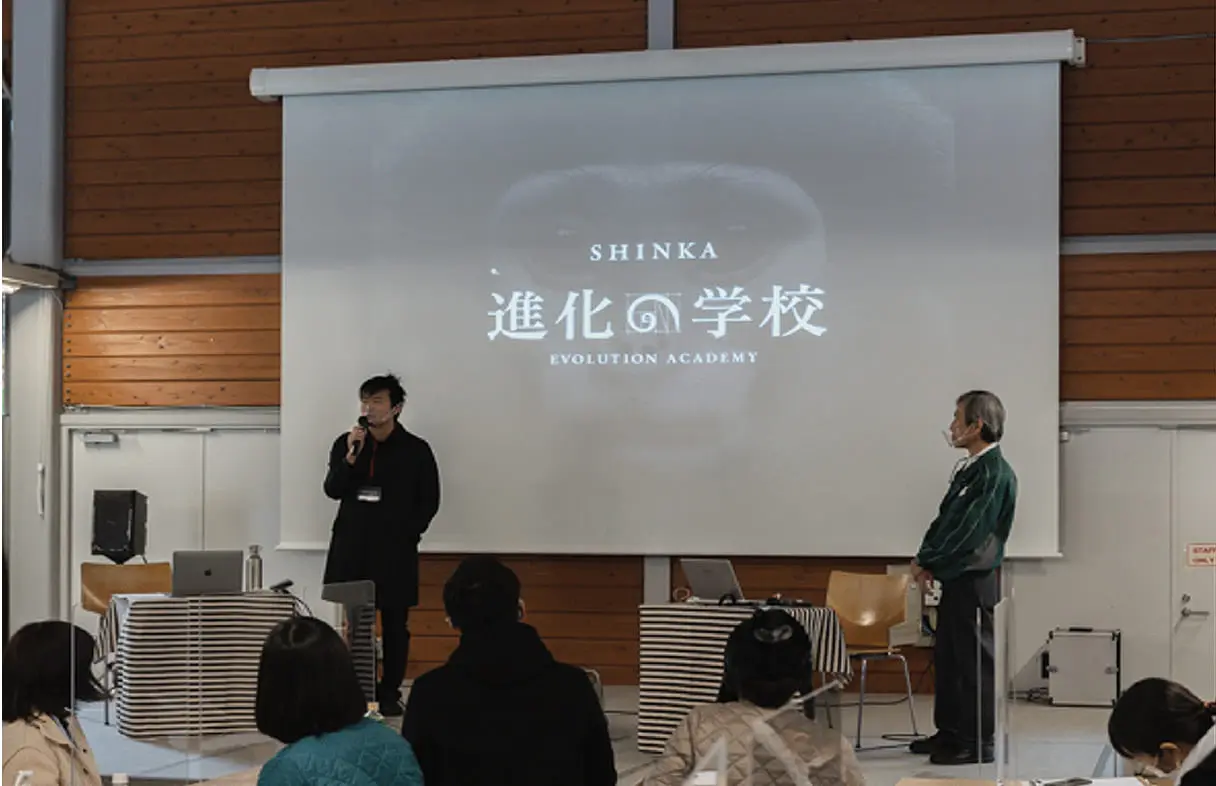
An online course was launched through the voluntary efforts of Takashi Yamada and other members who had studied Evolutional Creativity. The “School of Evolution” began as a course designed to plant the seeds of creativity across various sectors of society. This school is a training program that helps participants refine new ideas for business creation through lectures and workshops on Evolutional Creativity.
The “School of Evolution” has attracted a diverse group of participants, including corporate executives, employees aiming to drive innovation, and school teachers and public servants seeking to engage in creative practice. To date, the program has produced approximately 1,000 graduates.
The program is offered to a wide range of participants, from corporations and organizations to individuals, and is utilized for product development and human resource development. Many graduates continue to meet weekly to explore creativity education through Evolutional Creativity.
2019: Began writing the book *Evolutional Creativity*
After meeting Mr. Abe and Mr. Harada at “Kokuri! Camp,” they decided to launch the publishing house “Ami no Kaze” in Ami Town, Shimane Prefecture. They approached me with the idea of making *Evolutional Creativity* their first book, and thus began a three-year writing process.
September 2018: Paper on “Evolutional Creativity” Published in *DIAMOND Harvard Business Review*
A paper of approximately 10,000 characters summarizing the overview of “Evolutional Creativity” was published in
2018: Launch of the “Evolutional Creativity” Workshop
Having gained many insights through the exhibition, Tachikawa developed “The Grammar of Design” and launched “Evolutional Creativity,” a workshop designed to learn the creative process from biological evolution. At the first workshop held at “Cocri! Camp”—a gathering of leaders and experts from various sectors and fields—he met Takashi Yamada, who would later launch “The School of Evolution”; Yuji Abe, the publisher of *Evolutional Creativity*; and Eiji Harada of Eiji Publishing. Subsequently, the workshop was held at various companies, and “Evolutional Creativity” began to be adopted as an innovation methodology.
September 16–October 31, 2016: Exhibition “No-Designer: Form and Reason”
Tachikawa, who had become interested in the creativity of natural forms—which possess no language—that surpasses that of humans, began exploring the commonalities between biological evolution and human creativity. In the exhibition “No-Designer: Form and Reason,” held at the Ginza Graphic Gallery (ggg), he presented works that contrasted evolution and creation, delving into the reasons behind forms and methods for conceiving design.
2012 Began teaching the course “The Grammar of Design”
After entering the workforce and fully committing to his career as a designer, Tachikawa began teaching “The Grammar of Design” at Musashino Art University, a course that expanded upon the content of his master’s thesis. The course, which later expanded to include sessions for working professionals, gained a strong reputation, leading to its adoption at the University of Tokyo’s i.school and its application in innovation initiatives at various companies.
2006: Wrote Master’s Thesis “Linguistic Cognition of Design”
The origins of Evolutional Creativity lie in Tachikawa’s master’s thesis, “Linguistic Cognition of Design,” which he completed while studying architecture as a graduate student. Focusing on the process by which ideas and concepts emerge—a topic he had long been interested in—the thesis examined this process from a linguistic perspective, based on the assumption that language serves as the trigger for inspiration.

INFORMATION
- What
- Evolutional Creativity
- When
- 2016-
- Where
- Japan
- Scope
- Branding / Branding Strategy / Logo / Edition / Business card / Motion logo / Promotional items / Infographics / Photograph / Book cover and inner page design / Exhibition / Poster / Concept Development
- Award
- The 30th Shichihei Yamamoto Prize2021
- ITB GANESHA WIDYA JASA ADIUTAMA2024
- SDGs





CREDIT
- Inventor
- Eisuke Tachikawa
- Thanks
Amanokaze (kazetotuchito Inc. ),Eiji Press Inc. , NOSIGNER staffs,Ginza Graphic Gallery , Yuichi Hisatsugu, Kunihiko Sato