PROJECT
CRÉATIVITÉ ÉVOLUTIONNAIRE
Méthodologie créative s'inspirant de l'évolution biologique. Adoptée par plus de 70 entreprises and universités, lauréate du Prix Yamamoto Shichihei. Traduite en chinois, coréen, indonésien, se répandant mondialement.
HOW
Systématisation de l'éducation à la créativité en utilisant l'évolution biologique.
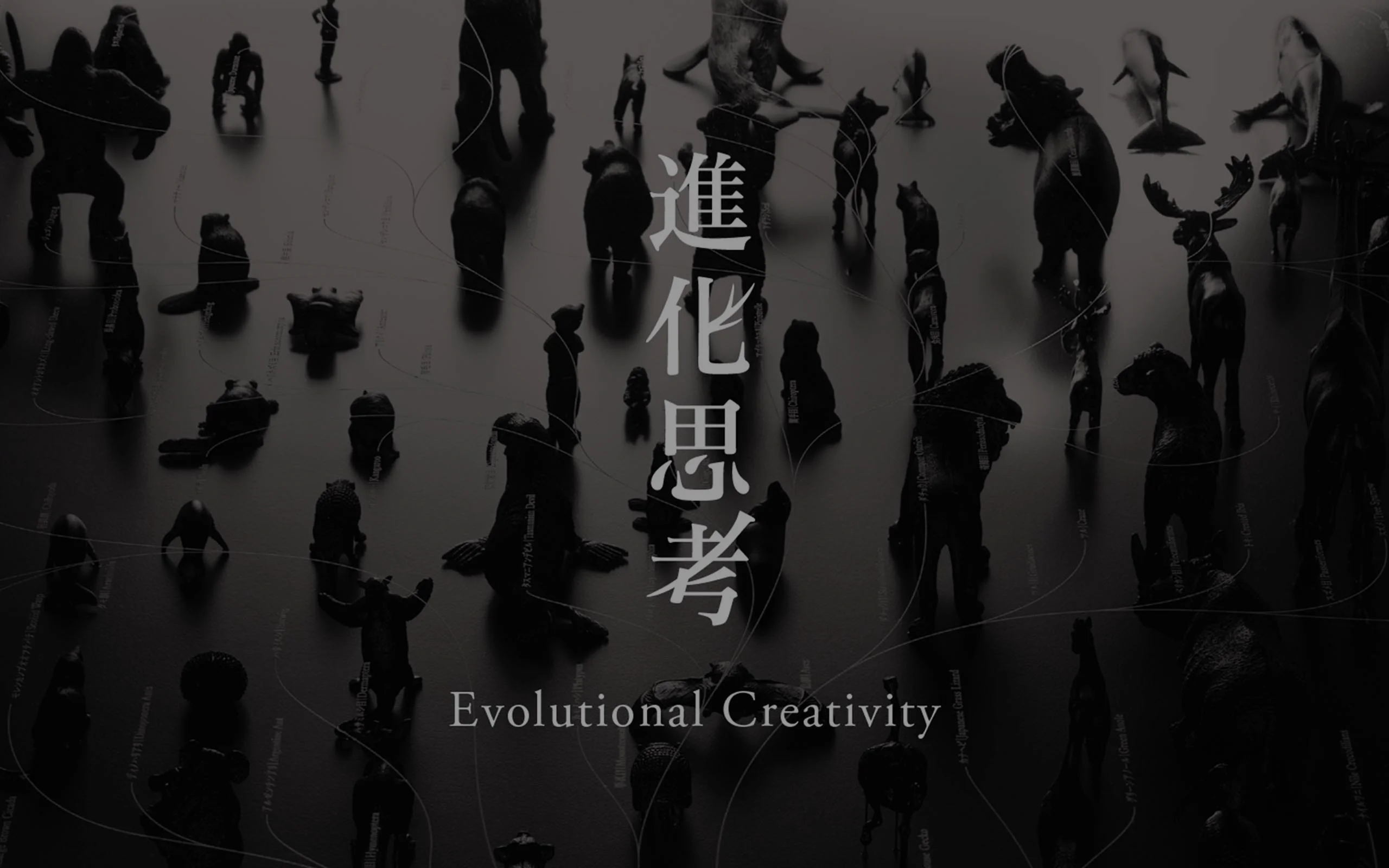
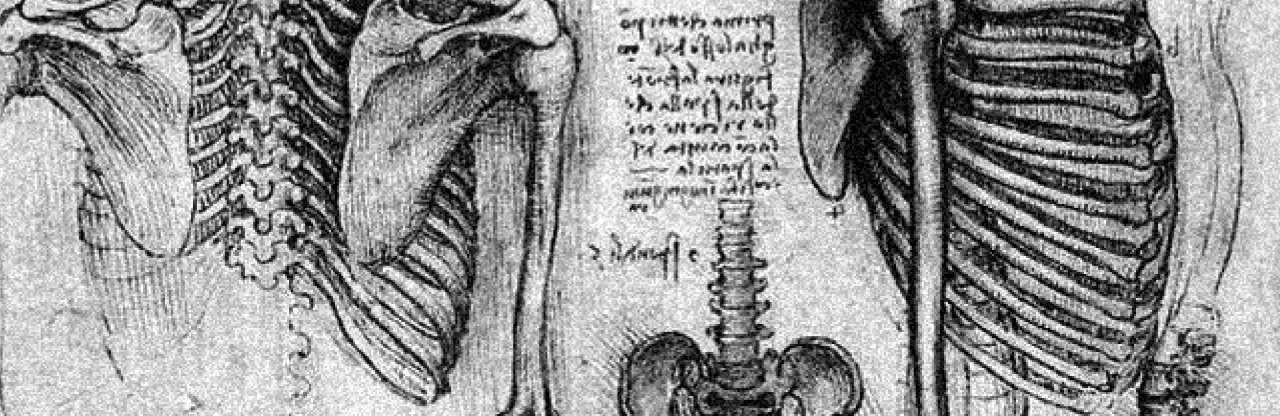
La créativité humaine est si spéciale qu'elle peut être qualifiée de phénomène paranormal dans le monde naturel. Parmi les dizaines de millions d'espèces dans l'histoire de 3,8 milliards d'années de la vie sur Terre, il n'y a aucune autre espèce qui ait démontré notre niveau de créativité. Puisque nous, les humains, faisons également partie de la nature, notre créativité devrait aussi être considérée comme un phénomène naturel.
Pendant ce temps, quand nous regardons les formes dans la nature, nous pouvons penser que la nature est encore plus créative que les humains. Pourquoi cela ?
De cette perspective, Eisuke Tachikawa, le directeur de NOSIGNER, pense que la créativité humaine est un phénomène similaire à l'évolution des êtres vivants. Il a continué d'essayer de structurer la créativité basée sur l'évolution naturelle. Il a ainsi développé la Créativité Évolutionnelle, une méthode de pensée créative systématisée qui applique le fonctionnement de l'évolution des êtres vivants au design et à l'innovation.
Les êtres vivants évoluent par des mutations qui se produisent par coïncidence et par des sélections qui se produisent par nécessité due aux facteurs environnementaux et autres conditions. Ces deux processus se répètent génétiquement pendant des générations.
Si notre créativité fonctionne de la même manière, alors beaucoup des inventions et innovations de l'humanité qui ont révolutionné le monde peuvent être attribuées à ces processus alternants causés par la coïncidence et la nécessité. Il n'y a aucune intention consciente dans les processus coïncidentels et nécessaires. Les deux processus alternent simplement entre eux pour se rapprocher de l'adaptation optimale.
La créativité est quelque chose qui se produit de manière autonome sans dépendre de l'intention consciente du créateur. Basée sur cette idée, la Créativité Évolutionnelle est le processus d'alternance entre les idées Mutées nées de coïncidences folles et non conventionnelles et les idées Sélectives nées de la nécessité de s'adapter aux conditions actuelles. Ce processus de créativité alternante continue pendant des générations.
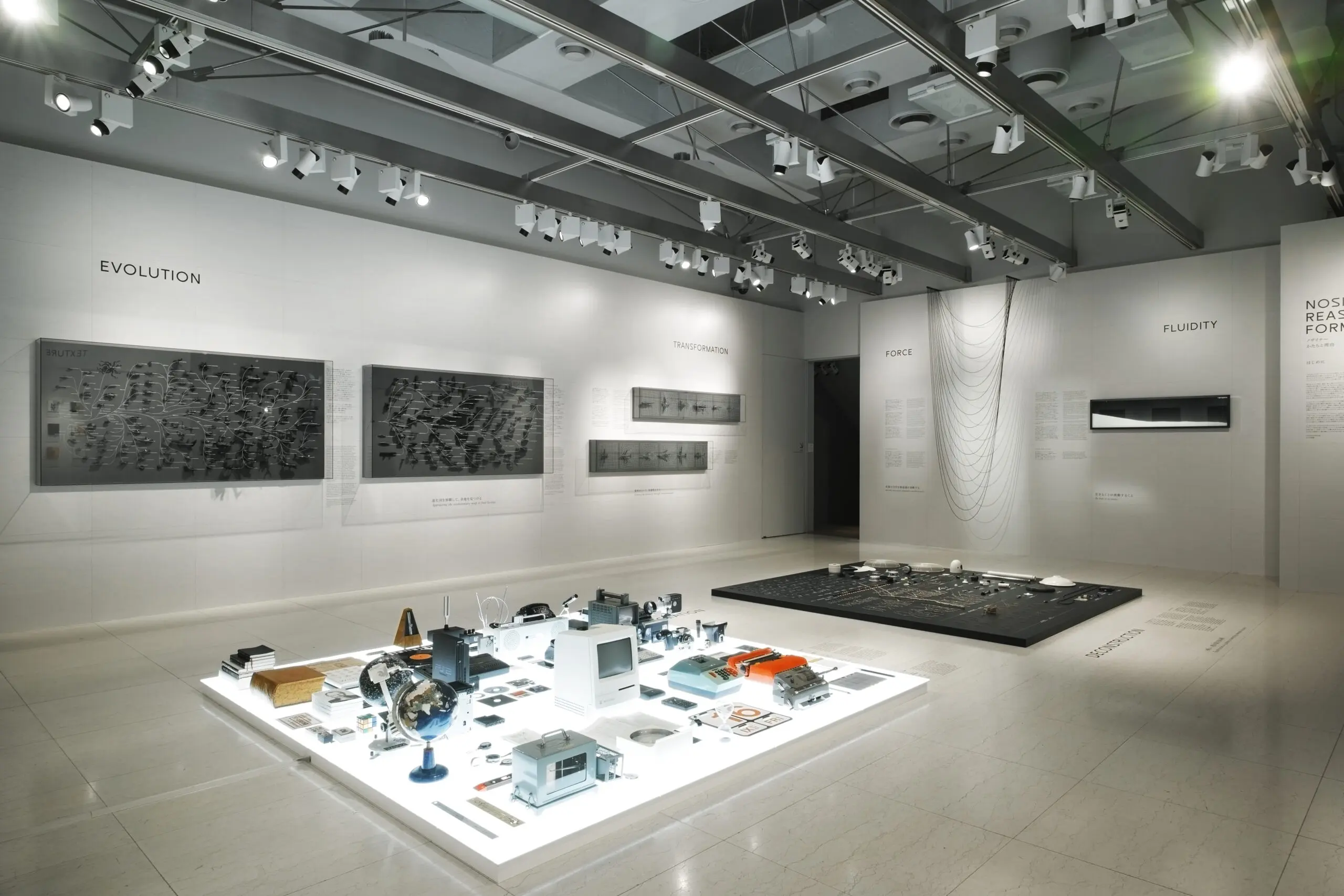

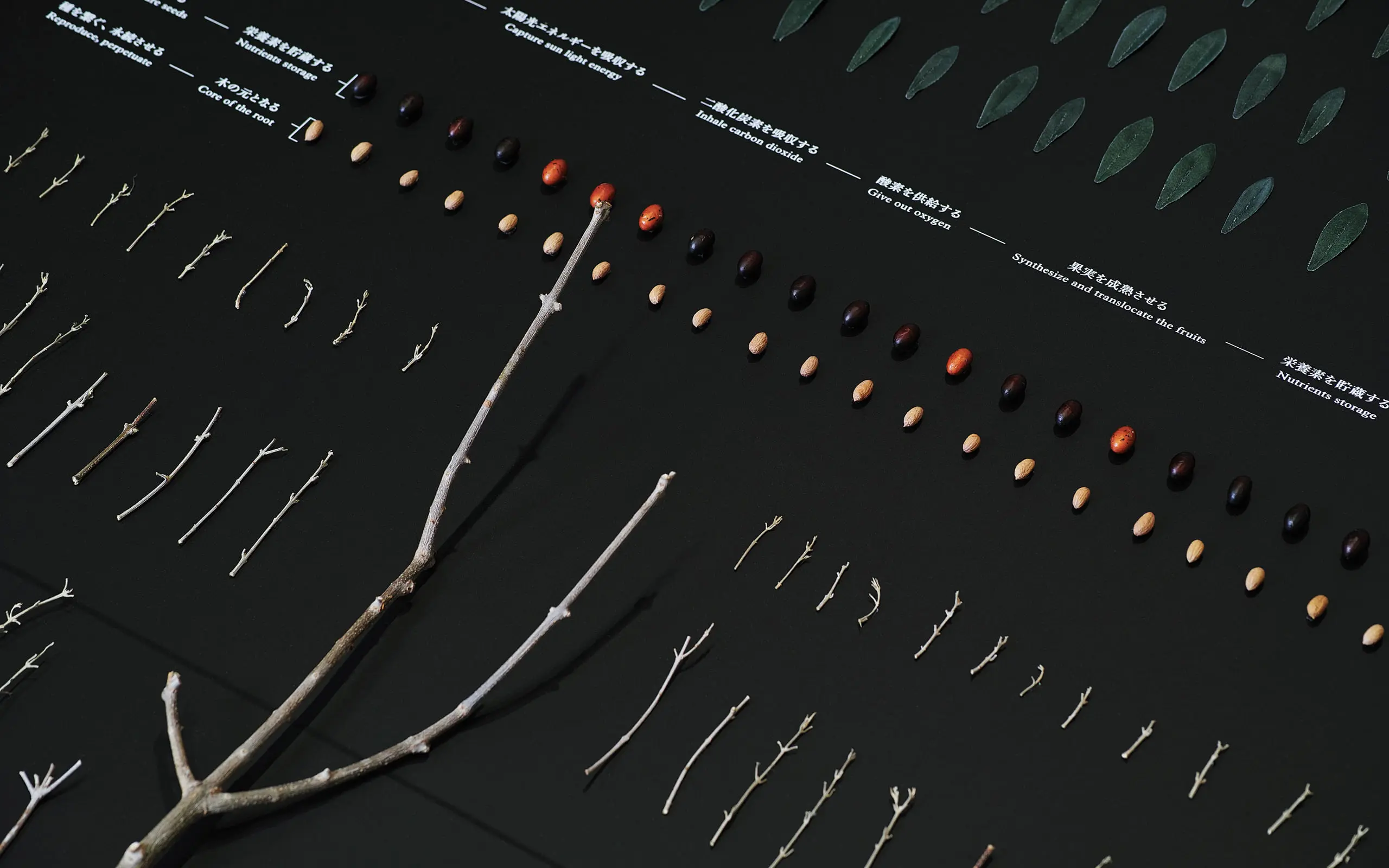
Tachikawa étudie le lien entre le design et le langage, et il croit que la source de la créativité humaine provient du langage. Et la clé de l'évolution des êtres vivants est la mutation de l'ADN qui est très similaire au langage.
Les erreurs de copie de l'ADN peuvent être comparées à la mauvaise prononciation et à la mauvaise compréhension du langage. Basé sur cette hypothèse, Tachikawa théorise que l'évolution et la créativité produisent des modèles similaires de mutation.
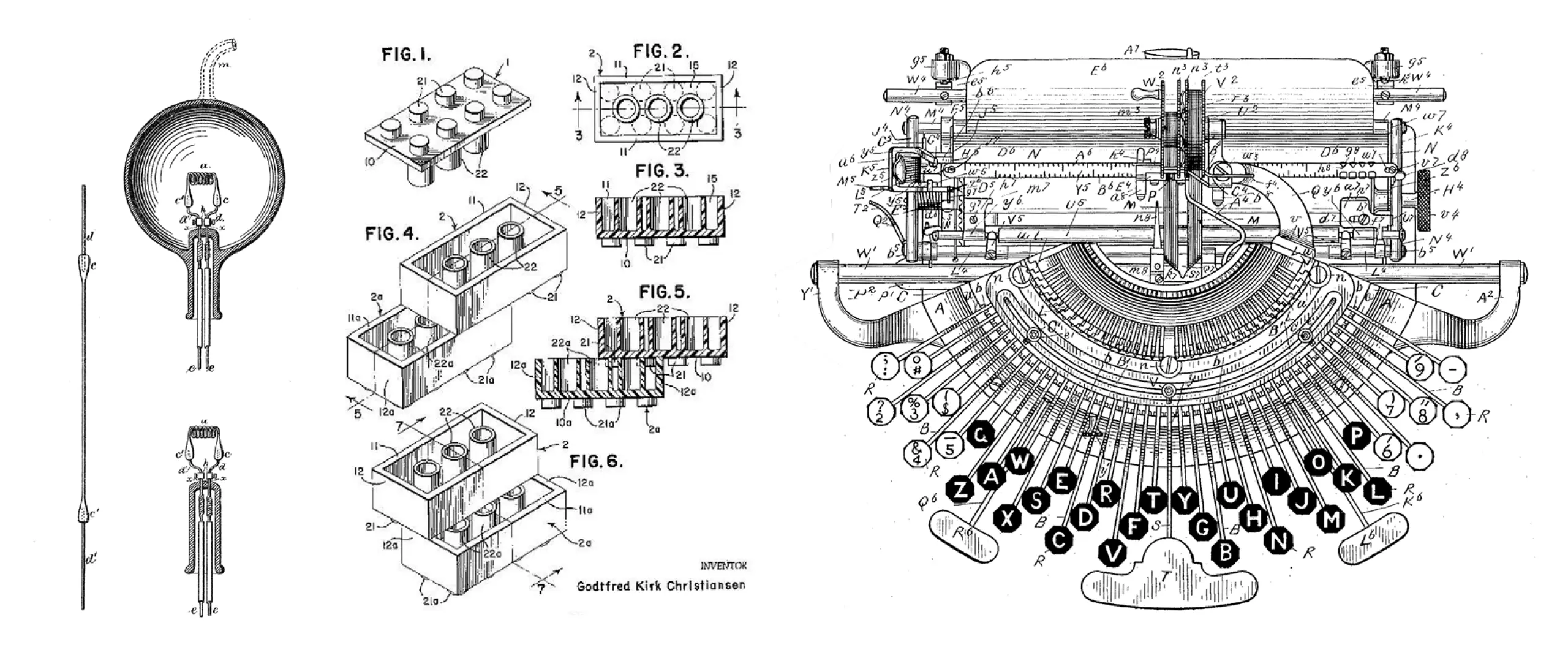
Des modèles similaires trouvés dans l'évolution des êtres vivants sont également évidents dans diverses inventions et cultures humaines. La Créativité Évolutionnelle applique ces modèles similaires au processus créatif. Les erreurs résultant en nouvelles idées sont catégorisées en neuf types.
En utilisant les neuf modèles de mutation de Varier, Disparaître, Intégrer, Inverser, Séparer, Substituer, Assimiler, Transiter, et Proliférer comme outils d'une boîte à outils, nous pouvons générer un grand nombre d'erreurs coïncidentielles pour créer de nombreuses idées en peu de temps. Ce sont des idées mutées.
Alors comment sélectionnons-nous une bonne idée parmi ces types d'erreurs ? Dans le monde naturel, nous pouvons observer comment les êtres vivants font des sélections pour s'adapter à leur environnement. Si nous apprenons de l'approche longuement raffinée du scientifique naturel pour observer le monde naturel, nous pourrions être capables de sélectionner des idées adaptatives.
En étudiant différentes méthodes d'observation dans les sciences naturelles, Tachikawa a remarqué qu'il n'y avait que quatre perspectives englobant à la fois le temps et l'espace. Chacune était un système d'observation biologique établi.
Les quatre perspectives sont l'Anatomie pour comprendre les parties internes, l'Écosystème pour comprendre l'environnement externe, la Lignée pour comprendre le développement de la généalogie, et la Prédiction pour contempler l'avenir avec les deux approches de Prévision et de Rétro-prévision. Il a systématisé ces quatre méthodes Adaptatives et les a nommées Apprentissage Spatio-Temporel. En analysant les conditions à travers ces quatre perspectives englobant le temps et l'espace, nous pouvons comprendre comment la société est pressée de faire les choix inévitables qu'elle fait. Nous pouvons alors les contrer en conséquence en sélectionnant des idées solides.
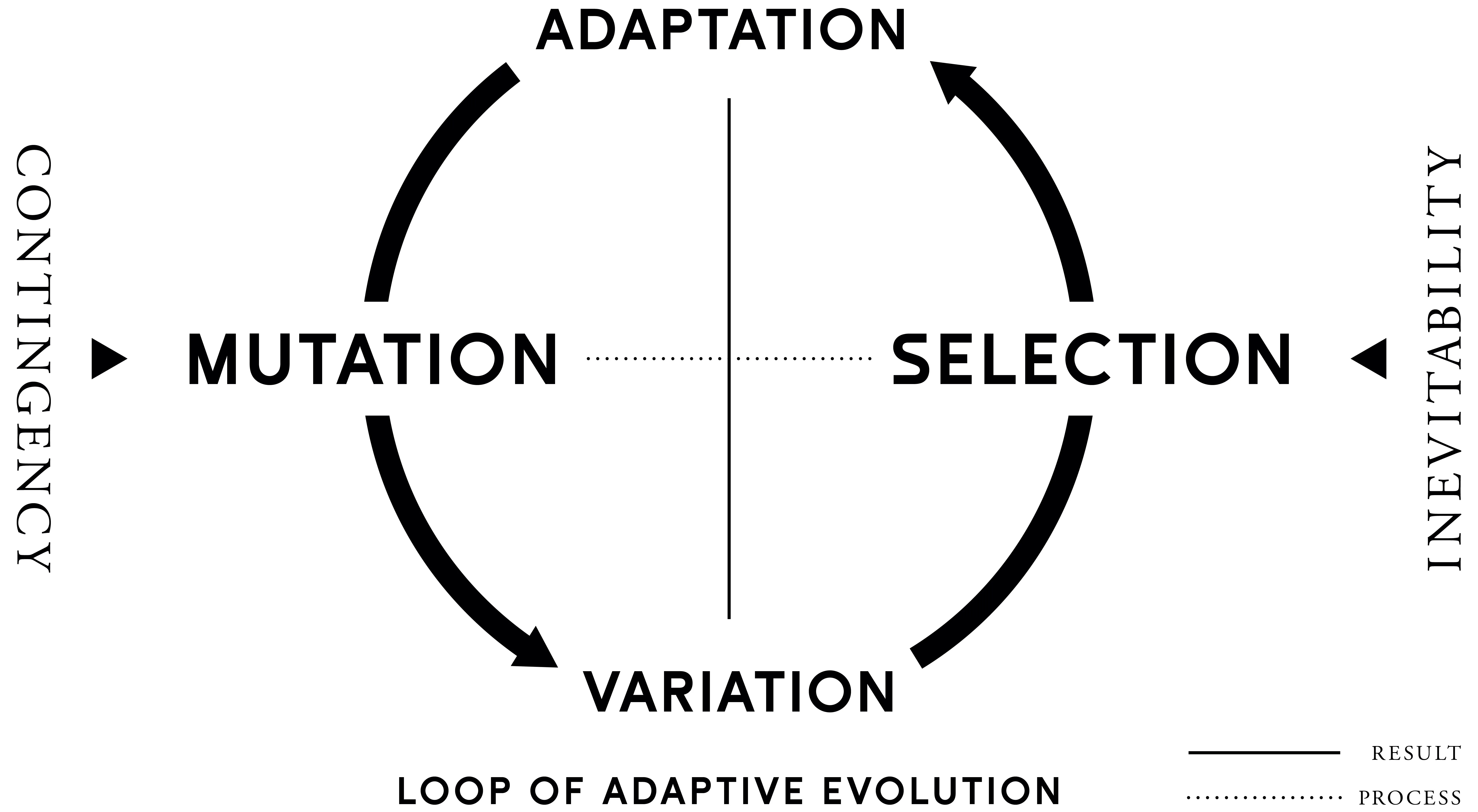
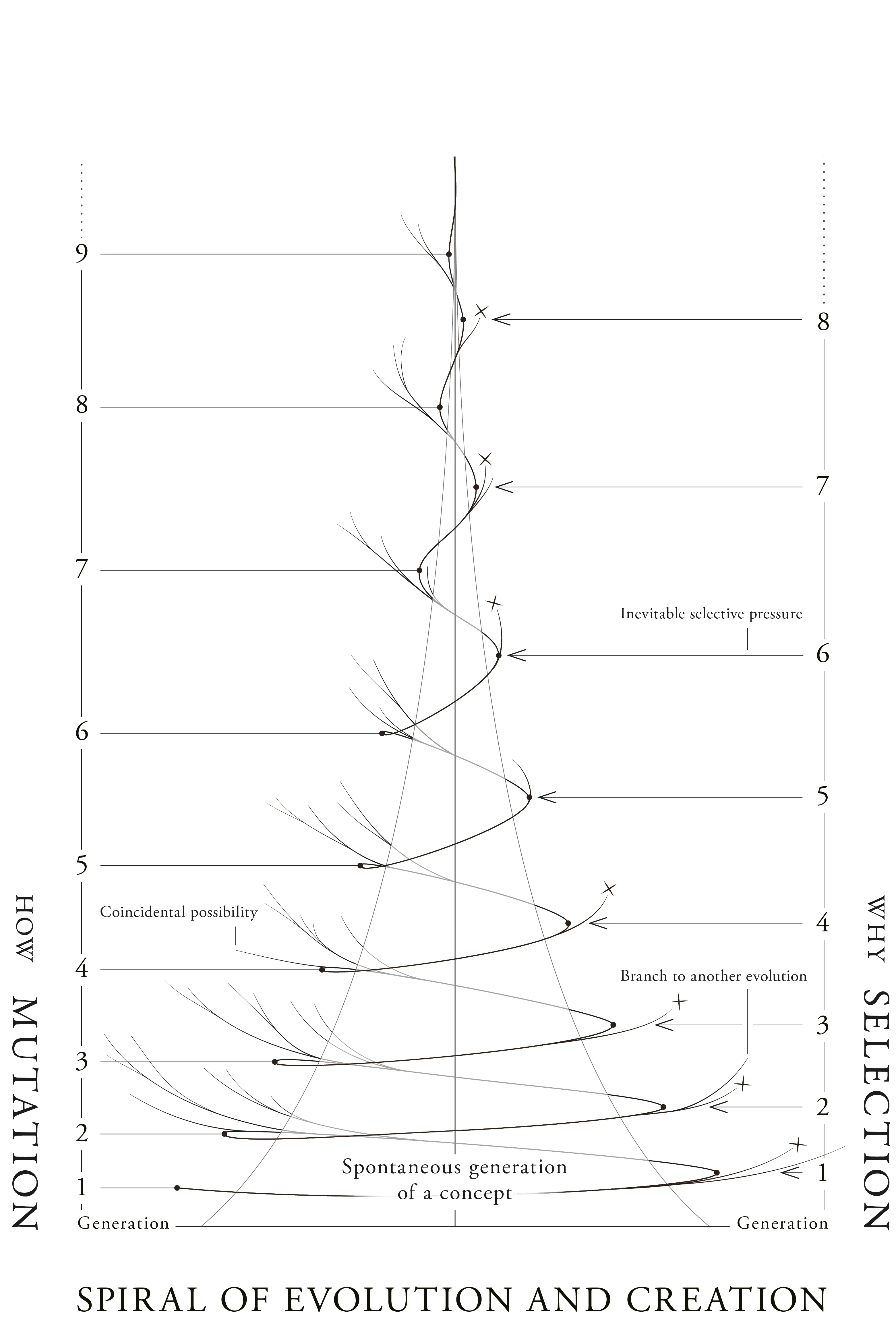
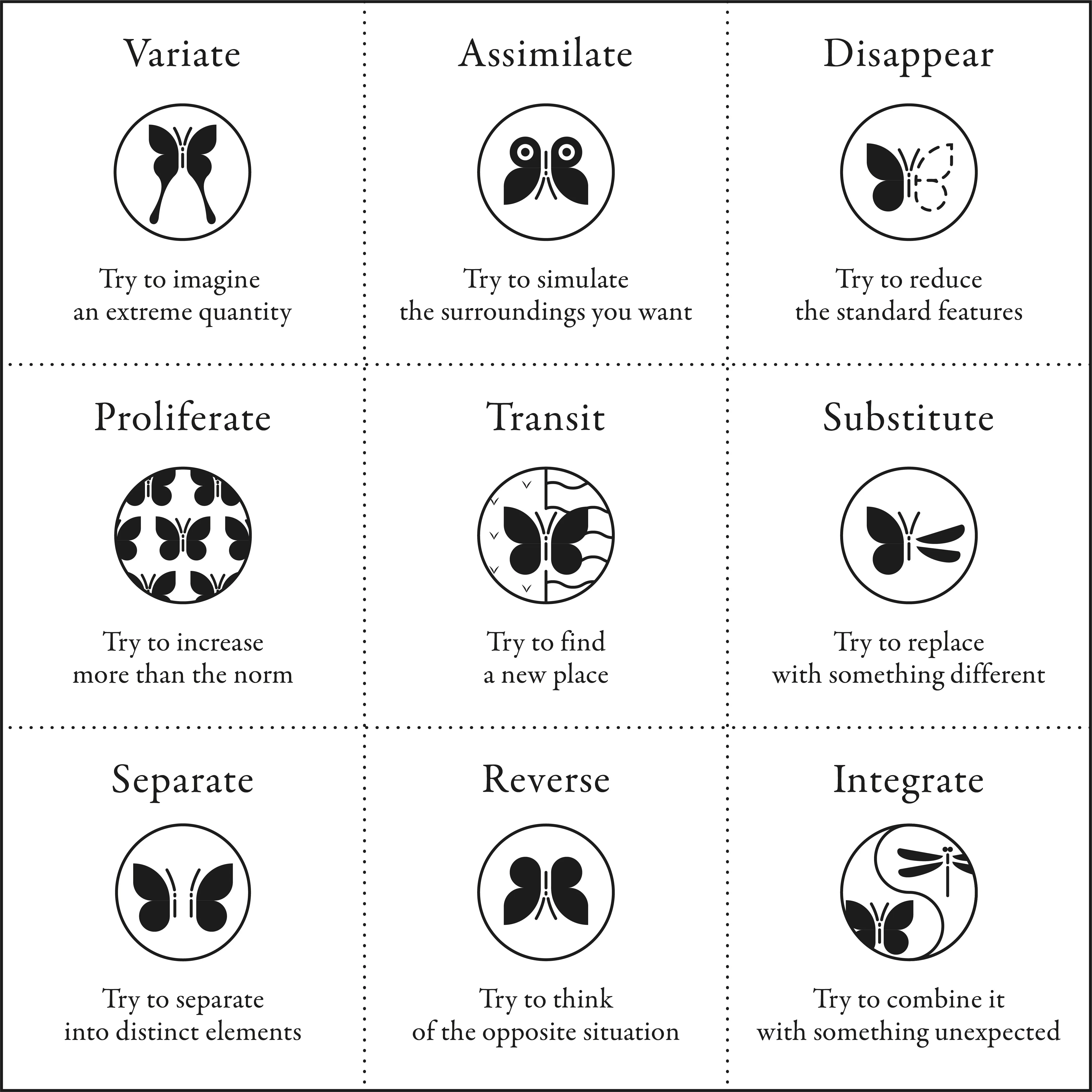
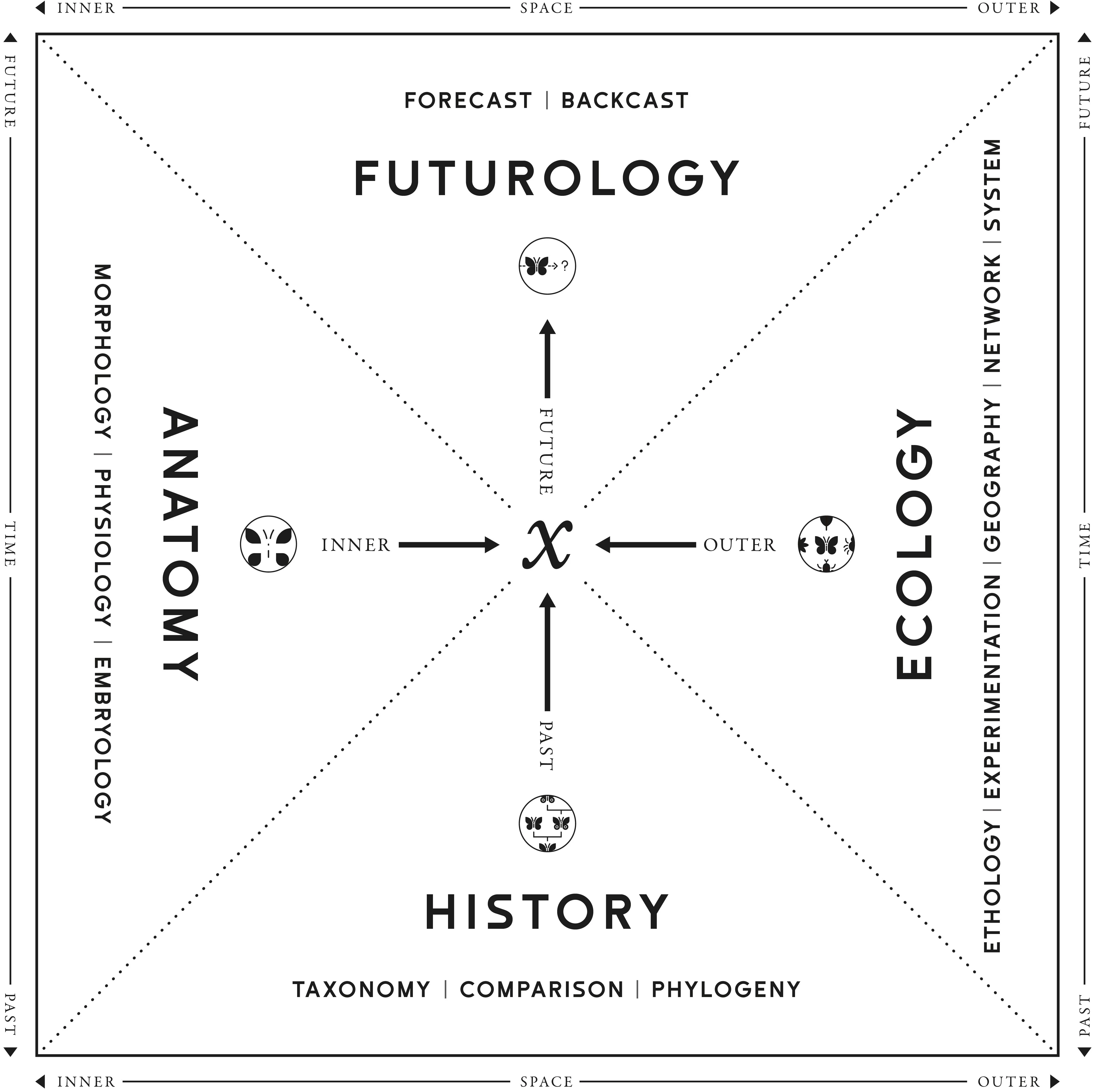
La Créativité Évolutionnelle est une façon de penser pour créer des concepts créatifs qui peuvent survivre longtemps en utilisant et en alternant entre les deux idées de Mutation et de Sélection.
(La première édition du livre Créativité Évolutionnelle utilisait l'expression "mutation et adaptation" en référence à la mutation coïncidentale et à la sélection naturelle visant l'adaptation. Cependant, l'édition révisée a changé l'expression pour "mutation et sélection" afin d'être plus en accord avec la justesse académique.)
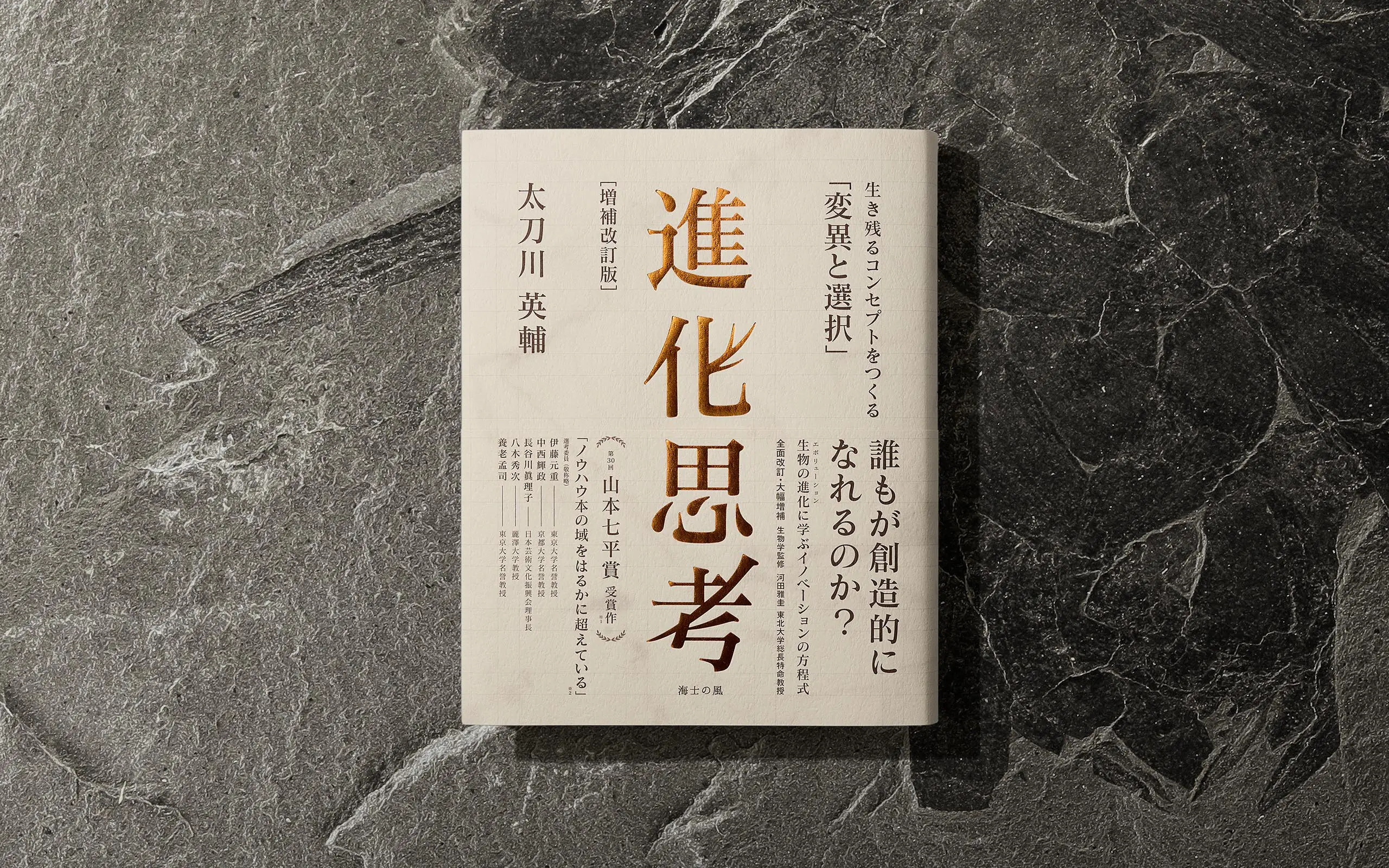
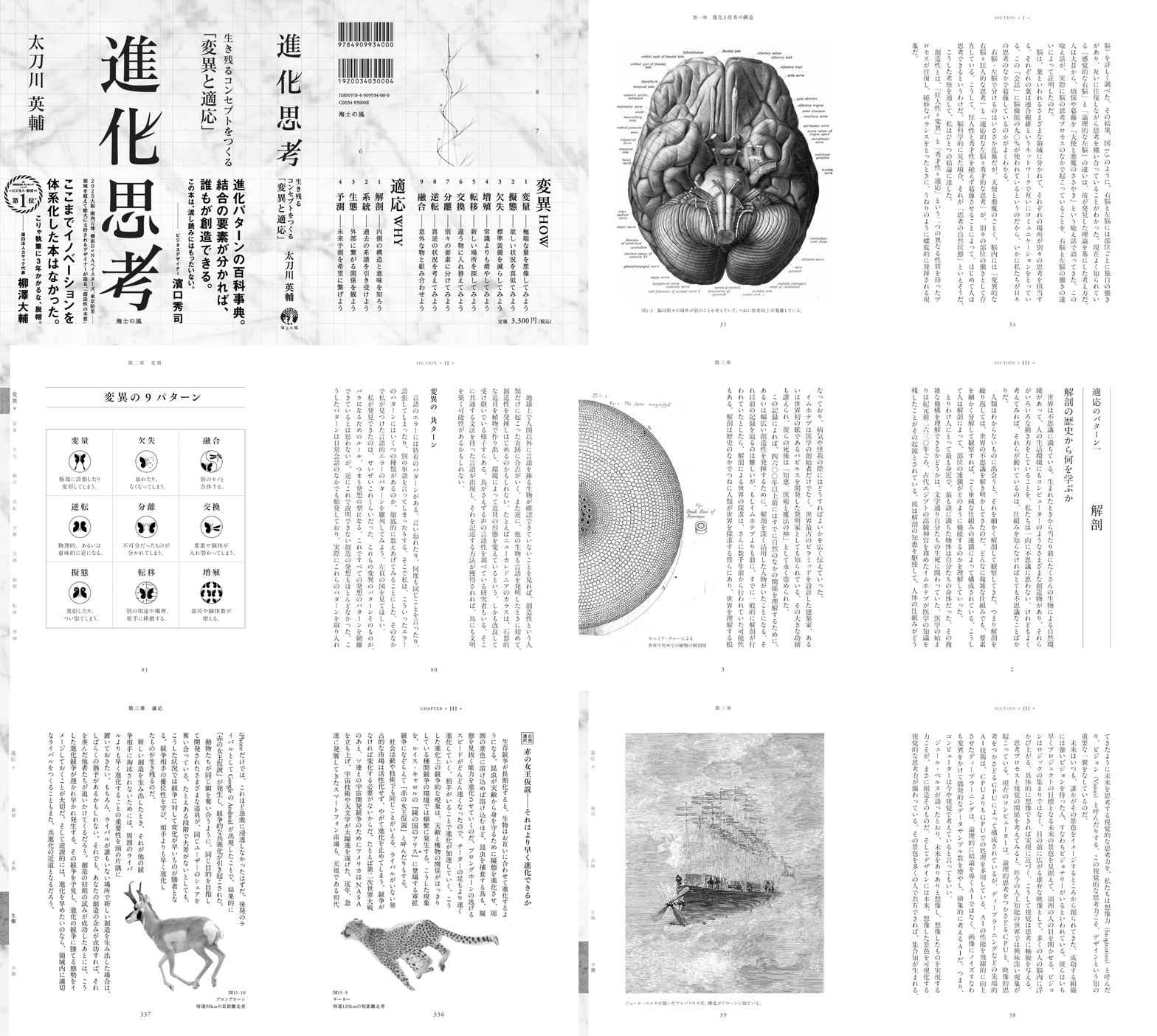
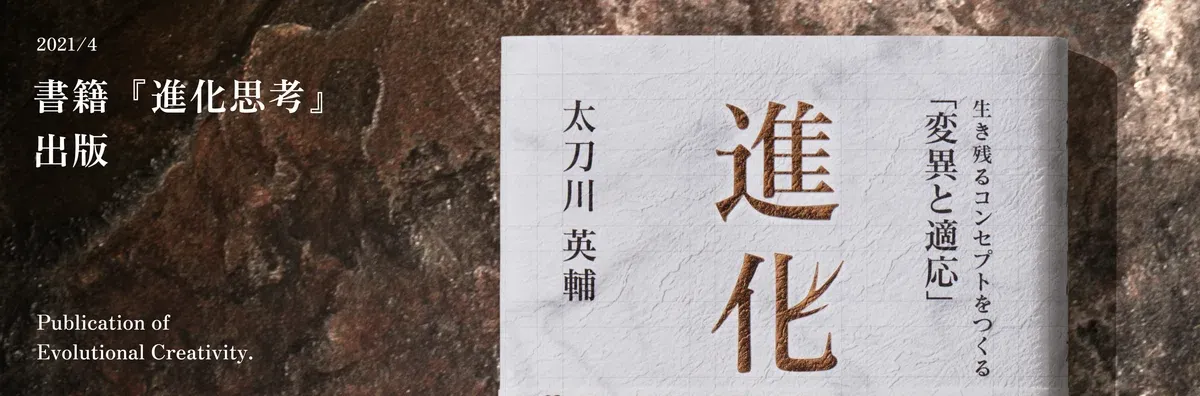
En avril 2021, Evolutional Creativity a été mis en vente comme le premier livre publié par Amanokaze, le premier éditeur à être fondé à Ama, dans la préfecture de Shimane, sur une île isolée d'environ 2 000 habitants près de la frontière nationale. Malgré sa publication dans un lieu reculé, le livre est devenu le bestseller n°1 d'Amazon Japon dans la catégorie Business & Economics. En une semaine après sa sortie, il s'est vendu à 30 000 exemplaires en trois tirages. Les ventes du livre ont continué à s'étendre largement.
Le livre a également remporté de nombreux prix au Japon. L'un d'entre eux était le prix Yamamoto Shichihei, un prix académique prestigieux décerné tous les quelques années aux livres de sciences humaines qui incarnent le Japon. Le comité de sélection était composé de deux biologistes (l'anatomiste Takeshi Yoro et la biologiste évolutionniste Mariko Hasegawa), de l'économiste en sciences sociales Motoshige Ito, du politologue Terumasa Nakanishi, et du juriste Hidetsugu Yagi. Le livre a reçu une reconnaissance académique au-delà des sciences humaines et des sciences.
Avec Evolutional Creativity, nous voulons prouver que nous pouvons changer le monde même depuis un lieu reculé. Nous voulons aussi répandre ce nouveau programme d'éducation à la créativité dans le monde.
VOICE
L'évolution suit une variété de lois reconnues. L'auteur s'appuie sur ces lois comme fondement, visant à fournir du matériel de référence précieux pour ce qu'on appelle l'innovation.
Bien que les spécificités de chaque cas soient mieux explorées en lisant le livre lui-même, l'originalité de l'idée—appliquer les principes évolutionnaires à la réflexion sur l'innovation—dépasse de loin celle d'un guide pratique typique. Les exemples présentés dans chaque section sont vivants et captivants, rendant le livre agréable à lire. Cela reflète la réflexion continue et implacable de l'auteur.
Les 3,5 milliards d'années d'évolution biologique sur Terre nous ont menés à nous, façonnant qui nous sommes aujourd'hui. Si ce processus était guidé par certaines lois, il n'y a aucune raison pour que ces mêmes lois ne puissent pas servir de référence pour les processus à venir.
L'approche de l'auteur est essentiellement analogique. Konrad Lorenz, l'éthologue, a remarqué une fois dans sa conférence du prix Nobel que sa méthode était purement analogique. Dans le monde académique, qui met souvent l'accent sur "l'originalité", peu l'admettraient. Pourtant dans des contextes où l'originalité est prisée—comme dans l'innovation—l'importance de l'analogie devient claire. En ce sens, cette œuvre est très précieuse et mérite le prix Yamamoto Shichihei.
Institut de recherche Yoro, Ltd. /
Professeur émérite, Université de Tokyo
Takeshi Yoro

À propos de la conception de livres
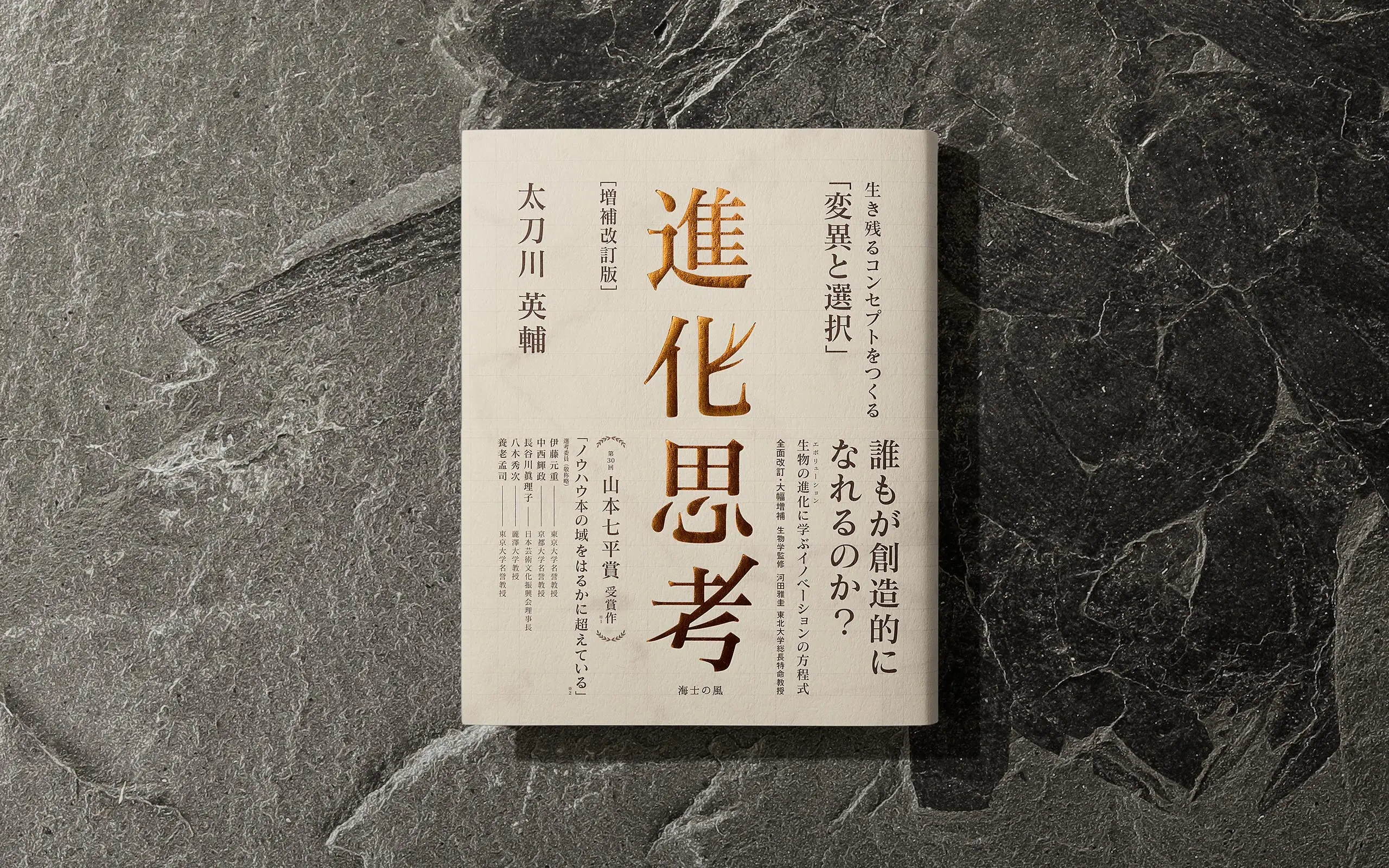
Le livre a été conçu par Tachikawa, l'auteur lui-même.
Il voulait que le livre continue d'être aimé au-delà de l'époque actuelle. Inspiré par les strates géologiques accumulées pendant des éons, il a opté pour un design et une texture semblables à la roche. C'était aussi un hommage aux recherches géologiques de James Hutton qui ont influencé la théorie de l'évolution de Charles Darwin.
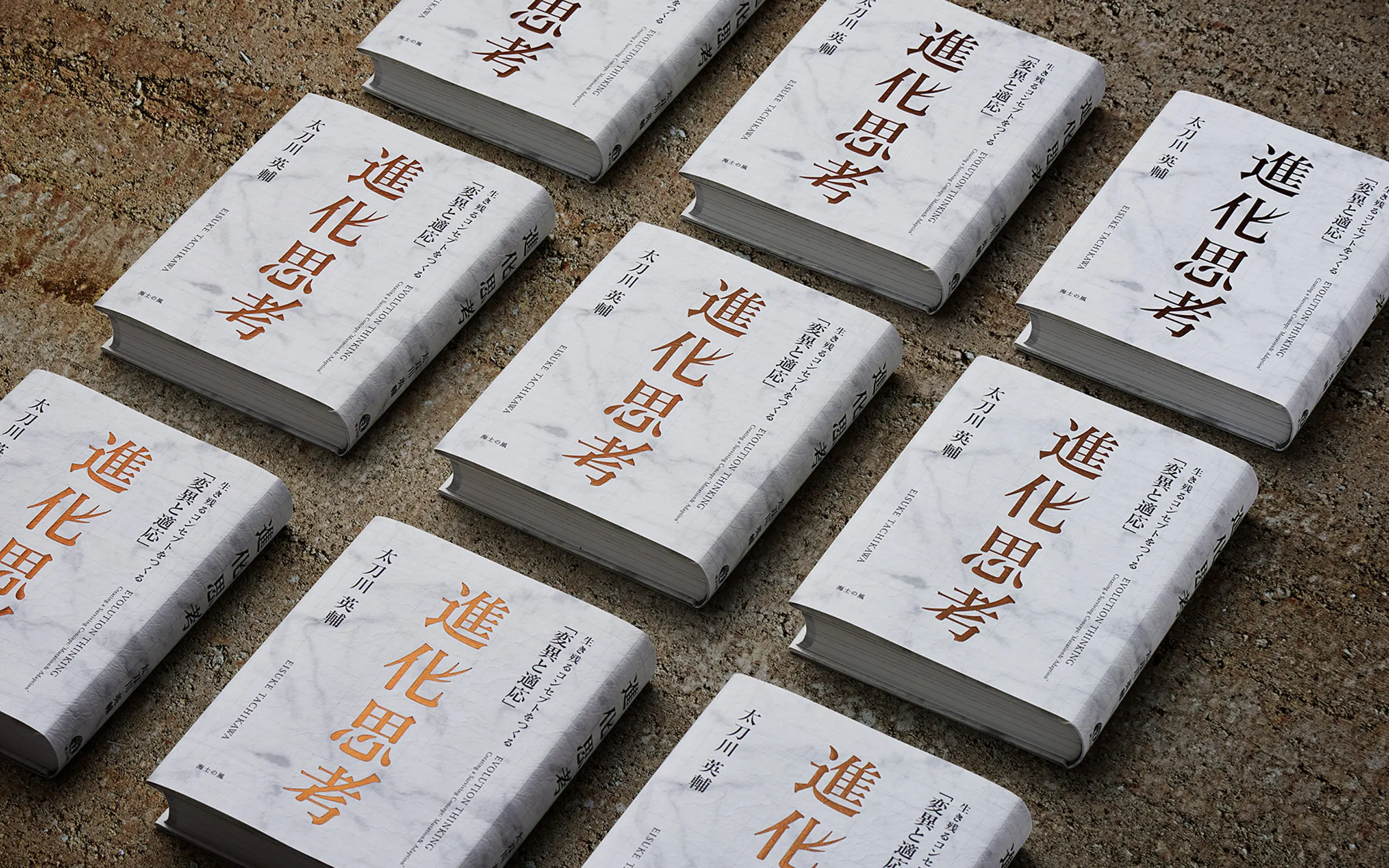
La couverture du livre utilise un papier à motif gaufré (appelé "Iwa-hada" ou surface de roche) avec une texture semblable à la roche, sur laquelle un motif de marbre est imprimé. Comme les bords du livre ont aussi le même motif de marbre, ce livre de plus de 500 pages ressemble à une brique de pierre épaisse et solide. De plus, en éliminant autant que possible les éléments décoratifs et en ayant un design minimaliste, un ton de couleur uniforme est maintenu. C'est un design de livre intemporel et attrayant, non influencé par les tendances du design.
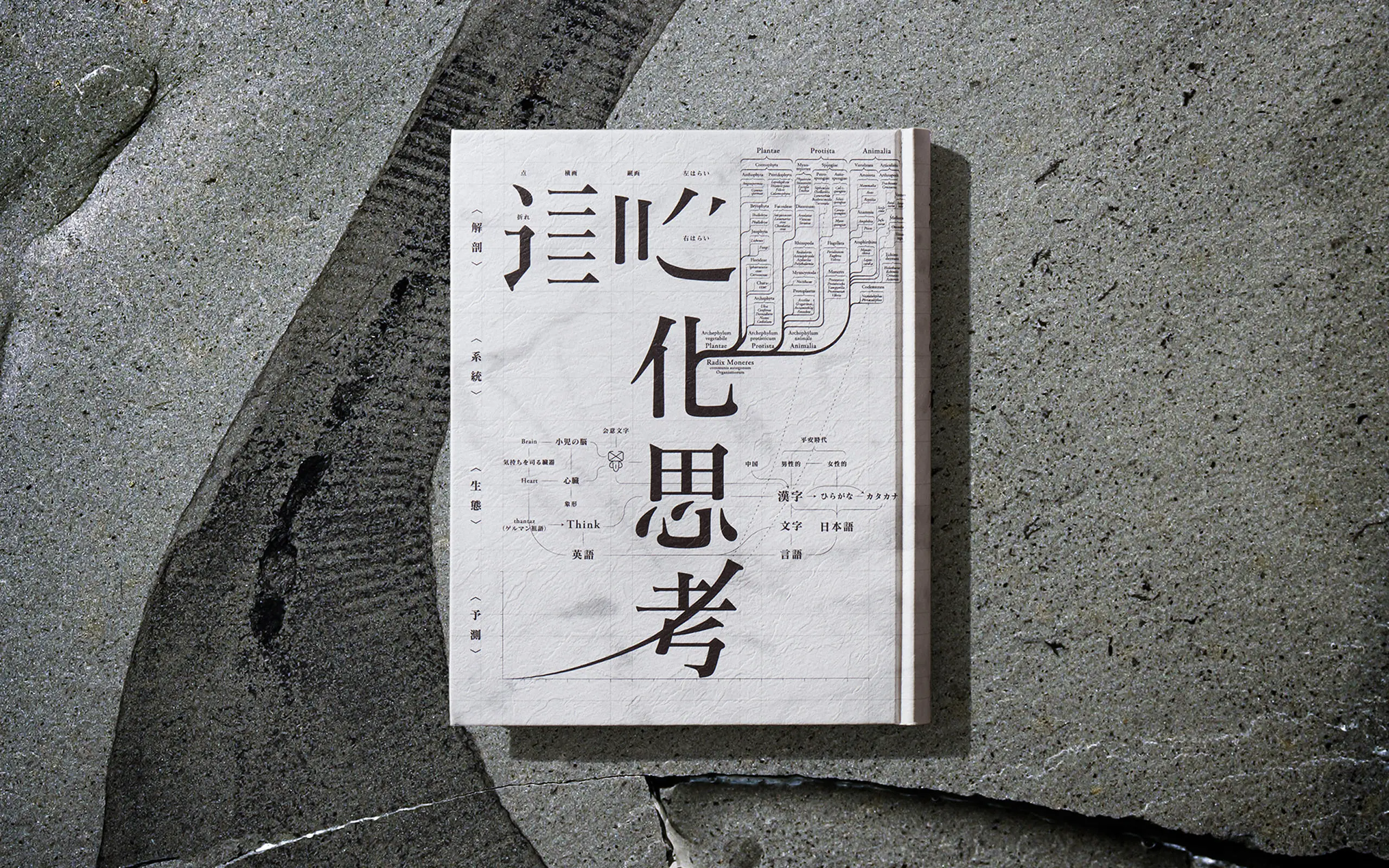
Le logo du titre du livre montre les quatre caractères kanji (進 化 思 考) en transition basés sur les modèles de mutation de la Créativité Évolutionnelle : Proliférer, Assimiler, Inverser et Varier. Lorsque la couverture papier est retirée, la couverture du livre montre les mêmes quatre caractères kanji comme représentations visuelles des quatre idées d'apprentissage spatio-temporel : Anatomie, Lignée, Écosystème et Prédiction.
Le logo imprimé peut paraître noir lorsqu'on le regarde directement du dessus, mais il apparaît brun lorsqu'on le regarde sous un angle. Cet effet a été créé grâce à la feuille de dorure à chaud "brun café" de la société Murata Kimpaku et est conçu pour ressembler à des bijoux faiblement scintillants incrustés dans le marbre.
Comme Tachikawa est à la fois le concepteur graphique et l'auteur du livre, il a pu concevoir efficacement la composition typographique du contenu principal en utilisant du texte à habillage pour intégrer les illustrations dans le texte. L'index du livre présente également un motif marbré pour faciliter la recherche de sujets et la relecture du texte.
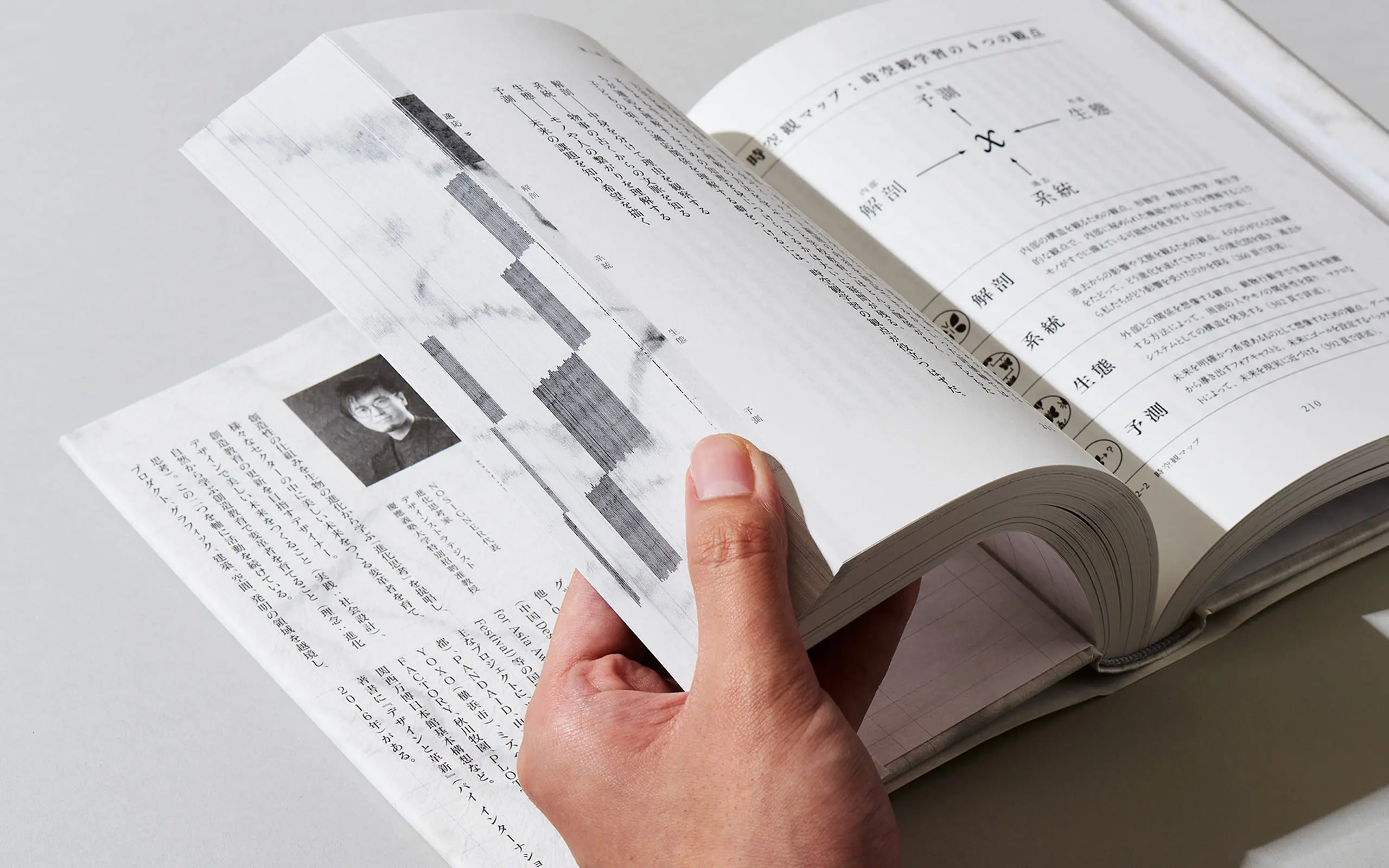
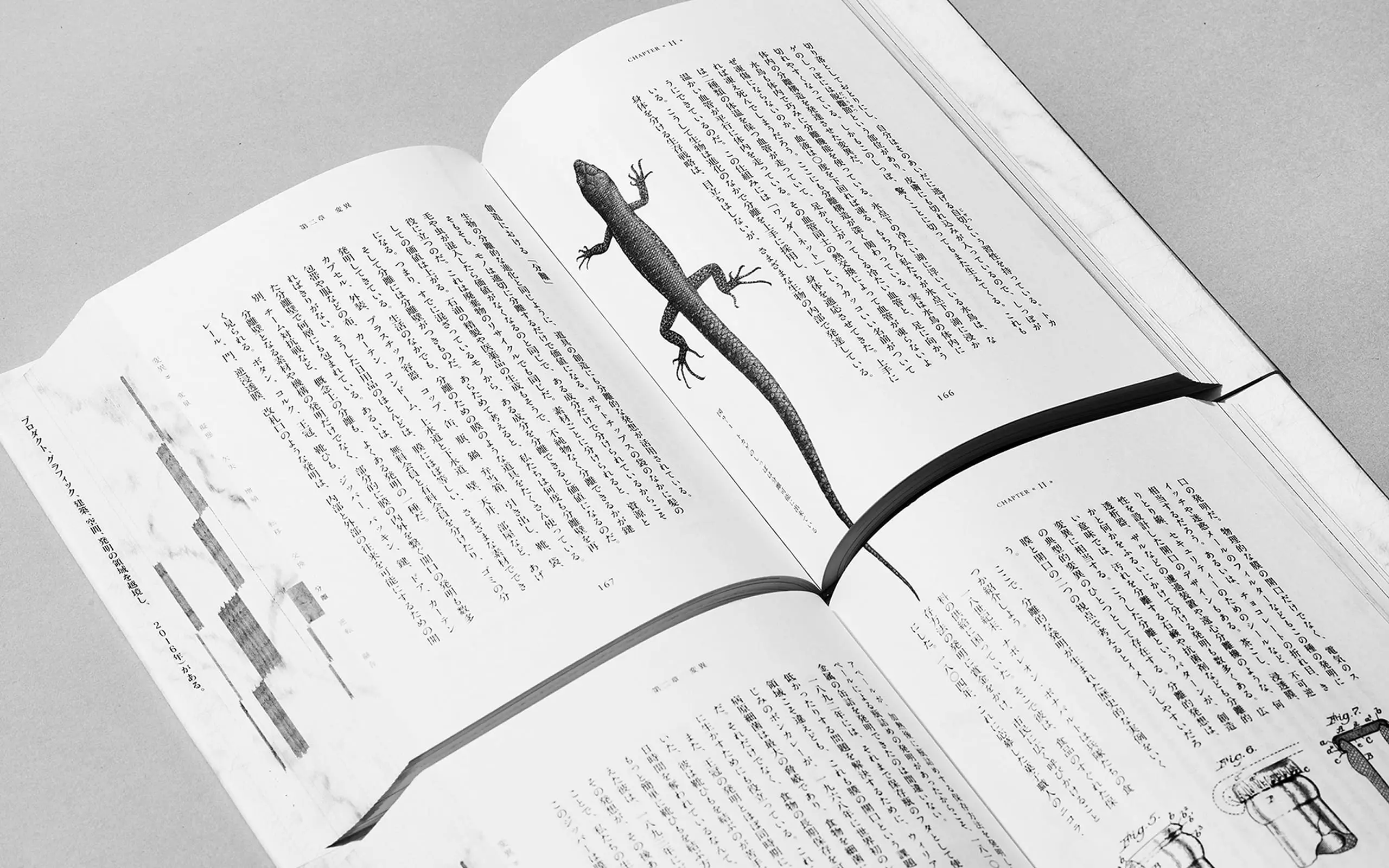
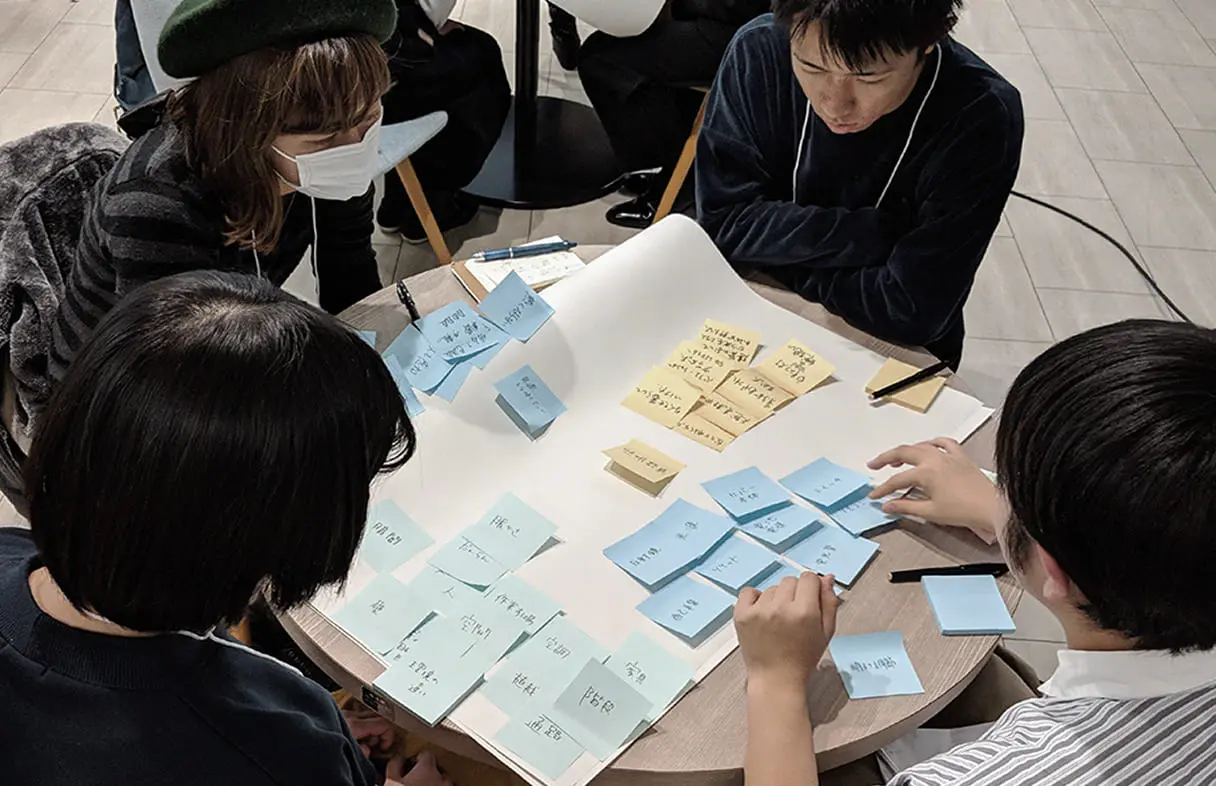
Tirant parti du fait que le livre provient d'ateliers de créativité dans des entreprises et des universités, il comprend 50 ateliers qui encouragent la pensée créative. Plutôt que d'être simplement un manuel à lire, vous pouvez également essayer et mettre en pratique vos idées créatives. Malgré la longueur du livre de plus de 500 pages, il est facile à lire et facile à utiliser. Il peut être utilisé comme une référence fréquente ou une encyclopédie pour rechercher des sujets sur la "créativité" et "l'évolution biologique".
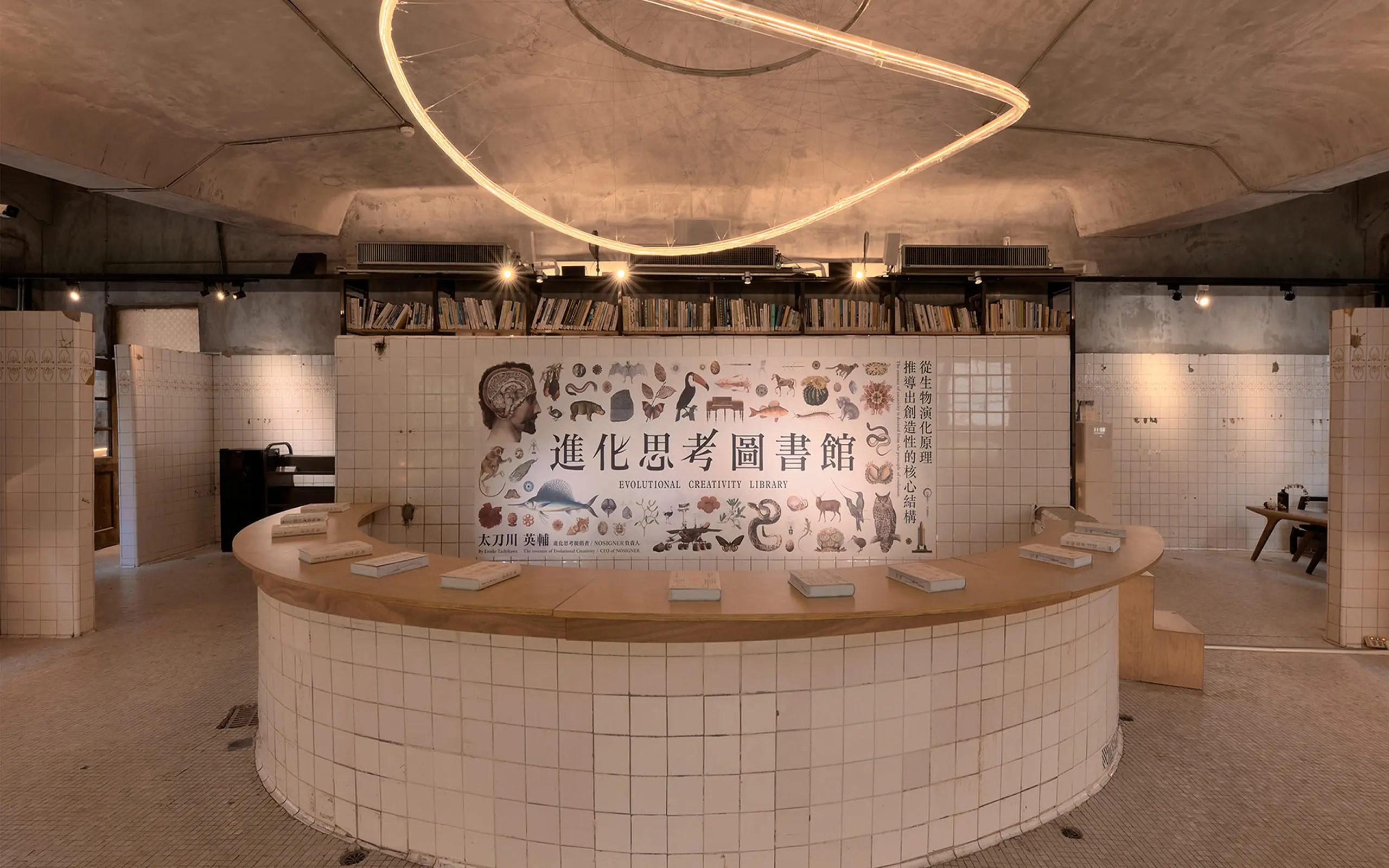
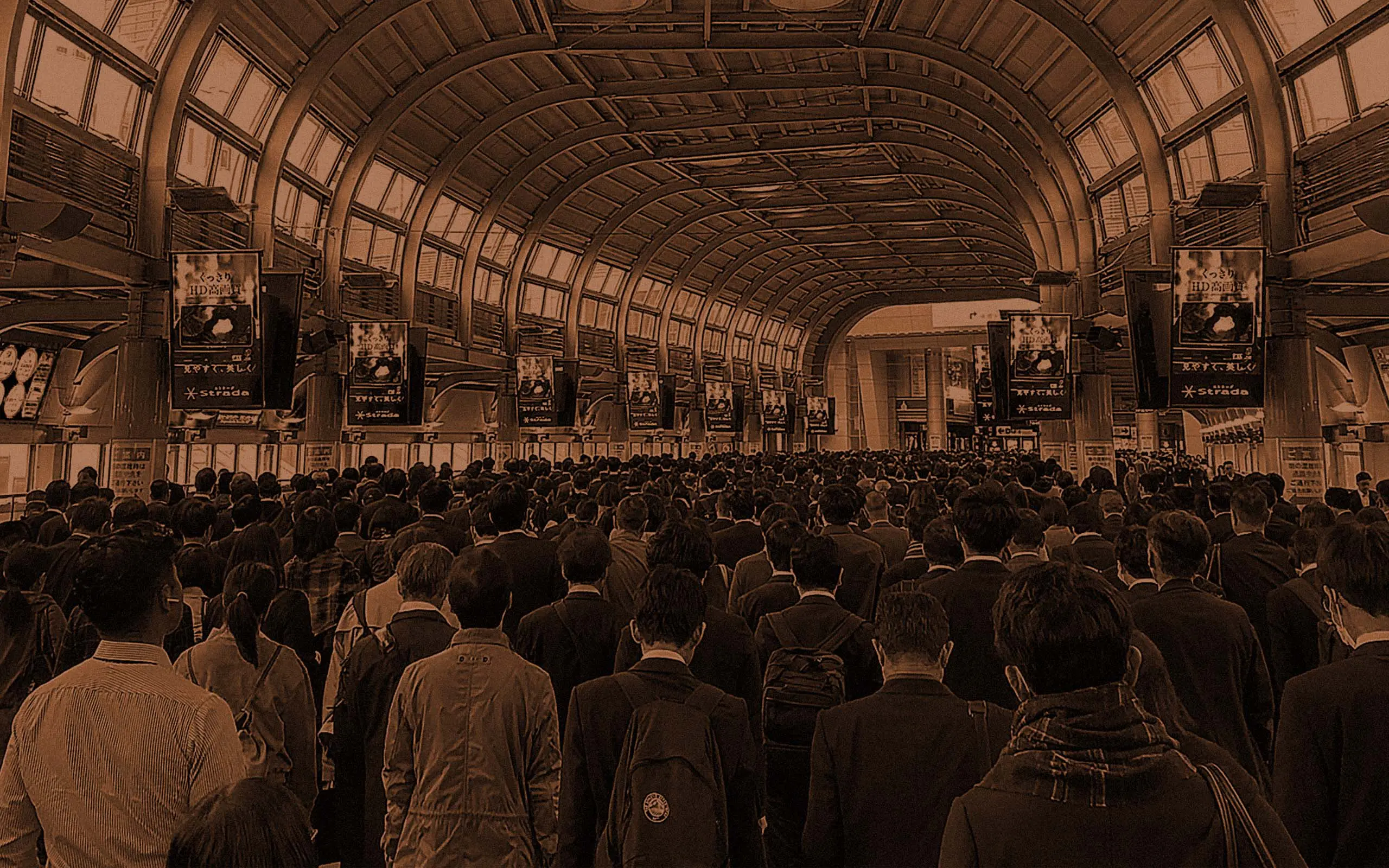
WHY
La créativité est-elle quelque chose de limité à ceux qui ont du talent ?
À la poursuite de nos désirs, nous, les humains, sommes devenus créatifs et avons inventé toutes sortes d'outils, contribuant ainsi au développement de notre civilisation. Malgré son importance, la créativité a été communément considérée comme une capacité innée nécessitant un talent naturel pour l'exprimer. La créativité est-elle quelque chose qu'on ne peut pas apprendre ?
"Intelligence Cristallisée et Fluide" par Raymond Cattell

État des cibles individuelles des ODD au point médian de l'Agenda 2030

Graphique des étudiants japonais qui pensent qu'ils sont créatifs

Il existe d'innombrables personnes qui pensent qu'elles n'ont aucun talent créatif parce qu'elles ne peignaient pas bien en cours d'art, etc. Une enquête décevante a révélé que seulement huit pour cent des étudiants universitaires au Japon pensaient qu'ils étaient créatifs.
Avons-nous vraiment une compréhension approfondie de la créativité ? Quand nous y réfléchissons, nous pouvons réaliser à quel point nous savons peu de choses sur le fonctionnement de la créativité et comment nous pouvons être formés pour cela. Si nous pouvons comprendre les rouages internes de la créativité, nous pourrons peut-être l'acquérir.
Ces dernières années, les écoles ont commencé à réfléchir à la participation active des étudiants comme l'apprentissage actif et l'apprentissage par enquête. C'est pour favoriser la créativité et un esprit curieux qui ne soit pas lié par le cadre conventionnel de la matière scolaire. Même dans le monde des affaires, les méthodes de réflexion qui stimulent la créativité attirent davantage l'attention.
Si nous avons plus de personnes qui lancent des projets créatifs, cela conduirait à une société plus durable et à des solutions de base pour divers problèmes sociaux. À cette fin, nous devons comprendre la créativité elle-même et établir une théorie et un programme éducatif pour apprendre systématiquement sur la créativité.
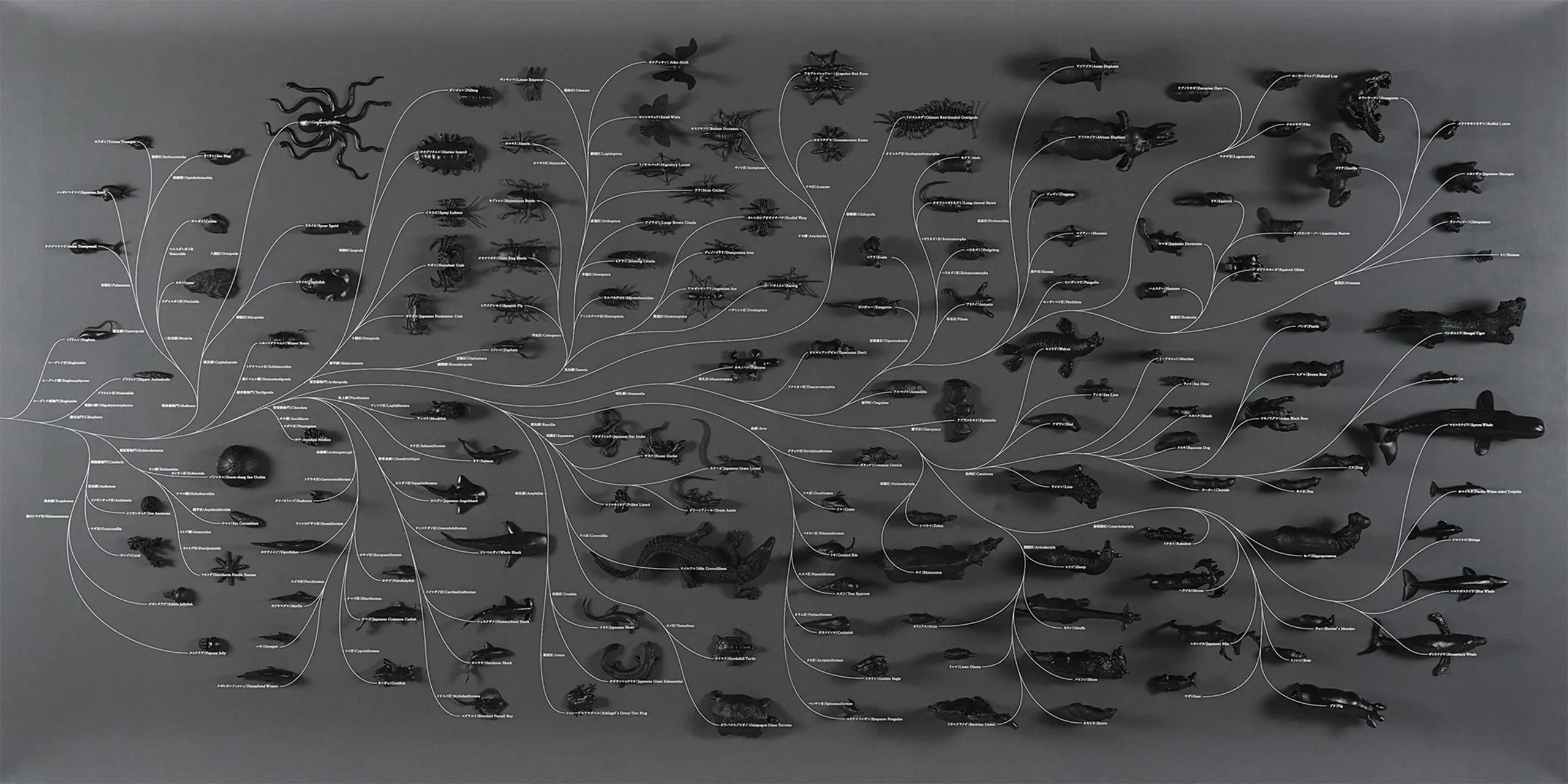
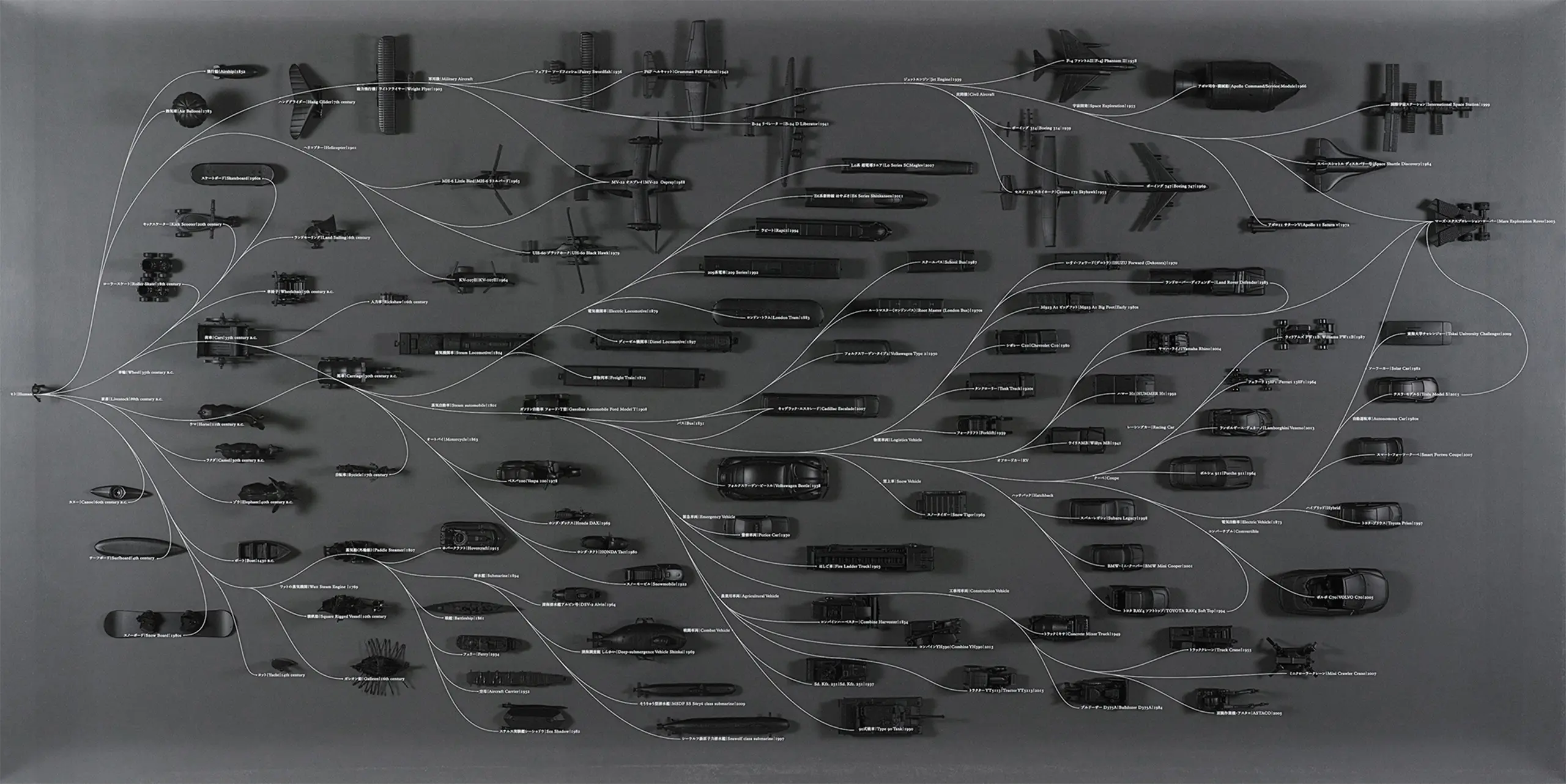
WILL
Mise à jour de l'enseignement créatif et surmonter un monde non durable.
La Créativité Évolutionnaire a gagné une large acceptation et reconnaissance en tant que méthode d'innovation la plus puissante au monde, ayant été adoptée par de grandes entreprises japonaises et institutions éducatives telles que Panasonic, Fujitsu, Sumitomo House, et l'Université Keio. La méthode a même été incluse comme question dans l'examen d'entrée pour la langue nationale à l'Université Doshisha. Alors que de plus en plus d'individus adoptent cette pensée créative et produisent des projets transformateurs pour la durabilité, la portée de la Créativité Évolutionnaire continue de s'étendre. Même les experts de l'IA de pointe du Japon incorporent les principes de la Créativité Évolutionnaire dans leur travail, et des ateliers utilisant la méthode ont été organisés lors de la plus grande exposition environnementale d'animaux du pays au zoo. La Créativité Évolutionnaire fait progressivement son chemin dans un large éventail de domaines, et son impact continuera de croître.
Malgré le succès précoce et la reconnaissance de la Créativité Évolutionnaire, la mise en œuvre de projets éducatifs véritablement créatifs qui s'inspirent des lois de la nature en est encore à ses balbutiements.
Alors que l'humanité continue d'avancer grâce à la technologie, nous faisons également face aux conséquences de changements drastiques de la géologie et du climat, ainsi qu'à l'effondrement des écosystèmes. Nous sommes entrés dans l'"Anthropocène," une ère géologique dans laquelle l'activité humaine a un effet profond sur la terre. Notre civilisation ayant dépassé la "limite planétaire," le point auquel un changement environnemental irréversible et soudain devient une possibilité réelle, le temps presse. Il est crucial que nous mettions en œuvre des méthodes éducatives innovantes et efficaces telles que la Créativité Évolutionnaire pour assurer notre survie et ouvrir la voie à un avenir durable.


L'expression étroite de la créativité de l'humanité a mené à la crise de l'effondrement de la civilisation, pourtant notre créativité demeure notre seul moyen de survie sur terre. Il est essentiel que nous saisissions l'essence de la créativité et l'utilisions à son plein potentiel pour aborder diverses questions et créer une société durable. Il est maintenant temps pour nous d'approfondir la compréhension de la créativité et de l'appliquer à des solutions qui favorisent la coexistence entre l'humain et l'environnement.
Friedrich Fröbel, un pionnier de l'éducation de la petite enfance qui a prospéré au 19e siècle, a posé les fondements de l'éducation à la créativité en s'inspirant des sciences naturelles et a eu une influence significative sur les mouvements ultérieurs tels que le Bauhaus. Cependant, malgré le travail révolutionnaire de Fröbel et du Bauhaus, l'éducation à la créativité est restée largement inchangée au cours du siècle passé. Notre objectif est de faire évoluer et revitaliser ce domaine d'éducation, pour suivre le rythme des besoins en constante évolution de la société et de l'environnement.
Nous croyons qu'en actualisant l'éducation à la créativité à travers le prisme de la Créativité Évolutionnaire, nous pouvons donner aux individus les moyens d'aborder créativement les questions sociales pressantes de notre époque et de maximiser la créativité de chaque personne dans chaque communauté. En dotant les individus des outils pour penser et agir de manières nouvelles et innovantes, nous pouvons œuvrer à résoudre les grands défis auxquels l'humanité fait face et construire un meilleur avenir pour tous.
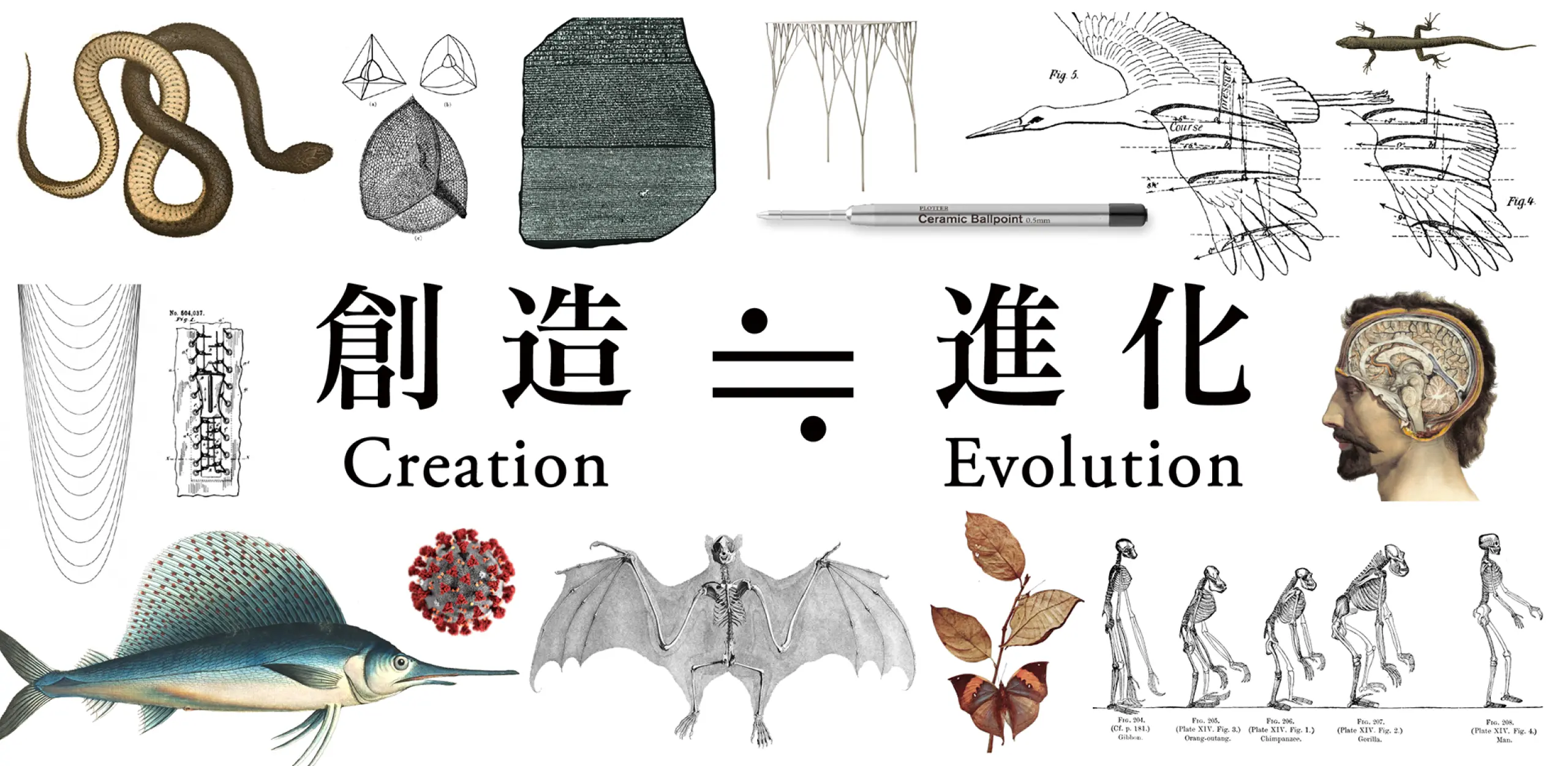


Le livre " Evolutional Creativity " a été classé n°1 dans les classements des livres d'affaires et d'économie d'Amazon peu après sa mise en vente en pré-commande, et a été rapidement réimprimé avant sa sortie. Quelle est cette nouvelle façon de penser qui éveille la créativité qui sommeille en chacun ?
Sites connexes /
L'Évolution de la "Créativité Évolutionnelle" (Mis à jour Novembre 2025)
Novembre 2025 : Discours principal au 9e Sommet du Leadership 2025 au Bangladesh
Eisuke Tachikawa est monté sur scène en tant qu'orateur principal au "Sommet du Leadership 2025" organisé au Bangladesh. Organisée sous le thème "Leadership Résilient – Prospérer dans l'Incertitude", cette conférence internationale a exploré le leadership durable et éthique requis dans une société en mutation rapide. Tachikawa a prononcé un discours sur la nature du leadership dans l'abordage des problèmes sociaux et des changements environnementaux du point de vue de la Créativité Évolutionnaire.
Novembre 2025 : Présentation en ligne lors de la Commémoration du 12e Anniversaire du Typhon Yolanda
Marquant le 12e anniversaire du Typhon Yolanda—qui a causé certains des pires dégâts jamais enregistrés aux Philippines—Eisuke Tachikawa a pris la parole lors d'un événement commémoratif organisé à l'Université d'État des Visayas orientales. Il a prononcé une conférence en ligne sur la "Créativité Évolutionnaire" devant environ 400 participants, partageant des perspectives créatives sur la façon d'affronter les catastrophes.
Novembre 2025 : A prononcé une conférence spéciale aux étudiants de troisième cycle de l'Université Minerva
À l'Université Minerva—connue pour son modèle éducatif unique qui implique d'apprendre en se déplaçant entre sept villes dans le monde et ayant été sélectionnée comme "l'université la plus innovante au monde"—Eisuke Tachikawa a prononcé une conférence spéciale sur la "Créativité Évolutionnaire" devant environ 20 étudiants de troisième cycle spécialisés en "Science de la Décision". Des étudiants d'horizons divers, incluant des politiciens actuels et des dirigeants d'entreprise, ont visité le studio de Yokohama de NOSIGNER—l'entreprise dirigée par Tachikawa—et la conférence a duré trois heures en raison d'une session de questions-réponses animée.
Octobre 2025 : Présentation à la conférence "Réunion du Sous-réseau des Villes de Design" organisée par le Réseau des Villes Créatives de l'UNESCO (UCCN)
Eisuke Tachikawa a pris la parole lors de la "Réunion du Sous-réseau des Villes de Design" organisée par le Réseau des Villes Créatives de l'UNESCO (UCCN)—qui vise à exploiter la culture et la créativité pour le développement urbain durable—à l'Institut de Technologie de Bandung. Il a participé à une table ronde sur le thème "Ville Créative 2.0", échangeant des points de vue sur les approches de la créativité basées sur la "Créativité Évolutionnaire" et l'avenir des villes s'adaptant au changement climatique.
Septembre 2025 : Discours principal à la Conférence Internationale de Design (IDC) 2025 aux Philippines
Eisuke Tachikawa a prononcé un discours principal à la Conférence Internationale de Design (IDC) 2025, organisée par le Centre de Design des Philippines, l'agence gouvernementale responsable de la promotion du design aux Philippines. Invité comme orateur principal à la conférence, qui présentait une gamme diversifiée d'intervenants incluant des consultants, des designers, des chercheurs et des dirigeants d'entreprise sous le thème "Tenir l'Ensemble", il a prononcé un discours principal sur l'éducation à la créativité basée sur la "Créativité Évolutionnaire" et la forme idéale des villes s'adaptant au changement climatique.
Juillet 2025 : A reçu la plus haute distinction académique de l'Institut de Technologie de Bandung
Il a reçu le "Prix GANESA WIDYA JASA ADIUTAMA", la plus haute distinction académique décernée par l'Institut de Technologie de Bandung (ITB) en Indonésie pour ses contributions exceptionnelles à la connaissance et à l'éducation. Ce prix prestigieux n'est accordé qu'à deux personnes suivant un processus de sélection rigoureux parmi les candidats nommés par chaque faculté ; il a été sélectionné sur la base d'une nomination de la Faculté d'Art et de Design (FSRD).
Novembre 2024 : Publication de l'édition indonésienne de *Créativité Évolutionnaire*
L'édition indonésienne du livre *Créativité Évolutionnaire* a été publiée par la maison d'édition indonésienne "SiMPUL" sous la supervision de l'Institut de Technologie de Bandung (ITB), l'une des principales universités d'Indonésie.
De plus, pour commémorer la publication du livre, une exposition et une conférence commémorative ont eu lieu au Centre de Design de l'ITB, et une exposition et un atelier ont également eu lieu dans l'espace artistique de Jakarta "
Avril 2024 : 3e anniversaire de la publication de "Créativité Évolutionnaire"
La "Créativité Évolutionnaire", systématisée par son promoteur, Eisuke Tachikawa, après des années d'exploration, a continué d'évoluer encore aujourd'hui, ayant reçu une large gamme de retours—incluant soutien, encouragement, critiques et suggestions—de nombreuses personnes depuis la publication de la première édition du livre.
De plus, une communauté de lecteurs formée par plus de 100 lecteurs enthousiastes reste activement engagée, et les principes de la Créativité Évolutionnaire sont mis en pratique dans le travail et la vie quotidienne de ses praticiens.
Mars 2024 : Conférence au Ministère de l'Économie, du Commerce et de l'Industrie pour les étudiants de la Stanford Business School
Tachikawa a prononcé une conférence sur le design japonais et la Créativité Évolutionnaire devant environ 30 étudiants et membres du corps professoral de la Stanford Graduate School of Business au Ministère de l'Économie, du Commerce et de l'Industrie. Cette conférence faisait partie du voyage d'étude de l'école au Japon, un programme conçu pour explorer la relation entre la croissance économique rapide du Japon et le design, ainsi que l'état actuel des start-ups.
Décembre 2023 : Publication de *Créativité Évolutionnaire [Édition Élargie et Révisée]*
Avec la supervision biologique fournie par le biologiste de l'évolution Masaki Kawata (Professeur par nomination spéciale du Président à l'Université de Tohoku),
Octobre 2023 : Présentation de rapport à la Conférence Internationale de l'Assemblée Mondiale du Design
À l'
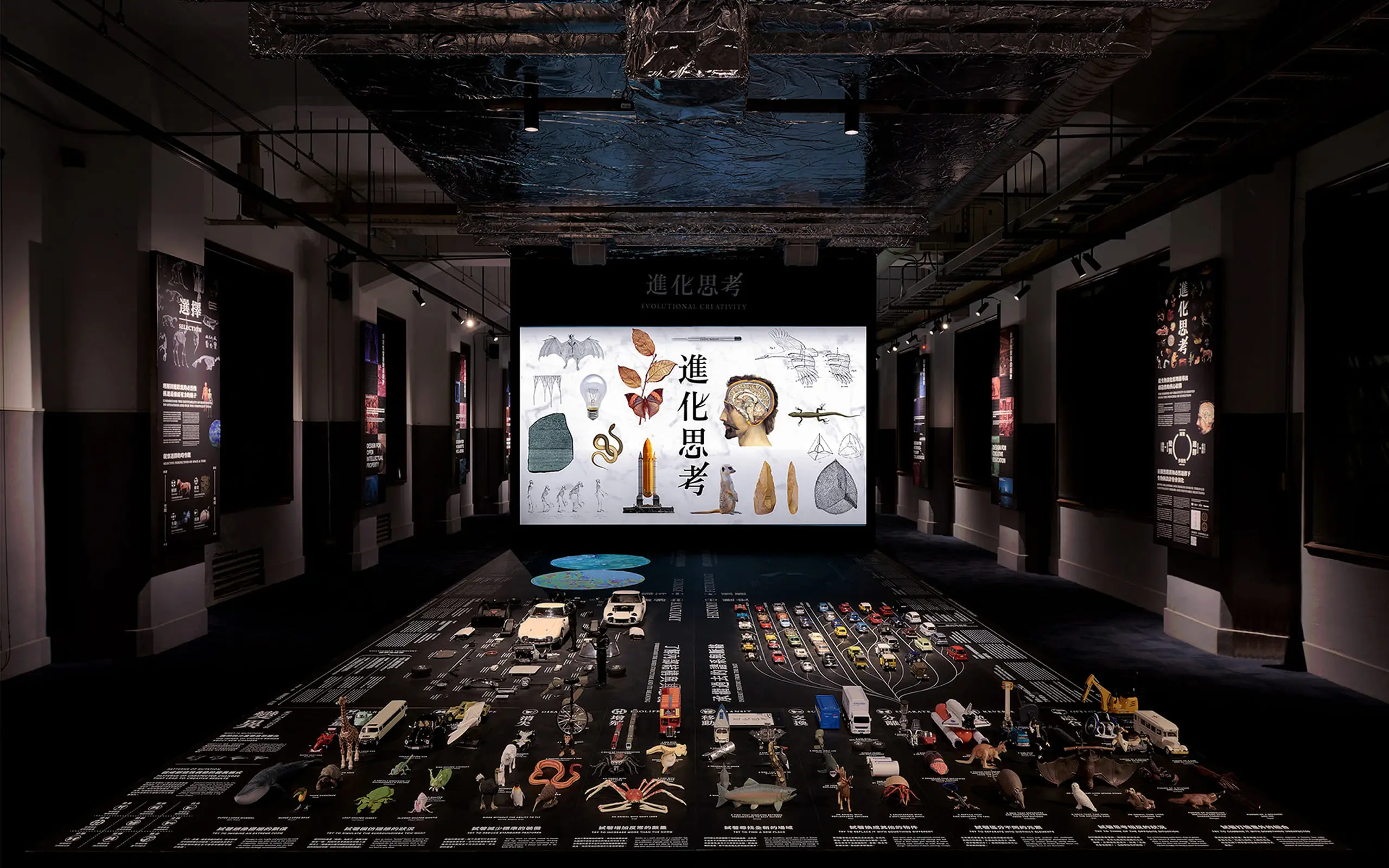
Septembre 2023 : Exposition organisée au Musée du Design de Taiwan
Coïncidant avec la publication de l'édition taïwanaise du livre *Créativité Évolutionnaire*, une exposition de NOSIGNER intitulée
Septembre 2023 : Publication de l'édition taïwanaise de "Créativité Évolutionnaire"
Suivant l'édition coréenne, l'
Juin 2023 : Publication de l'édition coréenne de "Créativité Évolutionnaire"
L'
Mai 2023 : Présentation à une conférence organisée par UNESCO-MGIEP
Tachikawa a été invité à prendre la parole à la conférence "Éducation pour l'Épanouissement dans une Réalité Mixte", organisée par UNESCO-MGIEP (l'Institut Mahatma Gandhi de l'Organisation des Nations Unies pour l'Éducation, la Science et la Culture pour l'Éducation à la Paix et au Développement Durable), qui a rassemblé des universitaires renommés, chercheurs, enseignants, décideurs politiques et représentants du secteur privé du monde entier. Il a prononcé une présentation sur la "Créativité Évolutionnaire" lors de la session "Design Thinking et Créativité dans l'Éducation". Cette conférence était également la première conférence internationale basée sur les Objectifs de Développement Durable.
Mars 2023, Août 2023 : Conférence à l'Institut de Technologie de Bandung (ITB), Indonésie
Tachikawa a prononcé une conférence sur la Créativité Évolutionnaire à l'Institut de Technologie de Bandung (ITB), la principale institution d'enseignement supérieur d'Indonésie. En raison de la réception positive de ce contenu, il a été décidé de publier une édition en langue indonésienne de "Créativité Évolutionnaire". Suivant la
Mars 2023 : A présidé le forum "Réfléchir sur l'Avenir de l'Enseignement Supérieur"
Eisuke Tachikawa a présidé le forum "Réfléchir sur l'Avenir de l'Enseignement Supérieur", organisé par l'Institut de Recherche Éducative Benesse, où les membres engagés dans des pratiques éducatives de pointe ont discuté de l'avenir de l'éducation universitaire. Après quatre rondes de tables rondes avec les membres du comité, une proposition exposant une vision pour l'éducation universitaire qui envisage un avenir prometteur a été compilée. Sous le nouveau principe directeur éducatif, "
Novembre 2022 : A reçu le "Prix Shu Yamaguchi" aux Pen Creator Awards
Eisuke Tachikawa a reçu le "Prix Shu Yamaguchi" aux "
Novembre 2022 : A participé à un programme NHK pour un dialogue avec l'anatomiste Takeshi Yoro
Il est apparu aux côtés de l'anatomiste Takeshi Yoro dans le programme populaire de NHK "Switch Interview", dans lequel deux personnes travaillant dans des domaines différents se rendent visite dans leurs lieux de travail respectifs et mènent un dialogue en "alternant" entre les rôles d'orateur et d'auditeur. Dans la deuxième partie du programme, j'ai invité le Dr Yoro—qui a passé près de 60 ans depuis ses années d'étudiant à explorer "les formes des êtres vivants"—au studio NOSIGNER. Tout en introduisant le concept de "Créativité Évolutionnaire", j'ai parlé de mon travail en tant que designer qui a poursuivi la forme à travers diverses approches.
Juin 2022 : Projet de lancement de l'édition révisée de
Un projet de publication d'une édition révisée a commencé, visant à affiner davantage le livre comme méthode de pensée créative et à incorporer avec précision les connaissances scientifiques. Pour cette révision, nous avons invité le Professeur Masaki Kawata, professeur en mission spéciale auprès du Président à l'Université de Tohoku et expert en évolution et écologie, à servir d'éditeur superviseur, accompagnant l'évolution du livre "Créativité Évolutionnaire". Un nouveau livre du Professeur Kawata expliquant la biologie évolutionnaire a été récemment publié, alors veuillez y jeter un coup d'œil également.
Pour l'auteur aussi, c'était une opportunité inestimable de réapprendre profondément la biologie évolutionnaire auprès d'un expert si distingué que le Professeur Kawata.
Mai 2022 : Dialogue avec le lauréat du prix Nobel Dr. Akira Yoshino
Lors d'un événement commémorant le 100e anniversaire d'Asahi Kasei, j'ai eu l'honneur de m'engager dans un dialogue avec le Dr Akira Yoshino (Asahi Kasei Honorary Fellow), l'inventeur de la batterie lithium-ion et lauréat du prix Nobel de Chimie. La vidéo de la conférence de Tachikawa sur la "Créativité Évolutionnaire" et son dialogue avec le Dr Yoshino a été diffusée à environ 40 000 employés du Groupe Asahi Kasei. Cet événement a non seulement satisfait le souhait de longue date de Tachikawa de s'engager dans un dialogue avec le Dr Yoshino, mais a également servi d'opportunité pour transmettre le message à tous chez Asahi Kasei que "c'est la 'curiosité' et la 'connaissance' de chaque individu qui enrichit l'imagination et façonne les 100 prochaines années."
Mars 2022 : A participé à "Nuit des Modifications Radicales : École de Formation d'Ingénieurs" de NHK E-Tele
Eisuke Tachikawa est apparu comme "Instructeur de Design (Création)" dans le programme populaire de NHK E-Tele "Nuit des Modifications Radicales : École de Formation d'Ingénieurs". Avec le thème "Modification Magique d'un Mixeur", il a dirigé un atelier de brainstorming pour créer un "mixeur qui tire du jus au loin", introduisant les neuf modèles de "mutation" de la "Créativité Évolutionnaire" comme indices pour générer des idées.
Février 2022 : A reçu un Prix Spécial aux "IT Engineer Book Awards 2022"
Dans la catégorie livre d'affaires des
2022–2023 : Adopté dans les questions d'examen d'entrée scolaire
Des extraits de *Créativité Évolutionnaire* ont été adoptés comme matériel pour les examens d'entrée dans plusieurs écoles, notamment comme sujet pour l'examen d'entrée en langue japonaise à l'Université Doshisha.
Novembre 2021 : Lauréat du Prix Yamamoto Shichihei
Nous avons reçu le
Alors que la "Créativité Évolutionnaire" a attiré l'attention comme méthode pour favoriser les innovateurs et conduire l'innovation, gagner ce prix académique japonais prestigieux—dont le comité de sélection inclut l'anatomiste Takeshi Yoro, la biologiste évolutionniste Mariko Hasegawa, l'économiste Motoshige Ito, le politologue Terumasa Nakanishi et le juriste Shuji Yagi—lui a permis de gagner la reconnaissance d'un point de vue académique comme une nouvelle façon de penser qui dévoile la créativité d'un point de vue évolutionnaire.
Avril 2021 : Publication du livre *Créativité Évolutionnaire*
Nous avons publié ce livre dans le but de transmettre les concepts et la méthodologie de la Créativité Évolutionnaire à un large public, incluant le secteur des affaires, et d'encourager son application à la génération d'idées dans tous les domaines, tels que le développement d'affaires, le design et l'art.
Rempli d'une richesse de photographies et d'illustrations sur l'évolution biologique et la créativité humaine, ainsi que 50 "Œuvres de Créativité Évolutionnaire" que les lecteurs peuvent pratiquer en lisant, ce livre—qui couvre de manière exhaustive les concepts et méthodes pratiques de la Créativité Évolutionnaire—est devenu un best-seller. La méthodologie de Créativité Évolutionnaire s'est répandue dans les grandes entreprises et institutions éducatives et a même été adoptée dans les examens d'entrée pour les universités et lycées.
La "Créativité Évolutionnaire" est un concept que Tachikawa avait nourri pendant de nombreuses années avant la publication du livre en 2021. Voici un résumé du parcours menant à la publication de *Créativité Évolutionnaire*.
2021 : Collaboration avec le programme TV "The Direxon" de NHK
Nous avons collaboré sur un projet pour le programme TV de NHK
Août 2020 : Lancement de "École de l'Évolution"
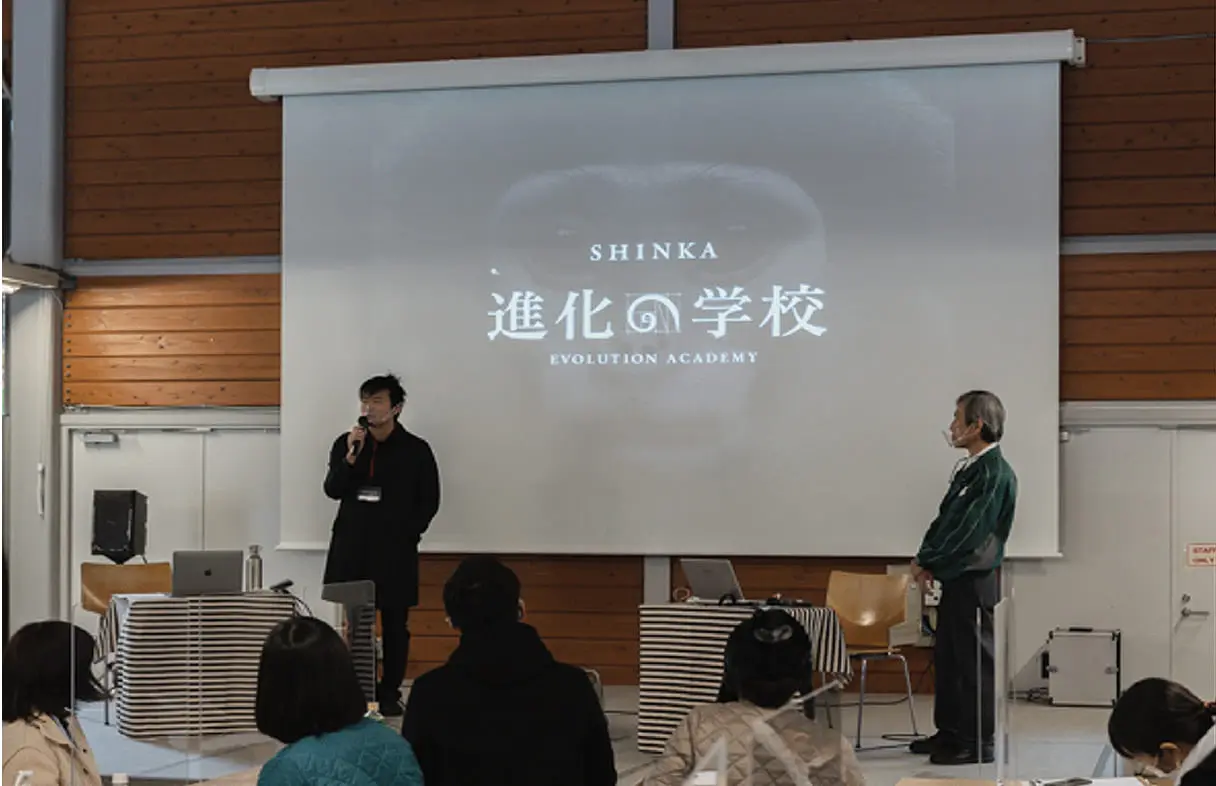
Un cours en ligne a été lancé grâce aux efforts volontaires de Takashi Yamada et d'autres membres qui avaient étudié la Créativité Évolutionnaire. L'"École de l'Évolution" a commencé comme un cours conçu pour planter les graines de la créativité dans divers secteurs de la société. Cette école est un programme de formation qui aide les participants à affiner de nouvelles idées pour la création d'entreprises à travers des conférences et ateliers sur la Créativité Évolutionnaire.
L'"École de l'Évolution" a attiré un groupe diversifié de participants, incluant des dirigeants d'entreprise, des employés visant à conduire l'innovation, et des enseignants d'école et fonctionnaires cherchant à s'engager dans la pratique créative. À ce jour, le programme a produit environ 1 000 diplômés.
Le programme est offert à une large gamme de participants, des entreprises et organisations aux individus, et est utilisé pour le développement de produits et le développement des ressources humaines. De nombreux diplômés continuent de se rencontrer hebdomadairement pour explorer l'éducation à la créativité à travers la Créativité Évolutionnaire.
2019 : A commencé à écrire le livre *Créativité Évolutionnaire*
Après avoir rencontré M. Abe et M. Harada au "Kokuri! Camp", ils ont décidé de lancer la maison d'édition "Ami no Kaze" à Ami Town, préfecture de Shimane. Ils m'ont approché avec l'idée de faire de *Créativité Évolutionnaire* leur premier livre, et ainsi a commencé un processus d'écriture de trois ans.
Septembre 2018 : Article sur la "Créativité Évolutionnaire" publié dans *DIAMOND Harvard Business Review*
Un article d'environ 10 000 caractères résumant l'aperçu de la "Créativité Évolutionnaire" a été publié dans
2018 : Lancement de l'atelier "Créativité Évolutionnaire"
Ayant acquis de nombreuses connaissances grâce à l'exposition, Tachikawa a développé "La Grammaire du Design" et lancé "Créativité Évolutionnaire", un atelier conçu pour apprendre le processus créatif de l'évolution biologique. Au premier atelier tenu au "Cocri! Camp"—un rassemblement de leaders et experts de divers secteurs et domaines—il a rencontré Takashi Yamada, qui lancerait plus tard "L'École de l'Évolution" ; Yuji Abe, l'éditeur de *Créativité Évolutionnaire* ; et Eiji Harada d'Eiji Publishing. Par la suite, l'atelier a été tenu dans diverses entreprises, et la "Créativité Évolutionnaire" a commencé à être adoptée comme méthodologie d'innovation.
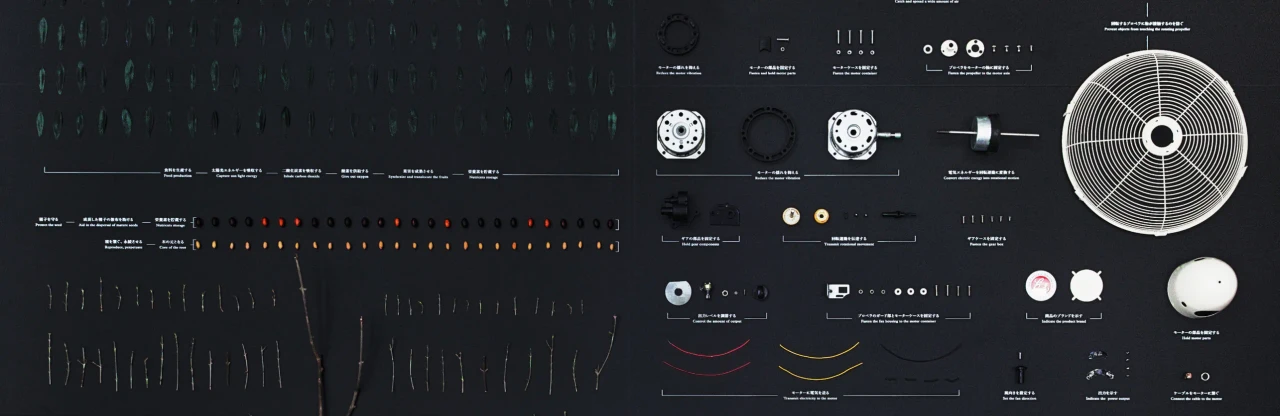
16 septembre–31 octobre 2016 : Exposition "No-Designer : Forme et Raison"
Tachikawa, qui s'était intéressé à la créativité des formes naturelles—qui ne possèdent aucun langage—qui surpasse celle des humains, a commencé à explorer les points communs entre l'évolution biologique et la créativité humaine. Dans l'exposition "No-Designer : Forme et Raison", tenue à la Ginza Graphic Gallery (ggg), il a présenté des œuvres qui contrastaient évolution et création, explorant les raisons derrière les formes et les méthodes pour concevoir le design.
2012 A commencé à enseigner le cours "La Grammaire du Design"
Après être entré dans la vie active et s'être pleinement engagé dans sa carrière de designer, Tachikawa a commencé à enseigner "La Grammaire du Design" à l'Université d'Art Musashino, un cours qui élargissait le contenu de sa thèse de master. Le cours, qui s'est plus tard élargi pour inclure des sessions pour les professionnels en activité, a gagné une solide réputation, menant à son adoption à l'i.school de l'Université de Tokyo et son application dans les initiatives d'innovation de diverses entreprises.
2006 : A écrit la thèse de master "Cognition Linguistique du Design"
Les origines de la Créativité Évolutionnaire résident dans la thèse de master de Tachikawa, "Cognition Linguistique du Design", qu'il a achevée pendant ses études d'architecture en tant qu'étudiant diplômé. Se concentrant sur le processus par lequel les idées et concepts émergent—un sujet qui l'intéressait depuis longtemps—la thèse examinait ce processus d'un point de vue linguistique, basé sur l'hypothèse que le langage sert de déclencheur pour l'inspiration.
Novembre 2025 : Discours d'ouverture au 9e Sommet du Leadership 2025 au Bangladesh
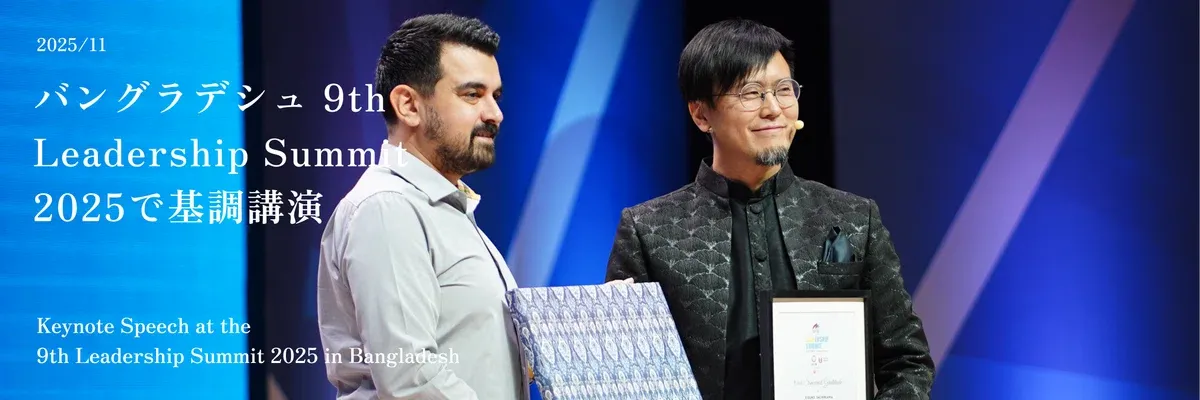
Eisuke Tachikawa a pris la parole en tant qu'orateur principal au "Sommet du Leadership 2025" organisé au Bangladesh. Organisée sous le thème "Leadership Résilient – Prospérer dans l'Incertitude", cette conférence internationale a exploré le leadership durable et éthique nécessaire dans une société en mutation rapide. Tachikawa a prononcé un discours sur la nature du leadership dans l'abordage des enjeux sociaux et des changements environnementaux du point de vue de la Créativité Évolutionnaire.
Novembre 2025 : Présentation en ligne lors de la commémoration du 12e anniversaire du typhon Yolanda
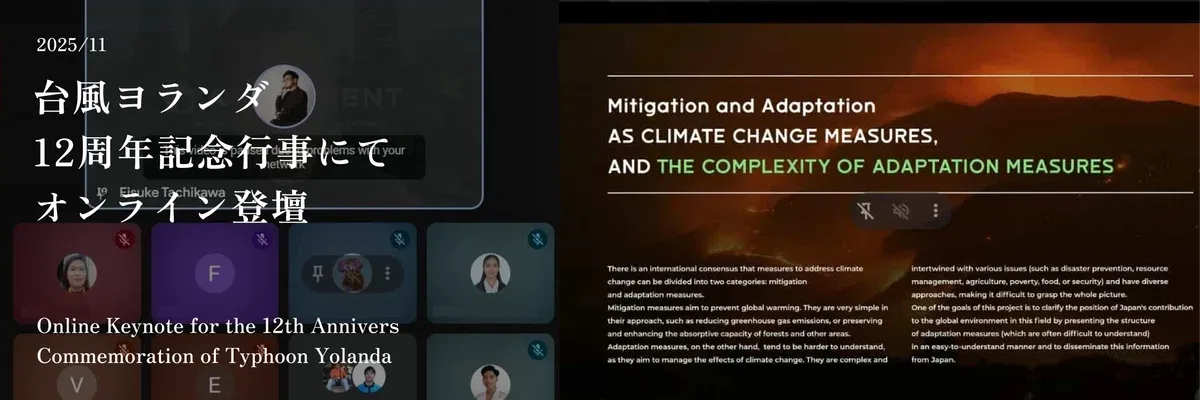
Marquant le 12e anniversaire du typhon Yolanda—qui a causé certains des dommages les plus graves jamais enregistrés aux Philippines—Eisuke Tachikawa s'est exprimé lors d'un événement commémoratif organisé à l'Eastern Visayas State University. Il a donné une conférence en ligne sur la "Créativité Évolutionnaire" à environ 400 participants, partageant des perspectives créatives sur la façon d'affronter les catastrophes.
Novembre 2025 : A donné une conférence spéciale aux étudiants diplômés de l'Université Minerva
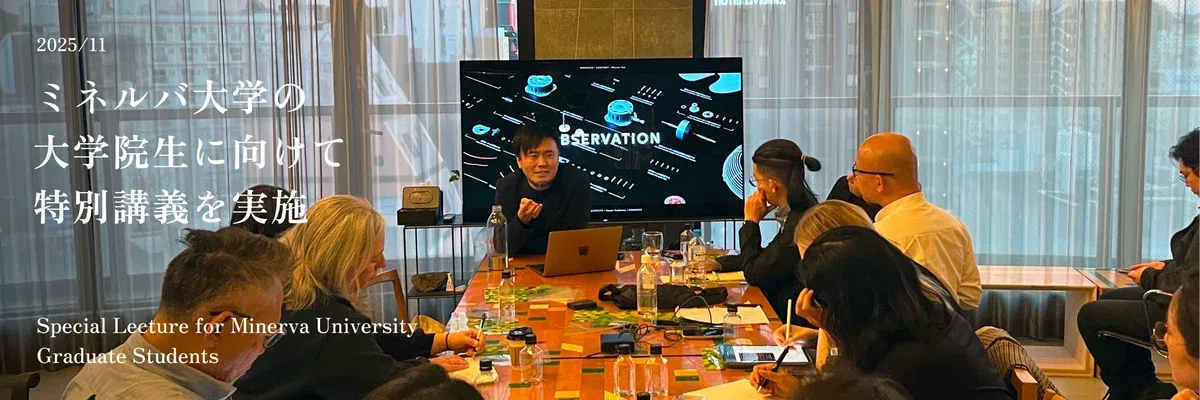
À l'Université Minerva—connue pour son modèle éducatif unique qui implique d'apprendre en se déplaçant entre sept villes du monde entier et ayant été sélectionnée comme "l'université la plus innovante au monde"—Eisuke Tachikawa a donné une conférence spéciale sur la "Créativité Évolutionnelle" à environ 20 étudiants de Master spécialisés en "Sciences de la Décision". Des étudiants aux parcours variés, incluant des politiciens actuels et des dirigeants d'entreprise, ont visité le studio de Yokohama de NOSIGNER—l'agence dirigée par Tachikawa—et la conférence a duré trois heures en raison d'une session de questions-réponses animée.
Octobre 2025 : Présentation à la conférence "Cities of Design Subnetwork Meeting" organisée par le Réseau des villes créatives de l'UNESCO (UCCN)
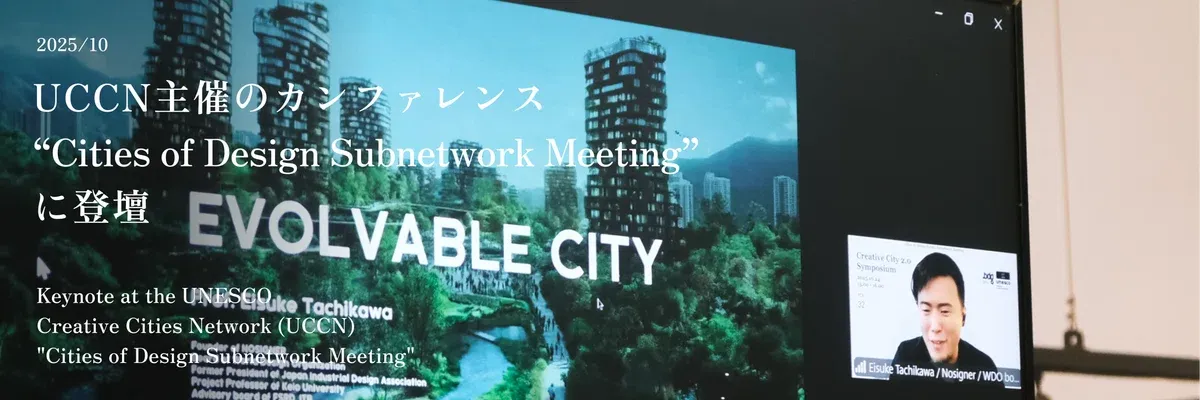
Eisuke Tachikawa s'est exprimé lors du "Cities of Design Subnetwork Meeting" organisé par le Réseau des villes créatives de l'UNESCO (UCCN)—qui vise à exploiter la culture et la créativité pour le développement urbain durable—à l'Institut de technologie de Bandung. Il a participé à une table ronde sur le thème "Creative City 2.0", échangeant des points de vue sur les approches de la créativité basées sur l'"Evolutional Creativity" et l'avenir des villes s'adaptant au changement climatique.
Septembre 2025 : Discours principal à la Conférence Internationale de Design (IDC) 2025 aux Philippines
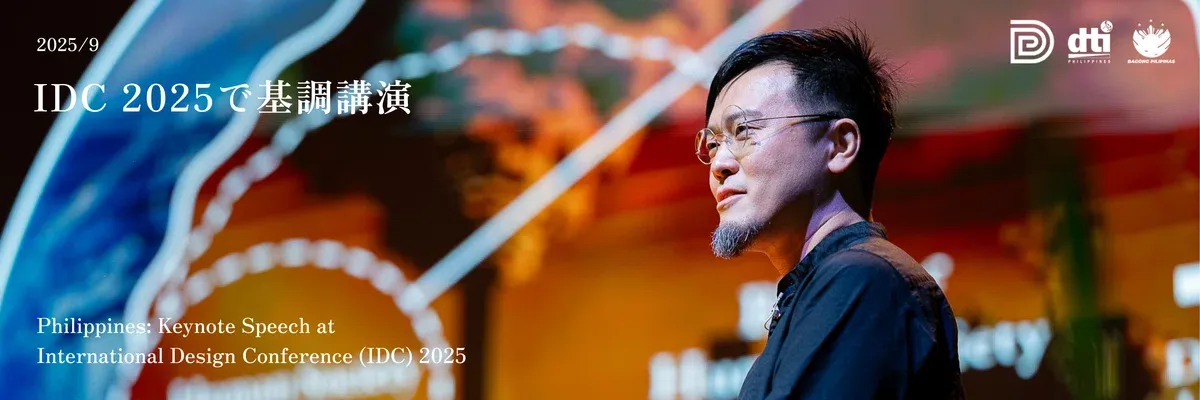
Eisuke Tachikawa a prononcé un discours d'ouverture à la Conférence internationale de design (IDC) 2025, organisée par le Design Center of the Philippines, l'agence gouvernementale responsable de la promotion du design aux Philippines. Invité en tant que conférencier principal à la conférence, qui présentait une programmation diversifiée d'intervenants incluant consultants, designers, chercheurs et dirigeants d'entreprise sous le thème "Holding the Whole", il a donné une conférence d'ouverture sur l'éducation à la créativité basée sur "Evolutional Creativity" et la forme idéale des villes s'adaptant au changement climatique.
Juillet 2025 : A reçu la plus haute distinction académique de l'Institut de technologie de Bandung
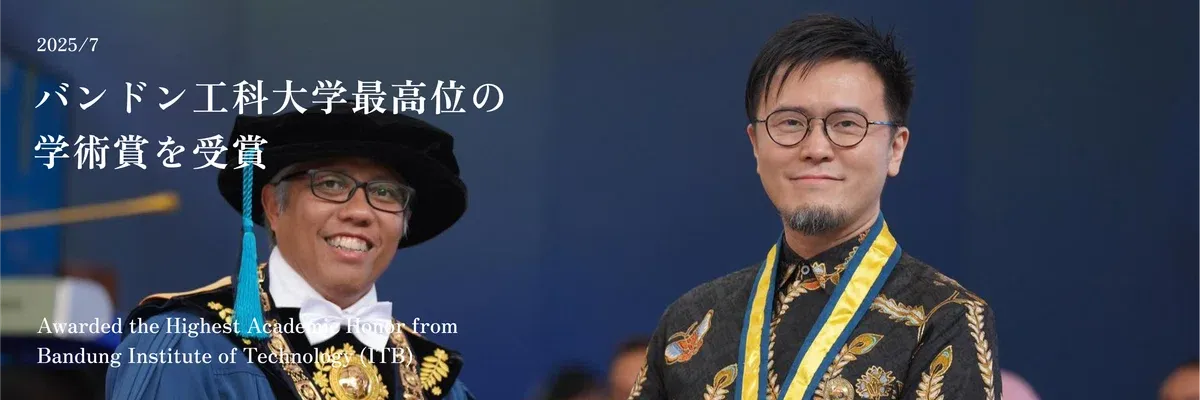
Tachikawa a reçu le "Prix GANESA WIDYA JASA ADIUTAMA", la plus haute distinction académique décernée par l'Institut de technologie de Bandung (ITB) en Indonésie pour des contributions exceptionnelles à la connaissance et à l'éducation. Ce prix prestigieux n'est accordé qu'à deux personnes suite à un processus de sélection rigoureux parmi les candidats nominés par chaque faculté ; il a été sélectionné sur la base d'une nomination de la Faculté d'art et de design (FSRD).
mbre 2024 : Publication de l'édition indonésienne d'*Evolutional Creativity*
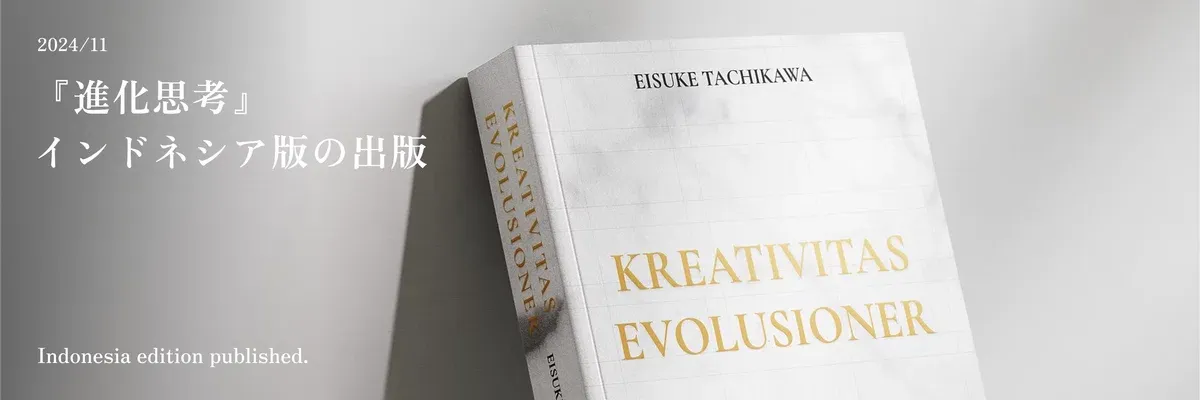
L'édition indonésienne du livre *Evolutional Creativity* a été publiée par la maison d'édition indonésienne « SiMPUL » sous la supervision de l'Institut de Technologie de Bandung (ITB), l'une des principales universités d'Indonésie.
De plus, pour commémorer la publication du livre, une exposition et une conférence commémorative ont eu lieu au ITB Design Center, et une exposition et un atelier ont également été organisés dans l'espace artistique de Jakarta «
Avril 2024 : 3e anniversaire de la publication de "Evolutional Creativity"
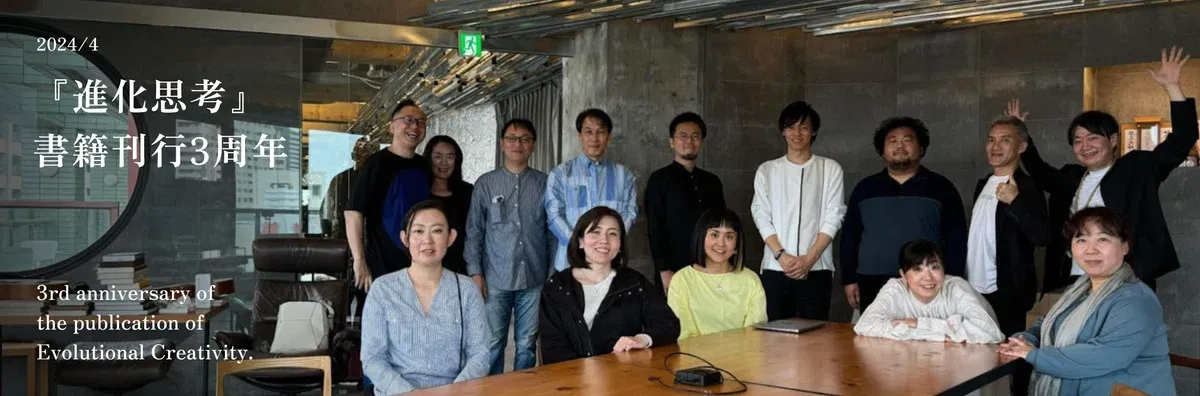
La "Créativité Évolutionnaire", systématisée par son promoteur, Eisuke Tachikawa, après des années d'exploration, continue d'évoluer encore aujourd'hui, ayant reçu un large éventail de retours—incluant du soutien, des encouragements, des critiques et des suggestions—de nombreuses personnes depuis la publication de la première édition du livre.
De plus, une communauté de lecteurs formée par plus de 100 lecteurs passionnés reste activement engagée, et les principes de la Créativité Évolutionnaire sont mis en pratique dans le travail et la vie quotidienne de ses praticiens.
Mars 2024 : Conférence au Ministère de l'Économie, du Commerce et de l'Industrie pour les étudiants de Stanford Business School
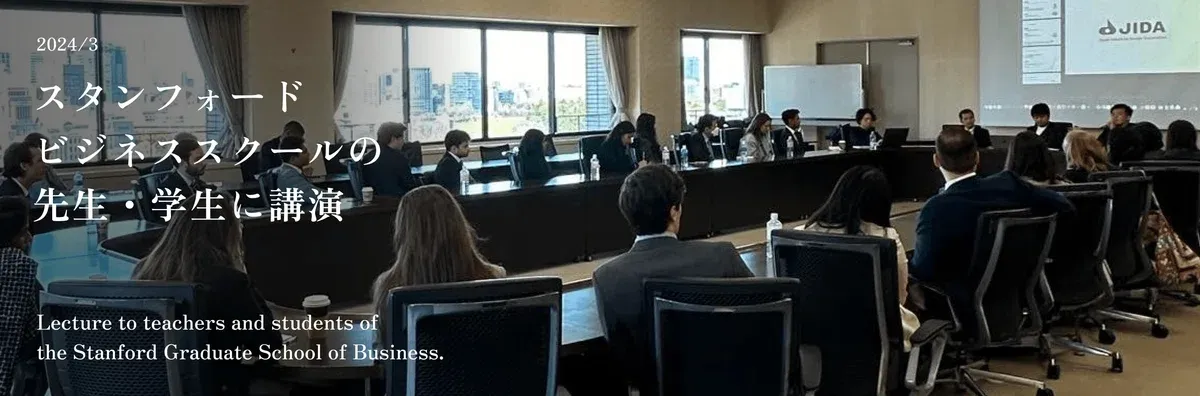
Tachikawa a donné une conférence sur le design japonais et la Créativité Évolutive à environ 30 étudiants et membres du corps professoral de la Stanford Graduate School of Business au ministère de l'Économie, du Commerce et de l'Industrie. Cette conférence faisait partie du voyage d'étude de l'école au Japon, un programme conçu pour explorer la relation entre la croissance économique rapide du Japon et le design, ainsi que l'état actuel des startups.
Décembre 2023 : Publication de *Evolutional Creativity [Édition élargie et révisée]*
![Sous la supervision biologique du biologiste évolutionniste Masaki Kawata (Professeur nommé spécialement par le Président de l'Université de Tohoku), *Evolutional Creativity [Édition augmentée et révisée]*—le résultat de plus d'un an de discussions avec divers experts—a été publié. Tenant compte des critiques et commentaires reçus concernant la première édition, cette édition révisée a été augmentée avec de nouveaux contenus du point de vue de la créativité. Il s'est enrichi de 50 pages pour atteindre 560 pages, évoluant vers un livre encore plus lisible et substantiel.](https://cdn.nosigner.com/2026/04/1734599638-jF4gAOTkHsD2E5zeqdZly7fK.webp)
Sous la supervision biologique du biologiste évolutionniste Masaki Kawata (Professeur nommé spécialement par le Président de l'Université de Tohoku),
Octobre 2023 : Présentation de communication à la Conférence Internationale de l'Assemblée Mondiale du Design
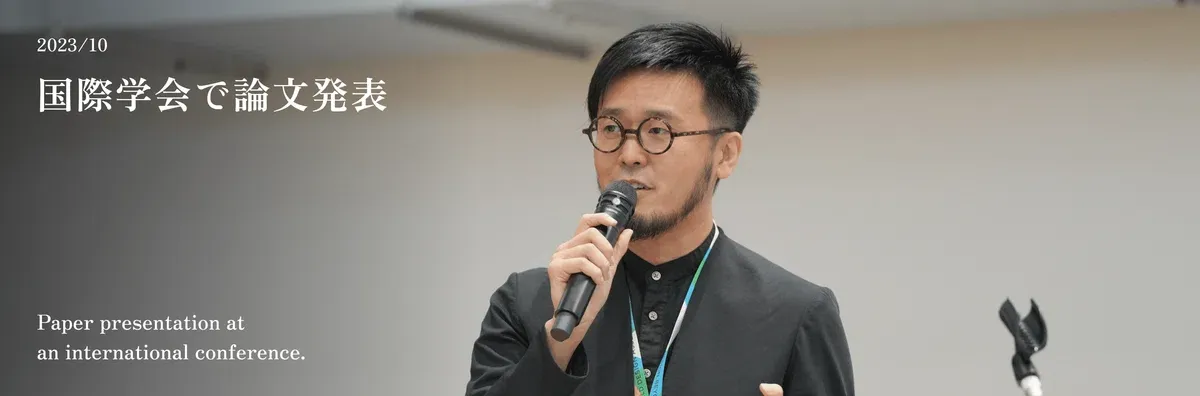
Lors de l'
Septembre 2023 : Exposition organisée au Musée du Design de Taïwan
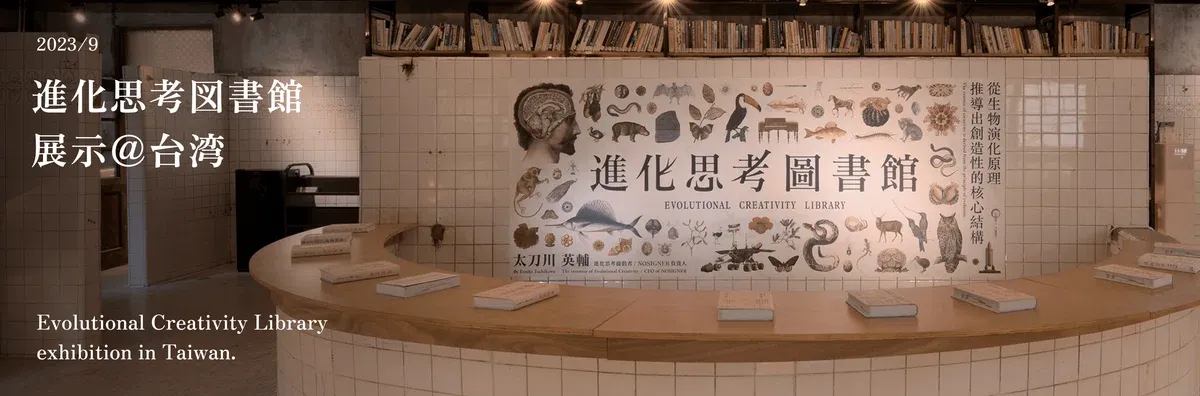
Coïncidant avec la publication de l'édition taïwanaise du livre *Evolutional Creativity*, une exposition de NOSIGNER intitulée
Septembre 2023 : Publication de l'édition taïwanaise de "Evolutional Creativity"
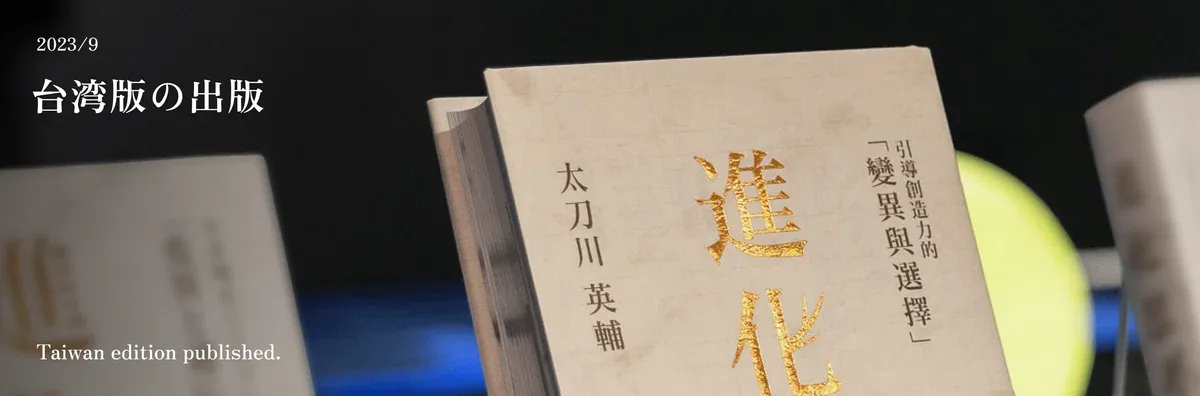
Suite à l'édition coréenne,
Juin 2023 : Publication de l'édition coréenne de "Evolutional Creativity"
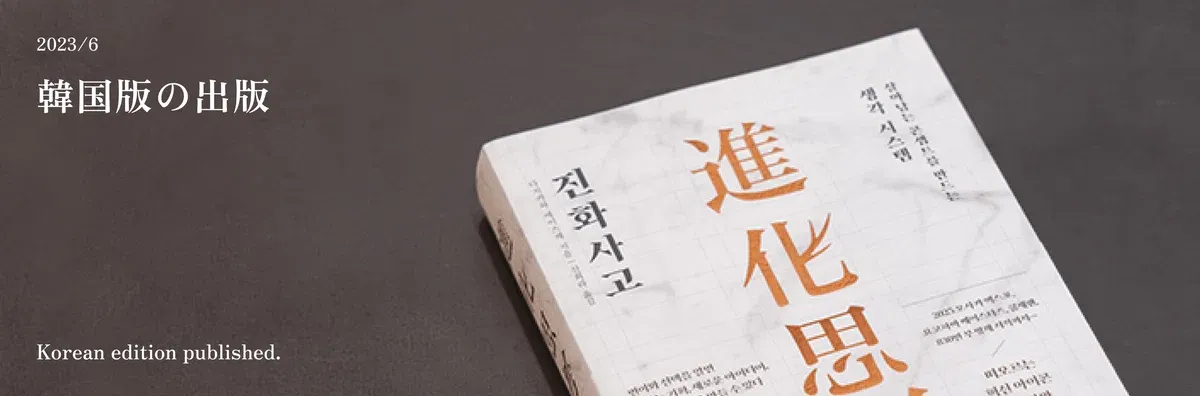
L'
Présentation lors d'une conférence organisée par l'UNESCO-MGIEP
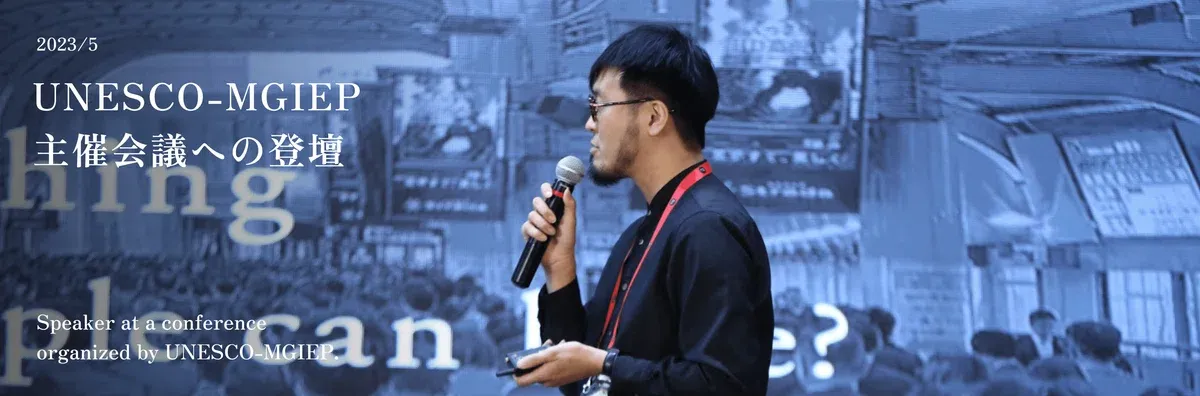
Tachikawa a été invité à intervenir lors de la conférence « L'éducation pour s'épanouir dans une réalité mixte », organisée par l'UNESCO-MGIEP (l'Institut Mahatma Gandhi de l'Organisation des Nations Unies pour l'éducation, la science et la culture pour l'éducation à la paix et au développement durable), qui a rassemblé des universitaires renommés, des chercheurs, des enseignants, des décideurs politiques et des représentants du secteur privé du monde entier. Il a présenté un exposé sur « La créativité évolutionnaire » lors de la session « Design Thinking et créativité dans l'éducation ». Cette conférence était également la première conférence internationale basée sur les Objectifs de développement durable pour l'épanouissement.
2023, Août 2023 : Conférence à l'Institut de technologie de Bandung (ITB), Indonésie
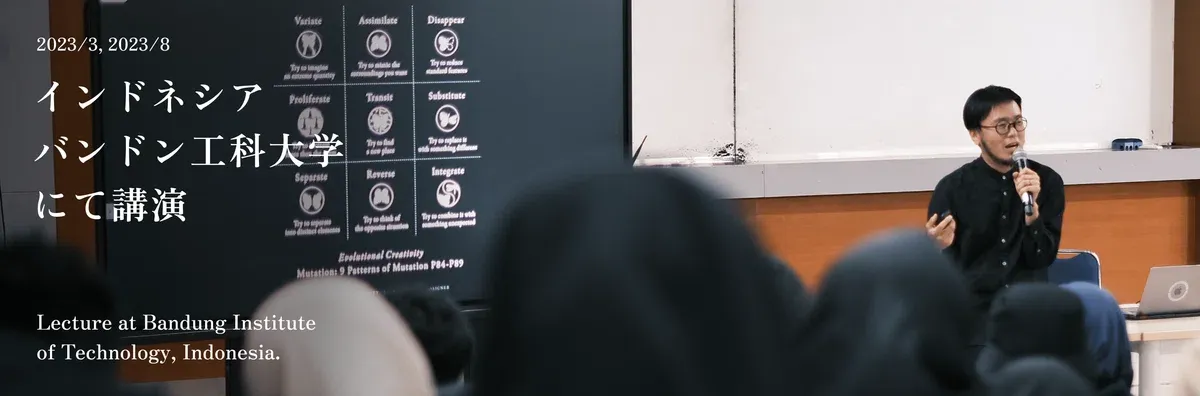
Tachikawa a donné une conférence sur la Créativité Évolutionnelle au Bandung Institute of Technology (ITB), la principale institution d'enseignement supérieur d'Indonésie. En raison de la réception positive de ce contenu, il a été décidé de publier une édition en langue indonésienne de "Créativité Évolutionnelle". Suite à la
Mars 2023 : A présidé le forum "Réfléchir à l'avenir de l'enseignement supérieur"
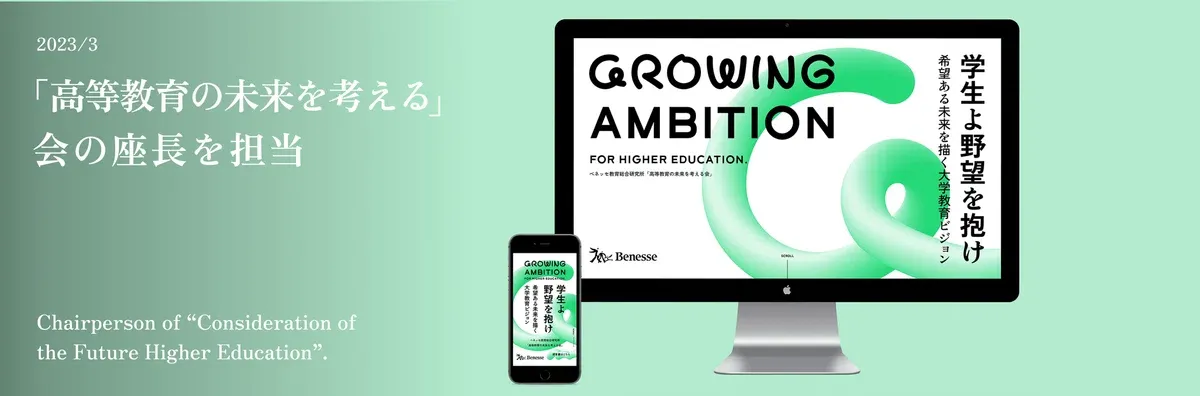
Eisuke Tachikawa a présidé le forum « Réfléchir à l'avenir de l'enseignement supérieur », organisé par l'Institut de recherche éducative Benesse, où des membres engagés dans des pratiques éducatives de pointe ont discuté de l'avenir de l'éducation universitaire. Après quatre séries de discussions en table ronde avec les membres du comité, une proposition décrivant une vision de l'éducation universitaire qui envisage un avenir prometteur a été compilée. Sous le nouveau principe directeur éducatif, «
Novembre 2022 : A reçu le "Prix Shu Yamaguchi" aux Pen Creator Awards
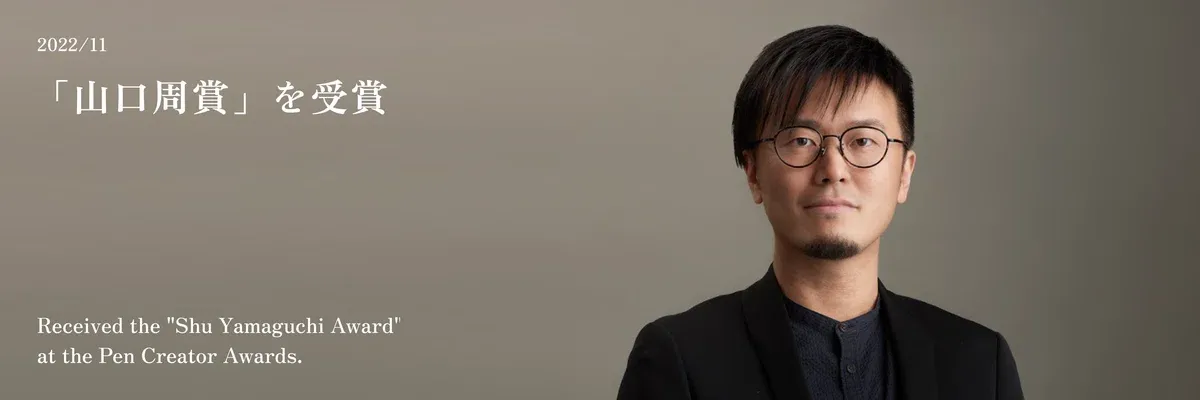
Eisuke Tachikawa a reçu le « Prix Shu Yamaguchi » aux «
Novembre 2022 : Apparition dans une émission de la NHK pour un dialogue avec l'anatomiste Takeshi Yoro
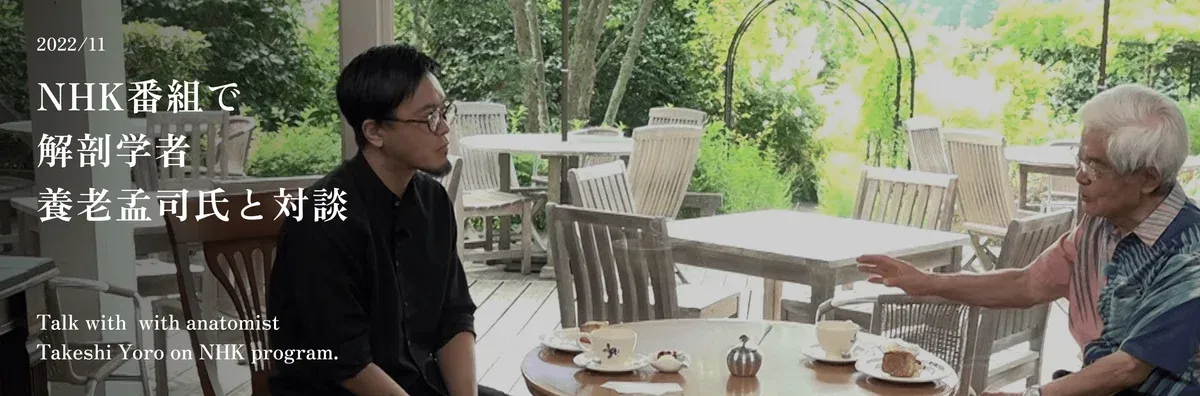
Il est apparu aux côtés de l'anatomiste Takeshi Yoro dans l'émission populaire de NHK "Switch Interview", dans laquelle deux personnes travaillant dans des domaines différents se rendent sur leurs lieux de travail respectifs et mènent un dialogue en "alternant" entre les rôles d'orateur et d'auditeur. Dans la deuxième partie de l'émission, j'ai invité le Dr Yoro—qui a passé près de 60 ans depuis ses années d'étudiant à explorer "les formes du vivant"—au studio NOSIGNER. Tout en présentant le concept de "Créativité Évolutionnelle", j'ai parlé de mon travail en tant que designer qui a poursuivi la forme à travers diverses approches.
: Projet de lancement d'une édition révisée de
Un projet de publication d'une édition révisée a commencé, visant à affiner davantage le livre en tant que méthode de pensée créative et à incorporer avec précision les perspectives scientifiques. Pour cette révision, nous avons invité le professeur Masaki Kawata, professeur en mission spéciale auprès du président de l'université de Tohoku et expert en évolution et écologie, à servir de rédacteur en chef de supervision, accompagnant l'évolution du livre "Evolutional Creativity". Un nouveau livre du professeur Kawata expliquant la biologie évolutive a récemment été publié, alors n'hésitez pas à y jeter un coup d'œil également.
Pour l'auteur aussi, ce fut une opportunité inestimable de réapprendre en profondeur la biologie évolutive auprès d'un expert aussi distingué que le professeur Kawata.
Mai 2022 : Dialogue avec le lauréat du prix Nobel Dr. Akira Yoshino
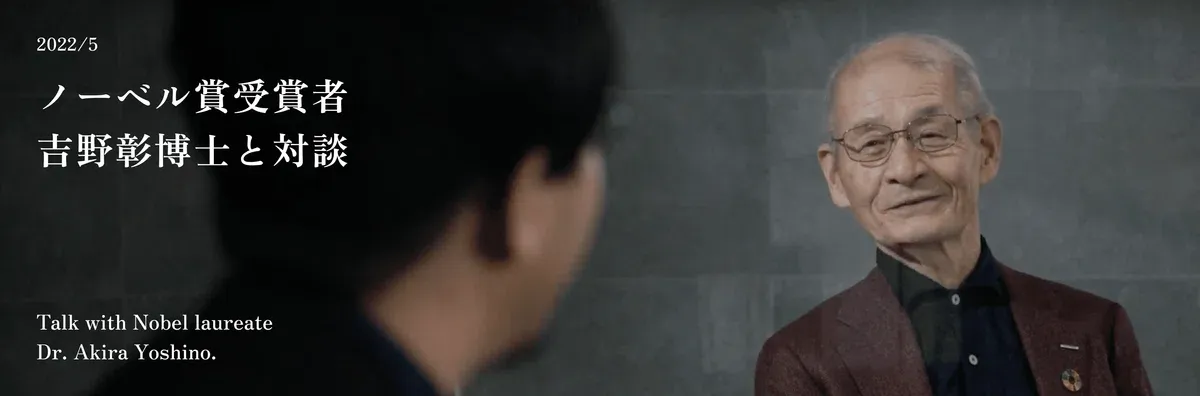
Lors d'un événement commémorant le 100e anniversaire d'Asahi Kasei, j'ai eu l'honneur d'engager un dialogue avec le Dr. Akira Yoshino (Membre d'honneur d'Asahi Kasei), l'inventeur de la batterie lithium-ion et lauréat du prix Nobel de chimie. La vidéo de la conférence de Tachikawa sur la "Créativité évolutionnelle" et son dialogue avec le Dr. Yoshino a été diffusée à environ 40 000 employés du groupe Asahi Kasei. Cet événement a non seulement réalisé le souhait de longue date de Tachikawa d'engager un dialogue avec le Dr. Yoshino, mais a également servi d'opportunité pour transmettre le message à tous chez Asahi Kasei que "c'est la 'curiosité' et la 'connaissance' de chaque individu qui enrichit l'imagination et façonne les 100 prochaines années."
Mars 2022 : Apparition dans "Night of Radical Modifications: Engineer Training School" sur NHK E-Tele
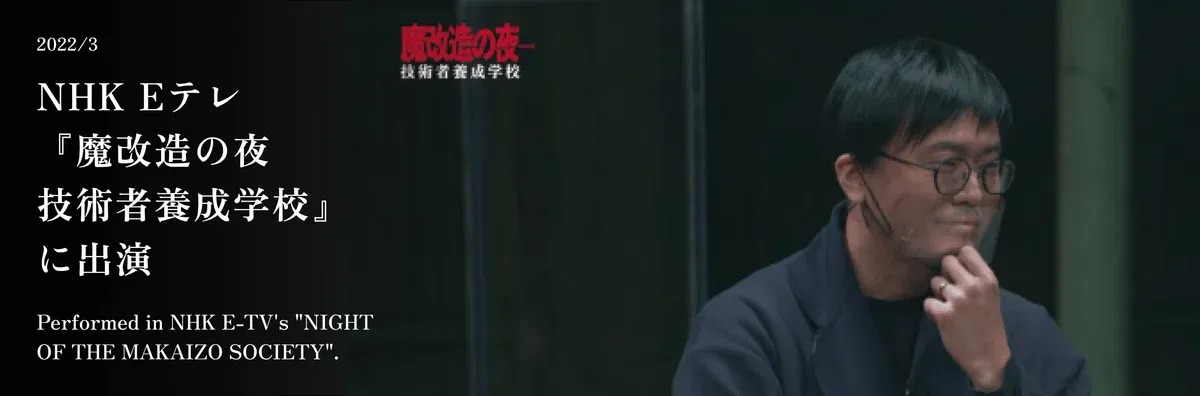
Eisuke Tachikawa est apparu en tant qu'"Instructeur de Design (Création)" dans l'émission populaire "Night of Radical Modifications: Engineer Training School" de NHK E-Tele. Avec le thème "Modification Magique d'un Blender", il a dirigé un atelier de brainstorming pour créer un "blender qui projette du jus au loin", introduisant les neuf modèles de "mutation" de "Evolutional Creativity" comme indices pour générer des idées.
Février 2022 : A reçu un prix spécial aux "IT Engineer Book Awards 2022"
Dans la catégorie livres d'affaires des
2022-2023 学校の入試問題に採用
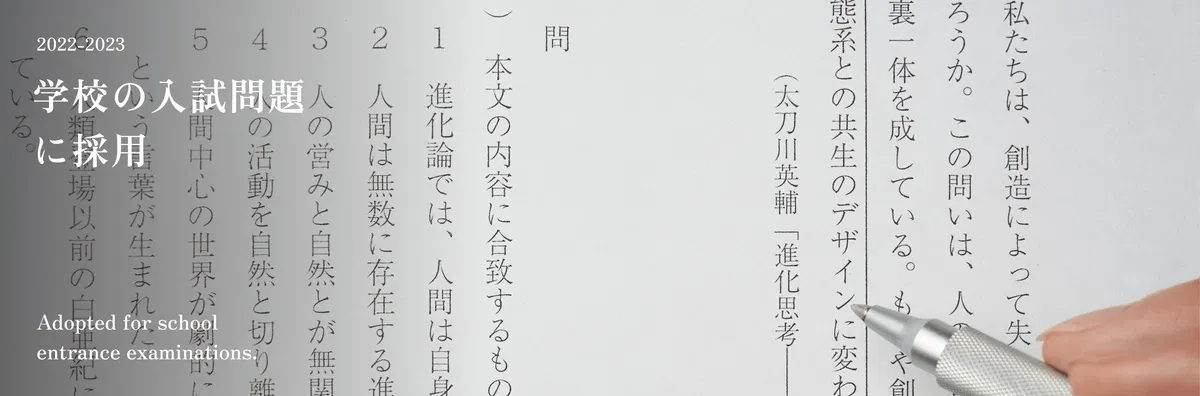
Des extraits d'Evolutional Creativity continuent d'être utilisés comme matériel pour les examens scolaires, apparaissant dans les examens d'entrée en japonais à l'Université Doshisha et les examens d'entrée au lycée dans la préfecture de Nagano.
Novembre 2021 : Lauréat du prix Yamamoto Shichihei
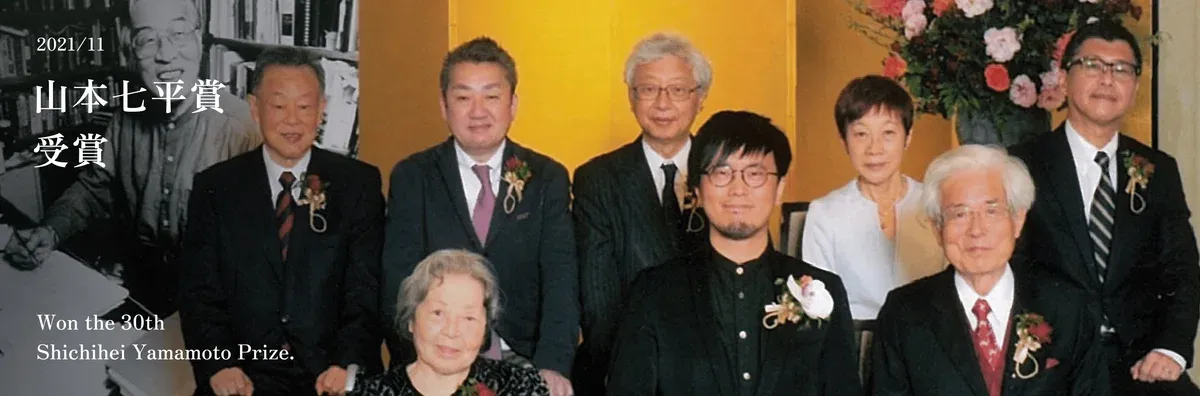
Nous avons reçu le
Bien que « Evolutional Creativity » ait attiré l'attention en tant que méthode pour former des innovateurs et stimuler l'innovation, remporter ce prestigieux prix académique japonais—dont le comité de sélection comprend l'anatomiste Takeshi Yoro, la biologiste évolutionniste Mariko Hasegawa, l'économiste Motoshige Ito, le politologue Terumasa Nakanishi et le juriste Shuji Yagi—lui a permis de gagner une reconnaissance du point de vue académique comme une nouvelle façon de penser qui démêle la créativité d'un point de vue évolutionniste.
avril 2021 : Publication du livre *Evolutional Creativity*
Nous avons publié ce livre dans le but de transmettre les concepts et la méthodologie de la Créativité Évolutionnelle à un large public, y compris le secteur des affaires, et d'encourager son application à la génération d'idées dans tous les domaines, tels que le développement commercial, le design et l'art.
Rempli d'une richesse de photographies et d'illustrations sur l'évolution biologique et la créativité humaine, ainsi que de 50 "Œuvres de Créativité Évolutionnelle" que les lecteurs peuvent pratiquer en lisant, ce livre—qui couvre de manière exhaustive les concepts et les méthodes pratiques de la Créativité Évolutionnelle—est devenu un best-seller. La méthodologie de la Créativité Évolutionnelle s'est répandue dans les grandes entreprises et les institutions éducatives et a même été adoptée dans les examens d'entrée des universités et lycées.
« Evolutional Creativity » est un concept que Tachikawa avait développé pendant de nombreuses années avant la publication du livre en 2021. Voici un résumé du parcours ayant mené à la publication d'« Evolutional Creativity ».
Collaboration avec l'émission TV "The Direxon" de NHK
Nous avons collaboré sur un projet pour l'émission télévisée de NHK
Août 2020 : Lancement de "School of Evolutional Creativity"
Un cours en ligne a été lancé grâce aux efforts volontaires de Takashi Yamada et d'autres membres qui avaient étudié la Créativité Évolutionnaire. L'"École de Créativité Évolutionnaire" a commencé comme un cours conçu pour planter les graines de la créativité dans divers secteurs de la société. Cette école est un programme de formation qui aide les participants à affiner de nouvelles idées pour la création d'entreprises à travers des conférences et des ateliers sur la Créativité Évolutionnaire.
L'"École de Créativité Évolutionnaire" a attiré un groupe diversifié de participants, incluant des dirigeants d'entreprise, des employés visant à stimuler l'innovation, et des enseignants d'école et fonctionnaires cherchant à s'engager dans la pratique créative. À ce jour, le programme a formé environ 1 000 diplômés.
Le programme est offert à un large éventail de participants, des entreprises et organisations aux individus, et est utilisé pour le développement de produits et le développement des ressources humaines. De nombreux diplômés continuent de se rencontrer hebdomadairement pour explorer l'éducation à la créativité à travers la Créativité Évolutionnaire.
2019 : A commencé à écrire le livre *Evolutional Creativity*
Après avoir rencontré M. Abe et M. Harada au "Kokuri! Camp", ils ont décidé de lancer la maison d'édition "Ami no Kaze" dans la ville d'Ami, préfecture de Shimane. Ils m'ont approché avec l'idée de faire de *Evolutional Creativity* leur premier livre, et ainsi a commencé un processus d'écriture de trois ans.
Septembre 2018 : Article sur "Evolutional Creativity" publié dans *DIAMOND Harvard Business Review*
Un article d'environ 10 000 caractères résumant l'aperçu d'"Evolutional Creativity" a été publié dans
2018 : Lancement de l'atelier "Evolutional Creativity"
Ayant acquis de nombreuses perspectives grâce à l'exposition, Tachikawa a développé "La Grammaire du Design" et a lancé "Evolutional Creativity", un atelier conçu pour apprendre le processus créatif à partir de l'évolution biologique. Lors du premier atelier organisé au "Cocri! Camp"—un rassemblement de dirigeants et d'experts de divers secteurs et domaines—il a rencontré Takashi Yamada, qui lancerait plus tard "The School of Evolution" ; Yuji Abe, l'éditeur d'*Evolutional Creativity* ; et Eiji Harada d'Eiji Publishing. Par la suite, l'atelier a été organisé dans diverses entreprises, et "Evolutional Creativity" a commencé à être adopté comme méthodologie d'innovation.
Novembre 16–31 octobre 2016 : Exposition Ginza Graphic Gallery "NOSIGNER : Form and Reason"
Tachikawa, qui s'était intéressé à la créativité des formes naturelles—qui ne possèdent aucun langage—qui surpasse celle des humains, a commencé à explorer les points communs entre l'évolution biologique et la créativité humaine. Dans l'exposition "NOSIGNER: Form and Reason," organisée à la Ginza Graphic Gallery (ggg), il a présenté des œuvres qui contrastaient évolution et création, explorant les raisons derrière les formes et les méthodes pour concevoir le design.
2012 A commencé à enseigner le cours "La Grammaire du Design"
Après être entré dans la vie active et s'être pleinement engagé dans sa carrière de designer, Tachikawa a commencé à enseigner "La Grammaire du Design" à l'Université d'Art de Musashino, un cours qui développait le contenu de sa thèse de master. Le cours, qui s'est ensuite élargi pour inclure des sessions destinées aux professionnels en activité, a acquis une solide réputation, conduisant à son adoption à l'i.school de l'Université de Tokyo et à son application dans des initiatives d'innovation au sein de diverses entreprises.
Mémoire de Master « Cognition Linguistique du Design »
Les origines de « l'Évolution Créative » remontent au mémoire de maîtrise de Tachikawa, « La Cognition Linguistique du Design », qu'il a écrit pendant ses études d'architecture en tant qu'étudiant de troisième cycle dans le laboratoire de Kengo Kuma à l'Université Keio. En se concentrant sur le processus par lequel les idées et les concepts émergent—un sujet qui l'avait longtemps intéressé—le mémoire a examiné ce processus d'un point de vue linguistique, basé sur l'hypothèse que le langage sert de déclencheur à l'inspiration.
INFORMATION
- What
- Evolutional Creativity
- When
- 2016-
- Where
- Japan
- Scope
- Branding / Branding Strategy / Logo / Edition / Business card / Motion logo / Promotional items / Infographics / Photograph / Book cover and inner page design / Exhibition / Poster / Concept Development
- Award
- The 30th Shichihei Yamamoto Prize2021
- ITB GANESHA WIDYA JASA ADIUTAMA2024
- SDGs




CREDIT
- Inventor
- Eisuke Tachikawa
- Thanks
Amanokaze (kazetotuchito Inc. ),Eiji Press Inc. , NOSIGNER staffs,Ginza Graphic Gallery , Yuichi Hisatsugu, Kunihiko Sato